
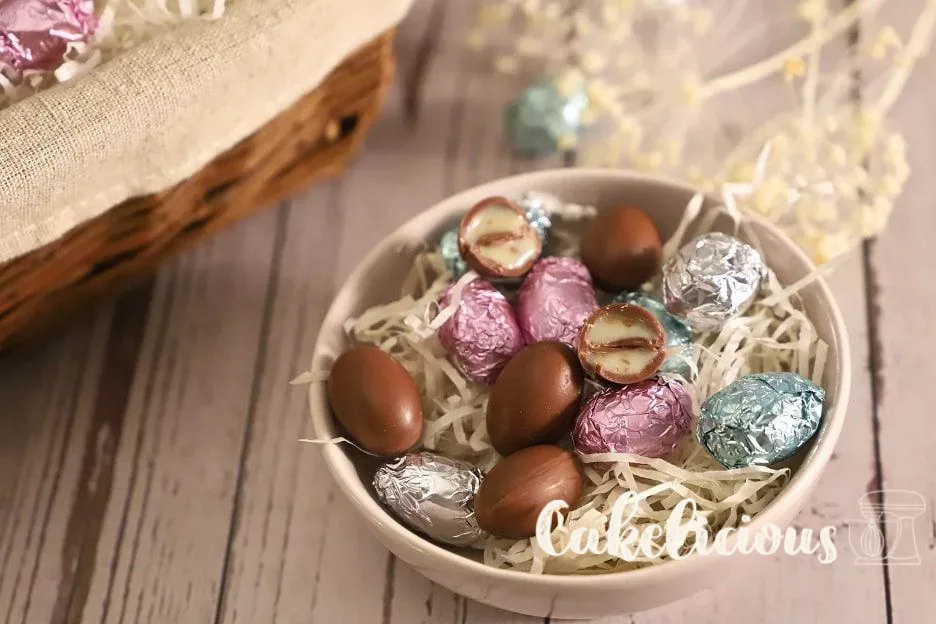
Make chocolate bonbons yourself
Mini chocolate eggs with a creamy milk filling and crunchy brittle
Hello fellow food lovers,
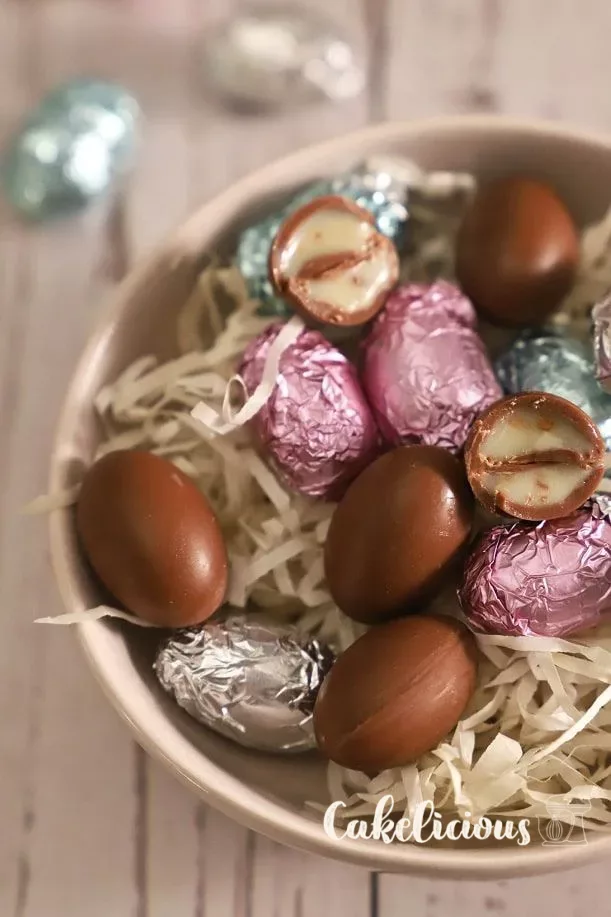
this week there's a recipe that goes down well with young and old alike: homemade chocolate bonbons! Small eggs made from delicate milk chocolate with a creamy milk filling and a touch of hazelnut brittle, which adds the crunch.
They make a real impression at the Easter meal and are guaranteed to be the first to disappear during the egg hunt. Wrapped prettily in colourful foil, they are also a wonderful gift from the kitchen.
Don't be afraid of tempering: if you keep to the temperatures, it will certainly work, and at the end the eggs almost come out of the mould by themselves. Let's get started!
Ingredients
Ganache
Step by Step
Ganache
Melt white chocolate
Melt 58 g White couverture Microwave for 1 minute at 600 watts and set aside.
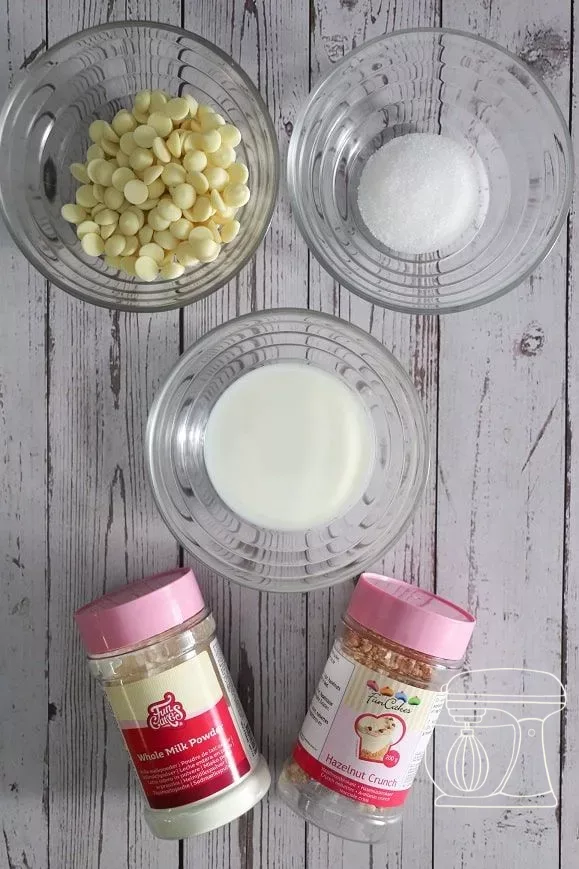
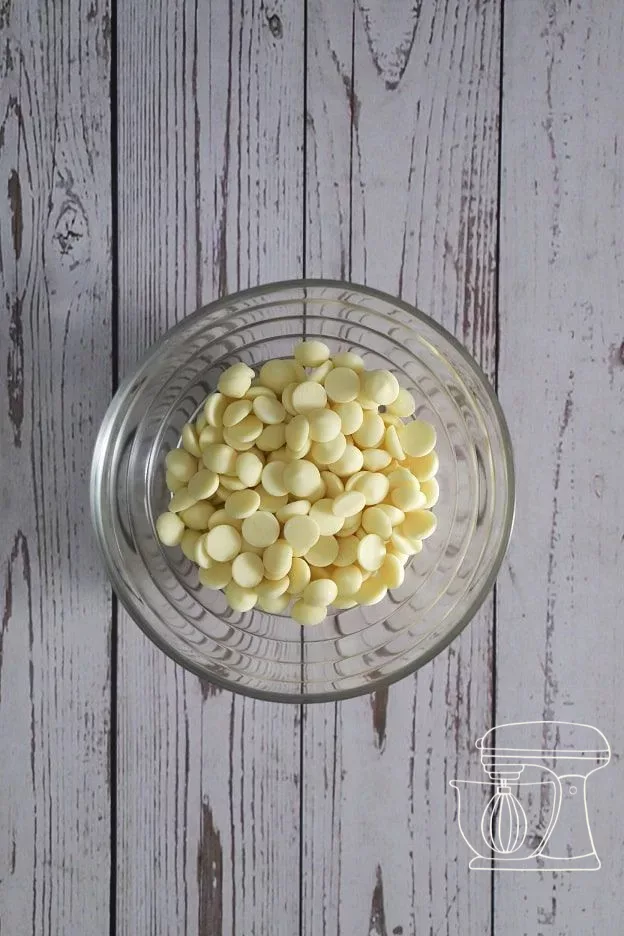
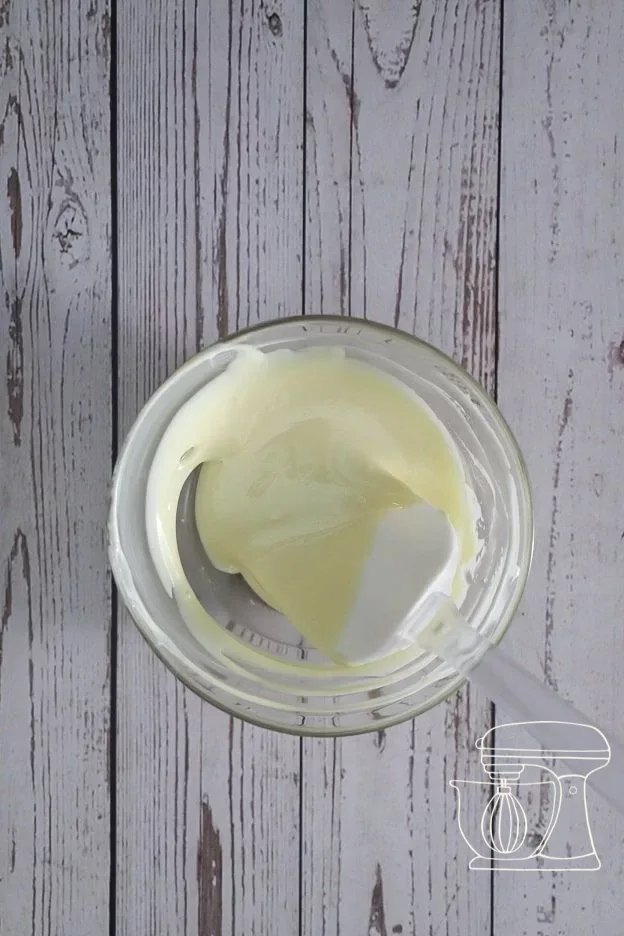
White couverture drops 500 g
Weigh out milk powder, milk and sugar
Weigh 18 g Whole milk powder, 33 g whole milk and 5 g sugar directly into a saucepan.
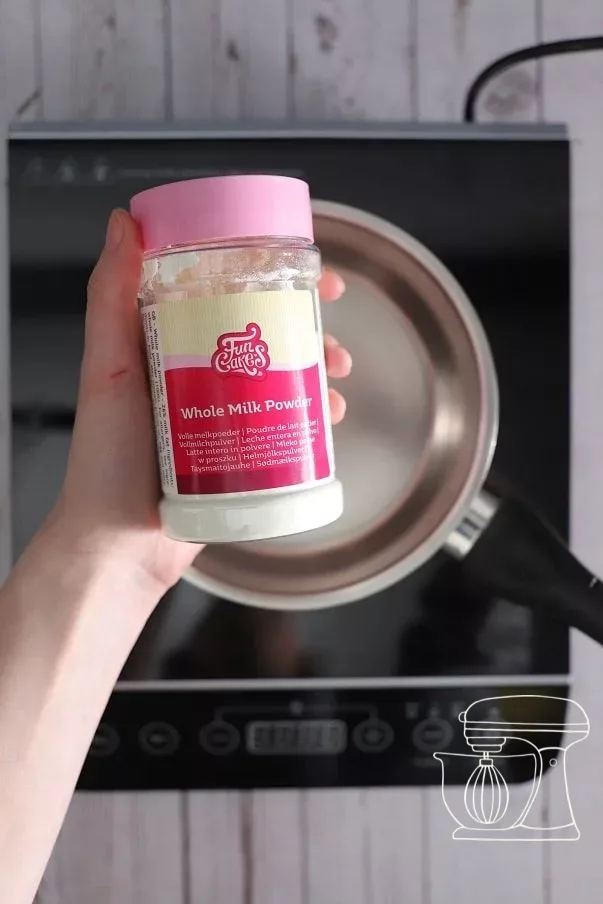
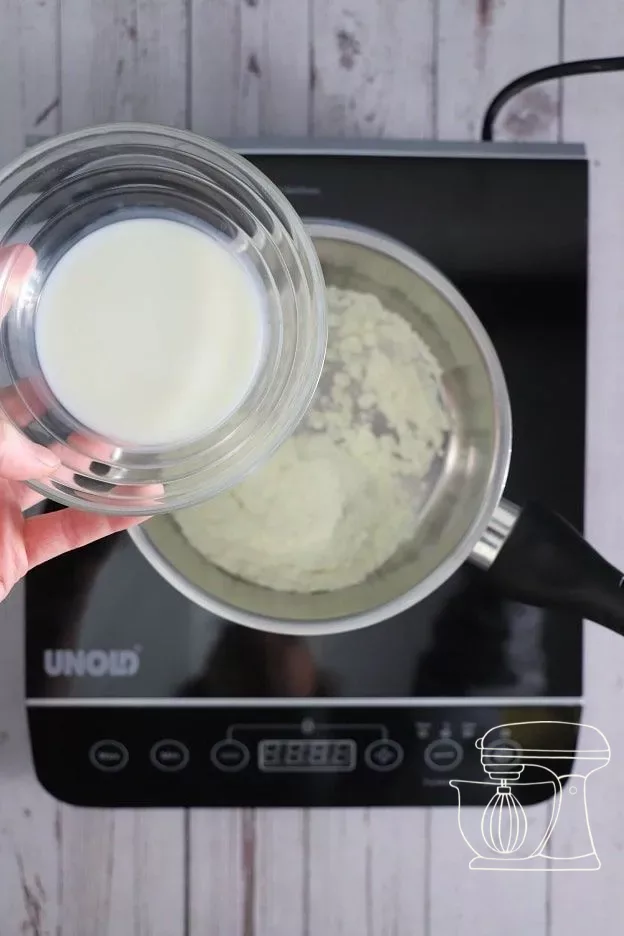
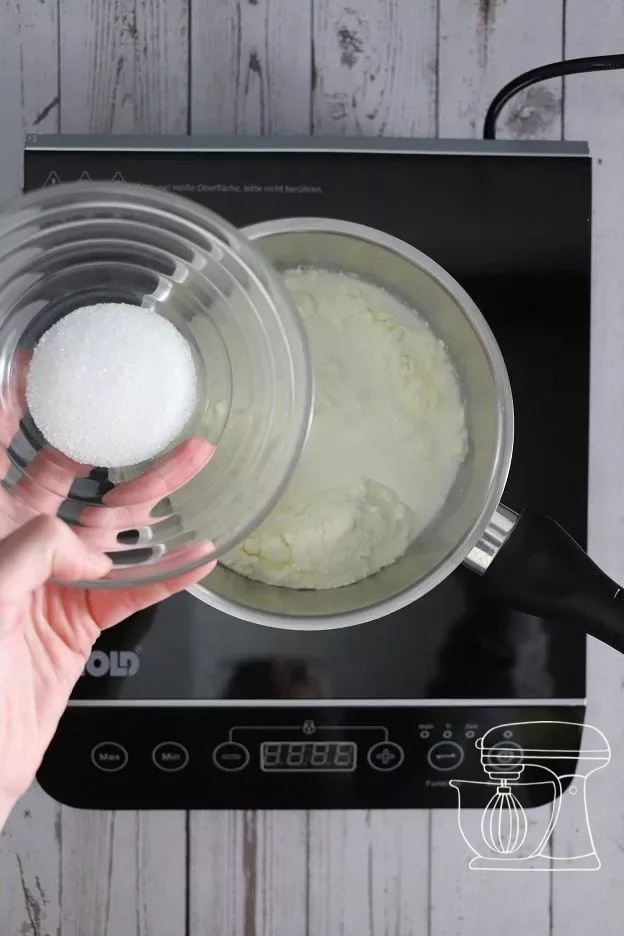
Whole milk powder
Stir
Mix everything well with a whisk. Then add the 58 g of melted white chocolate.
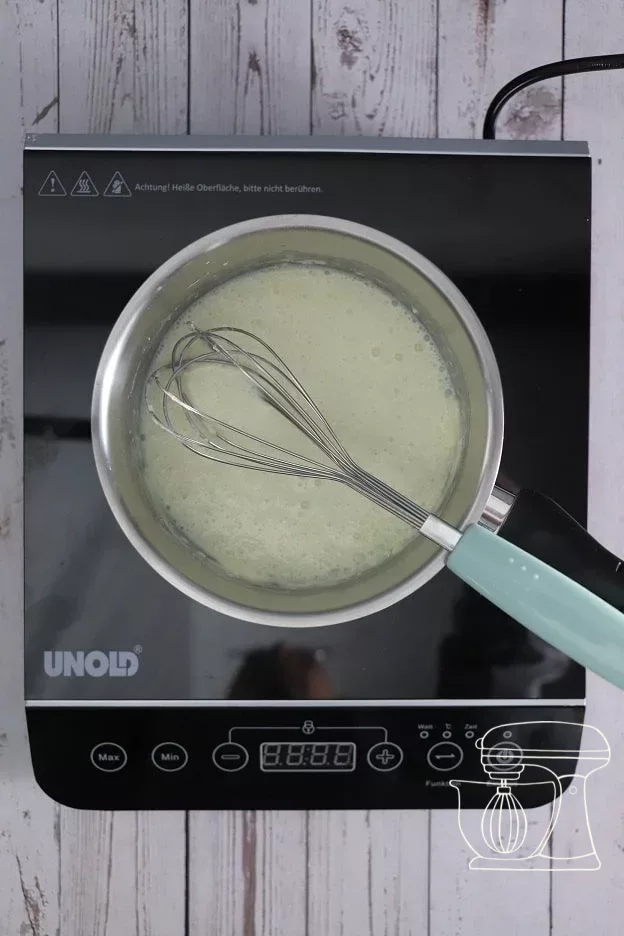
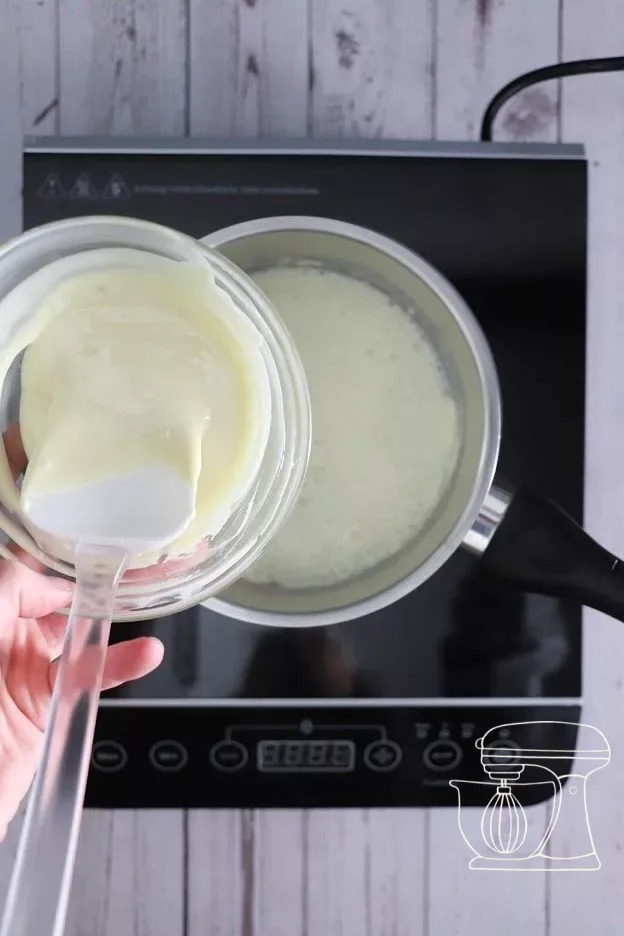
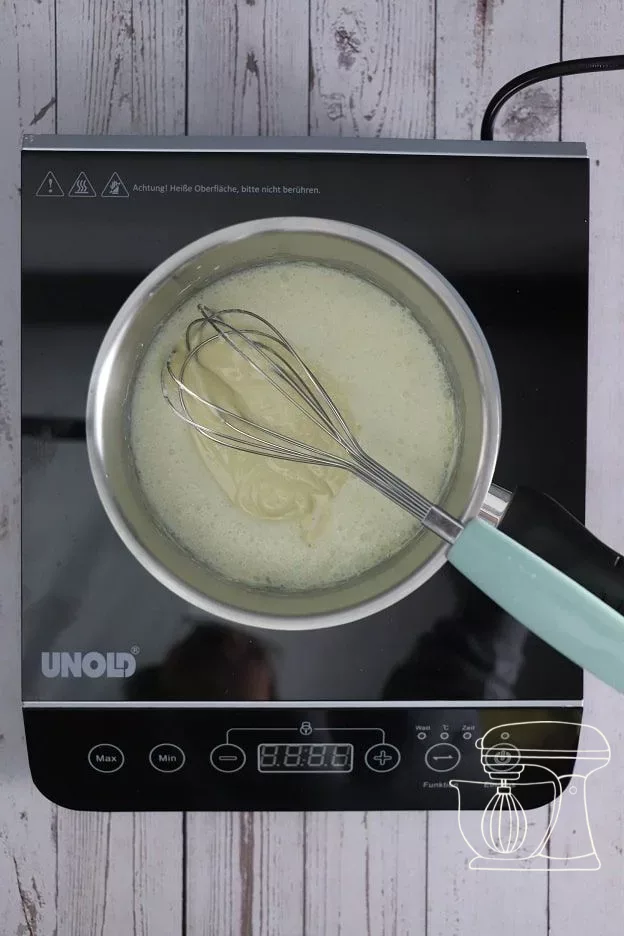
Heat to 70 °C
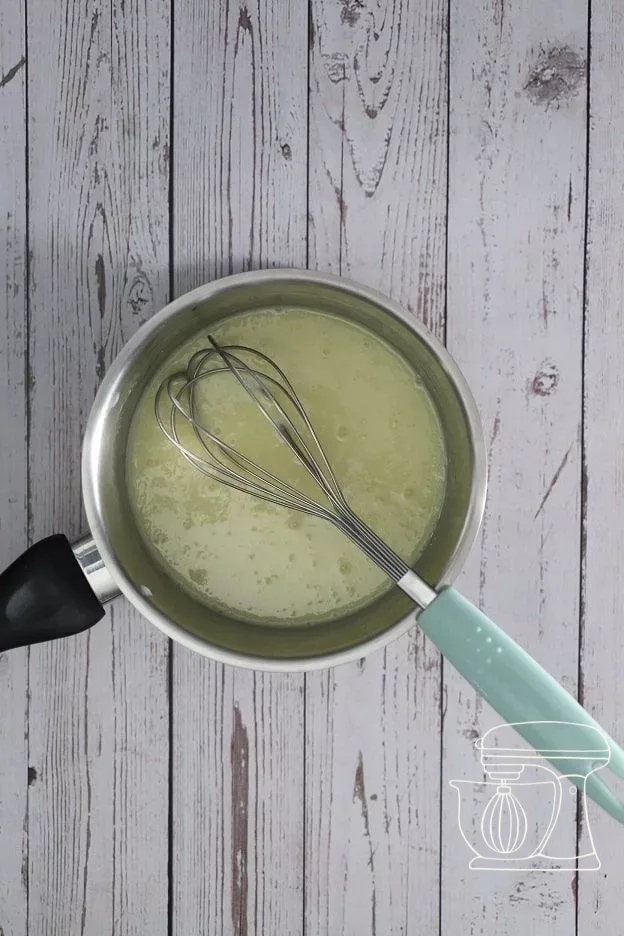
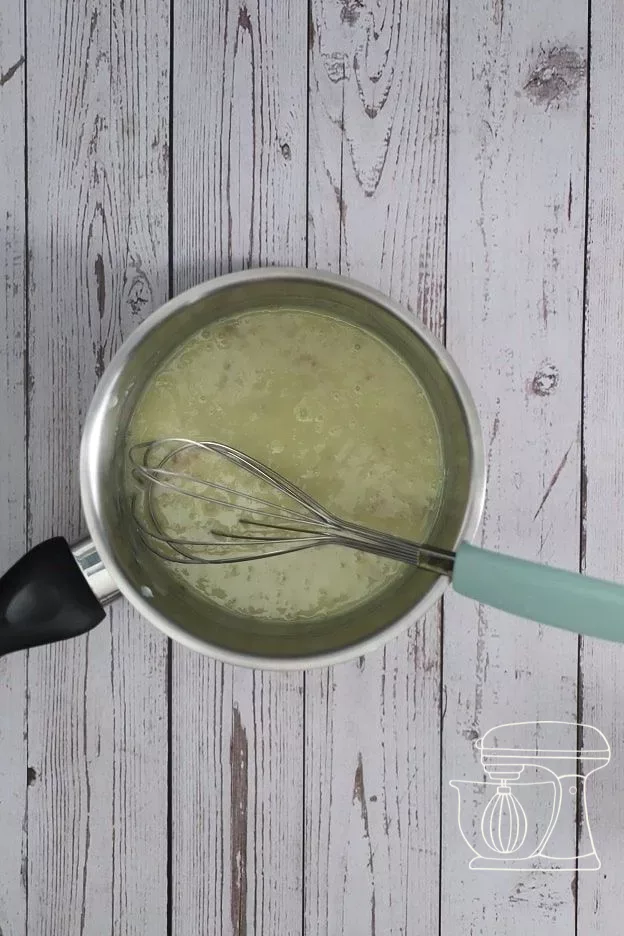
Heat the mixture to 70 °C using a Thermometer. Stir constantly so nothing burns on the bottom of the pan. Once the temperature is reached, remove the pan from the heat.
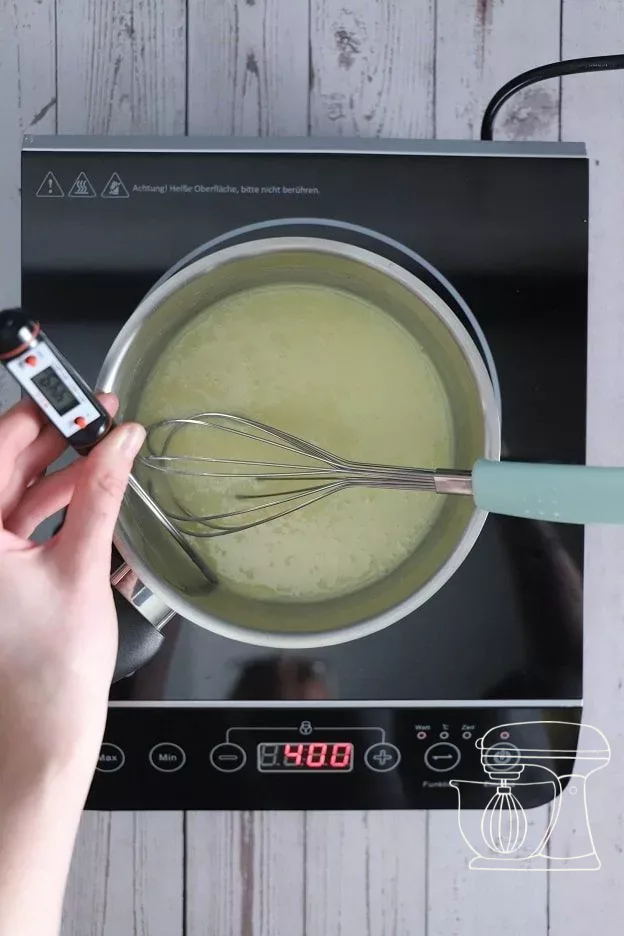
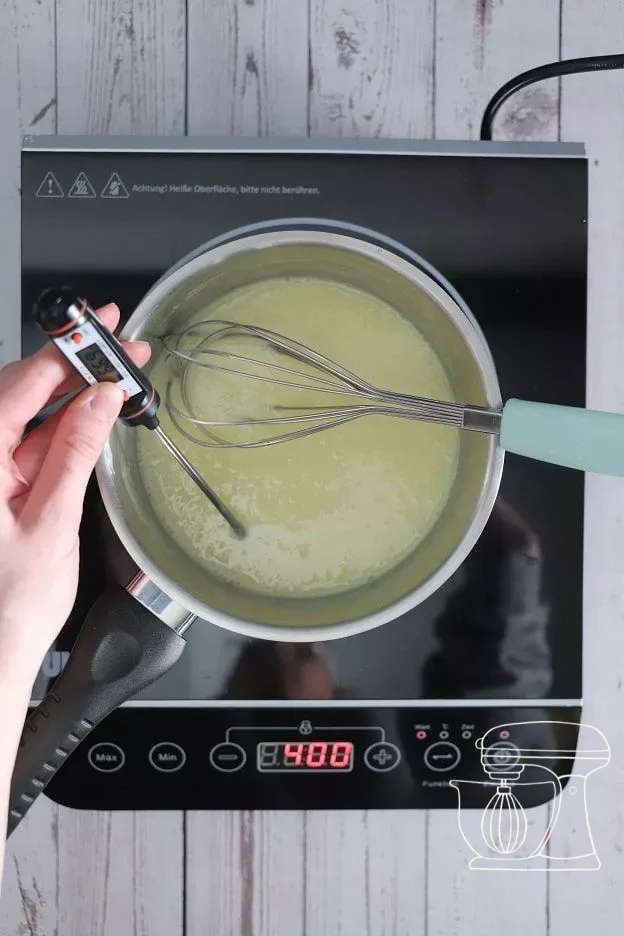
Digital Thermometer from -50 to 300°C
Fold in brittle
For extra crunch, stir 1 tbsp caramelised hazelnuts into the ganache.
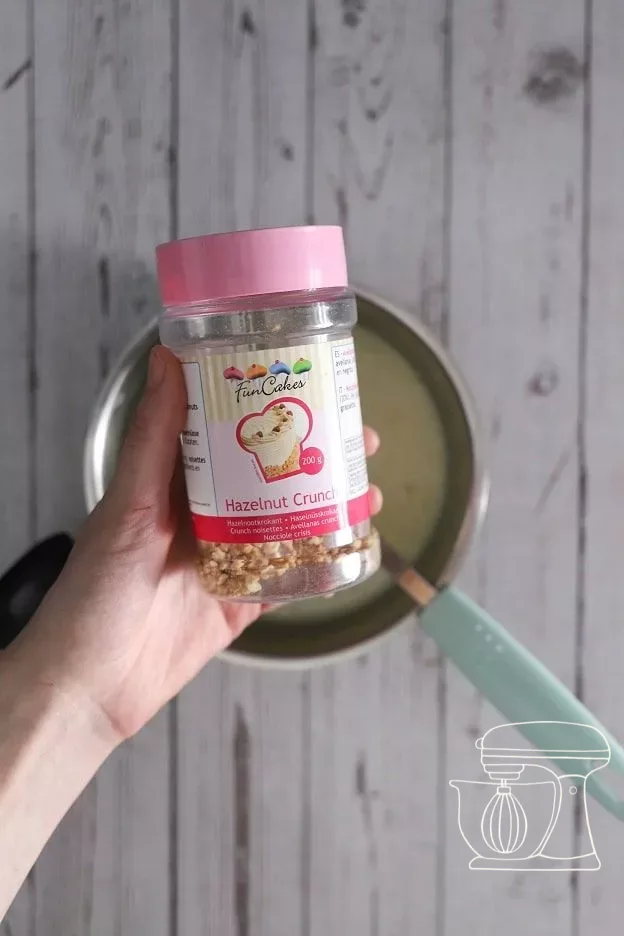
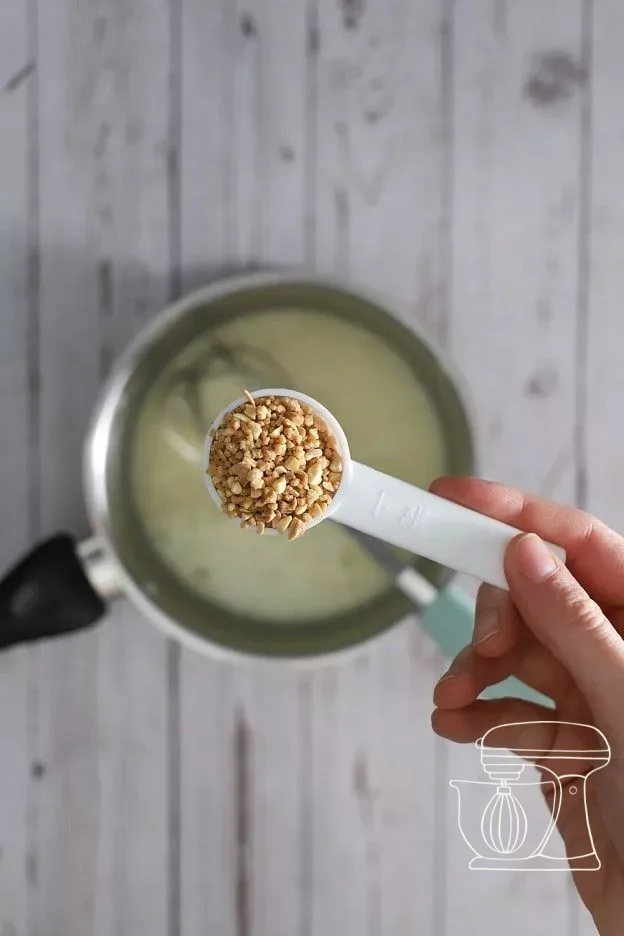
Caramelised hazelnuts, 200 g
Prepare the piping bag
Place an opened piping bag in a measuring cup. This leaves both hands free and makes filling much easier.
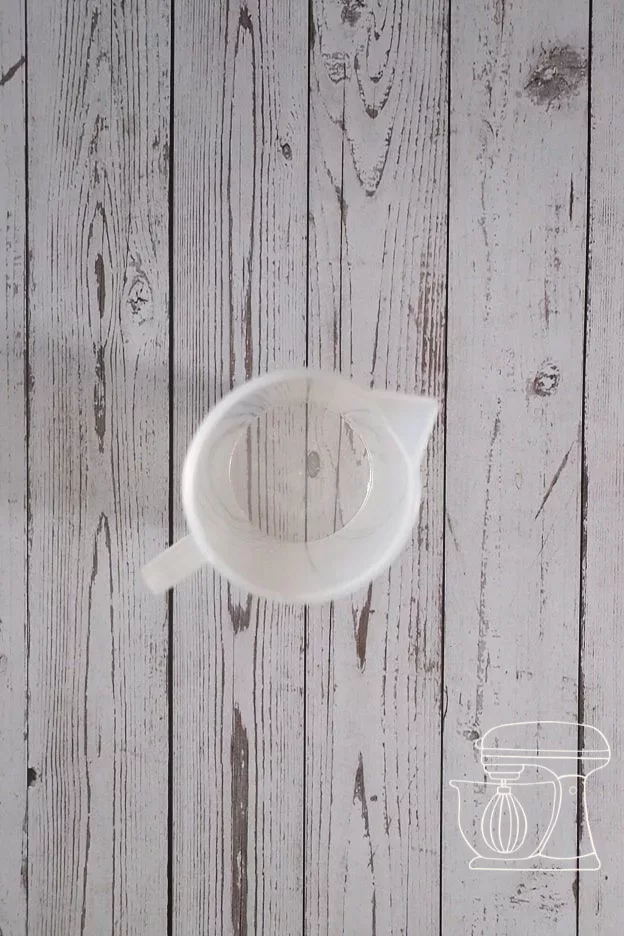
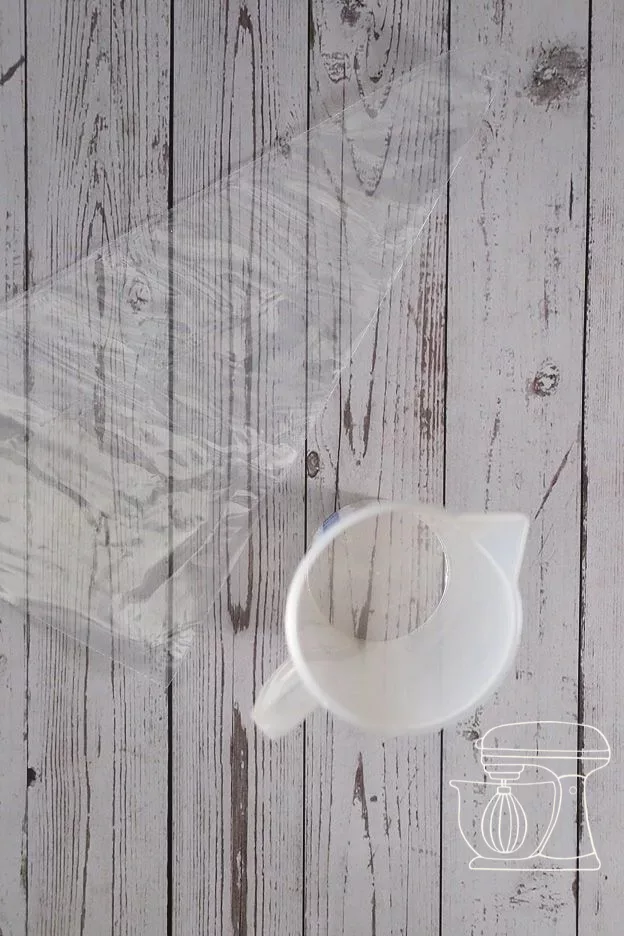
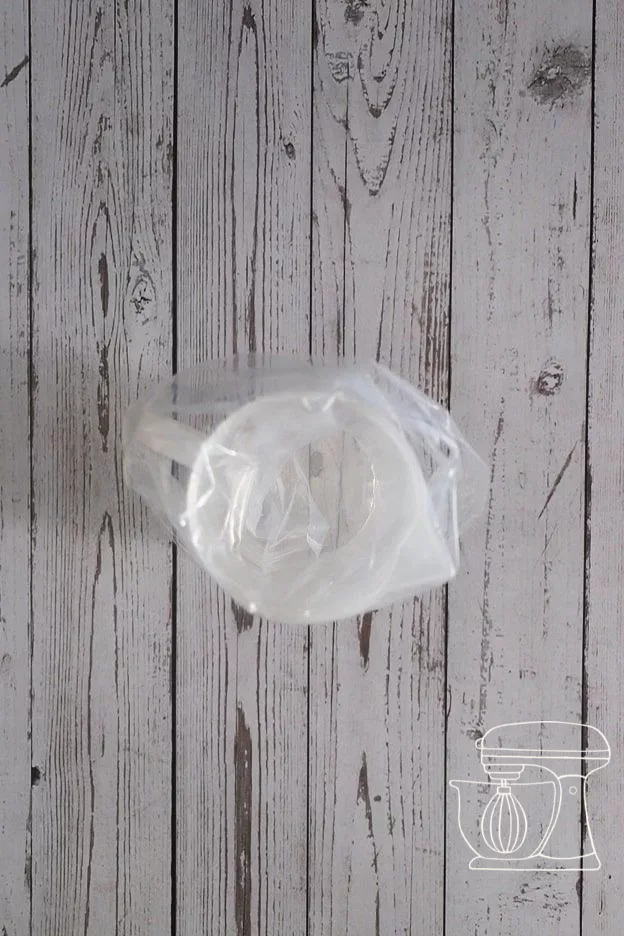
Disposable piping bag, 41 cm, 24 pcs
Fill and chill
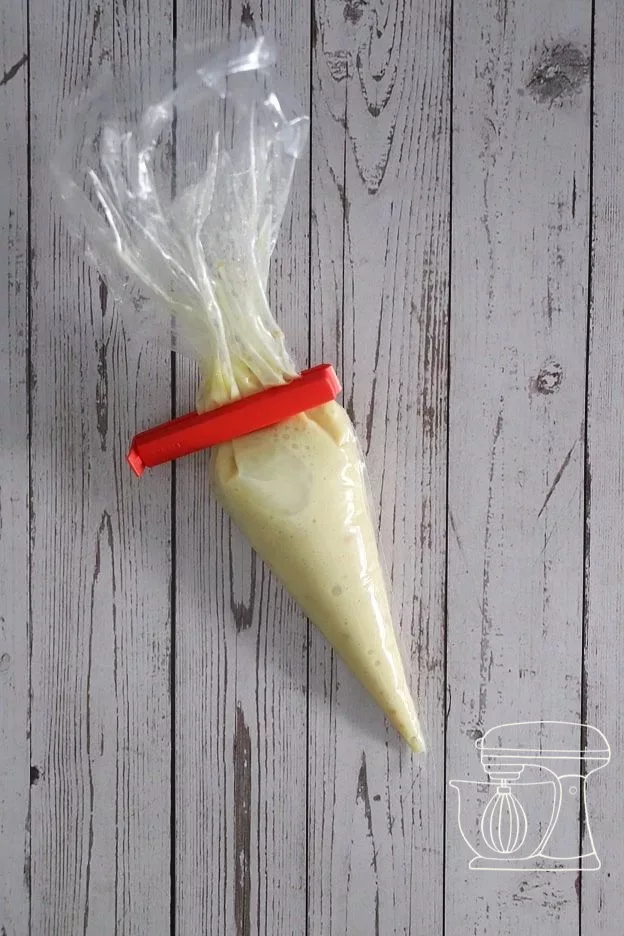
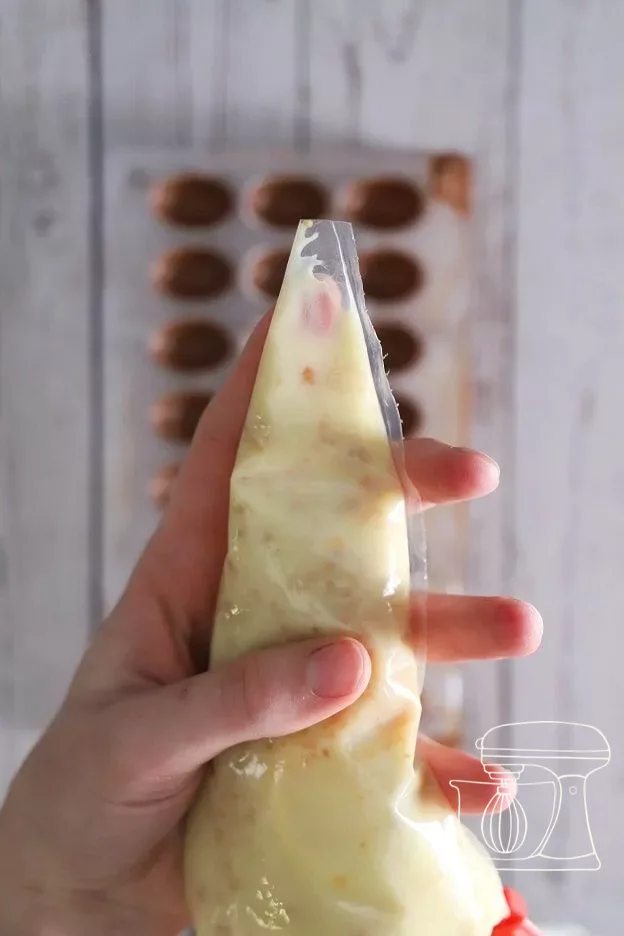
Pour the ganache into the bag and seal the end with a clip. Keep the bag in the fridge while you prepare the chocolate shells.
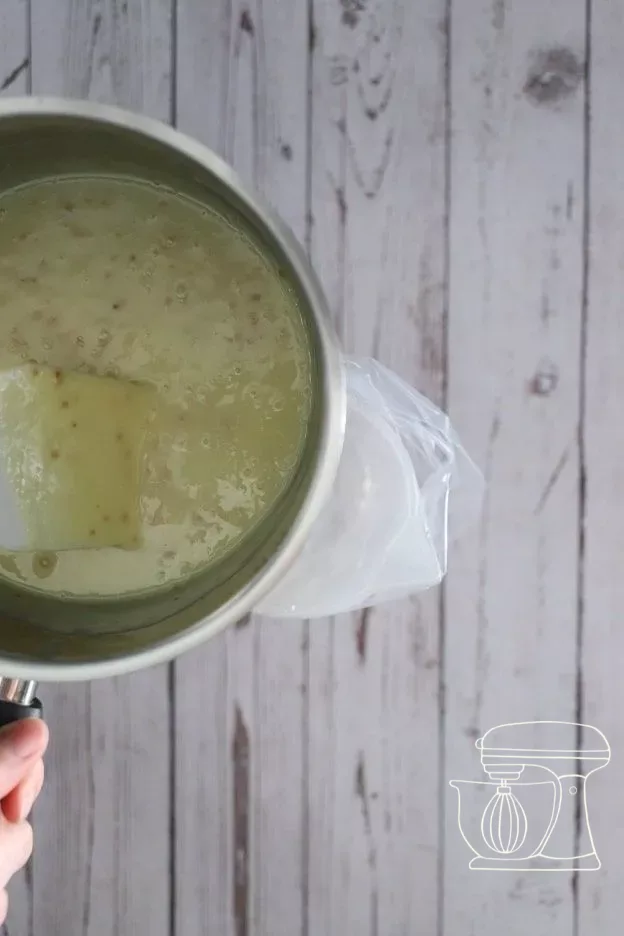
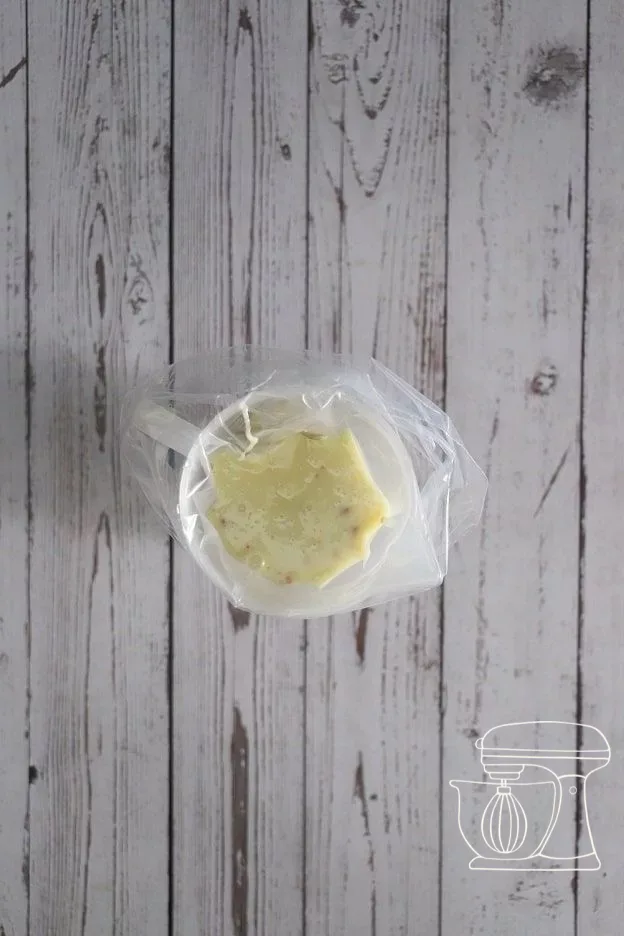
Chocolate shells
Melt the chocolate
Now the milk chocolate gets tempered. Don't worry: if you stick to the temperatures, everything will work out perfectly!
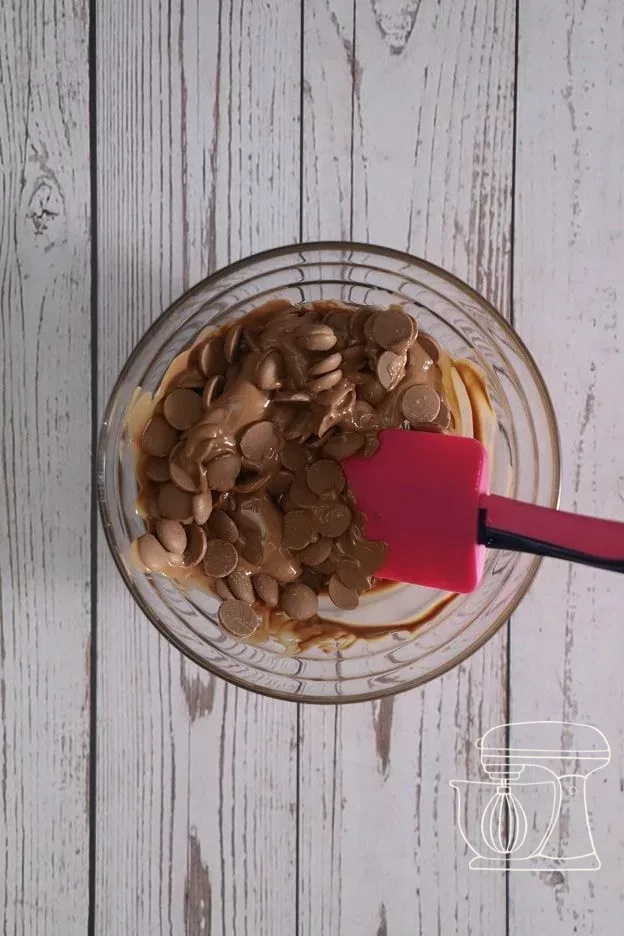
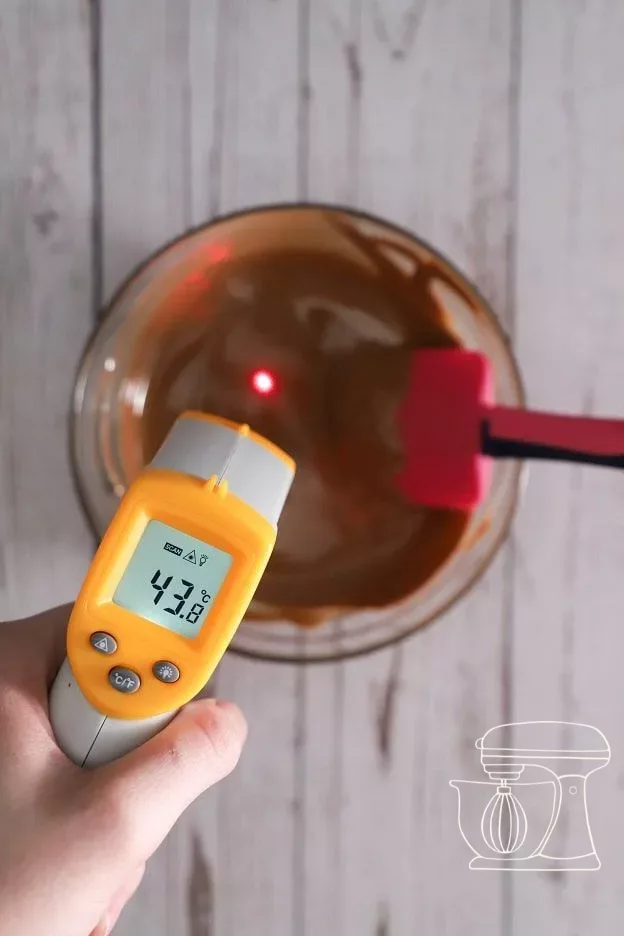
Warm 180 g Milk couverture in the microwave at 600 watts for 1 minute, then stir it well with a dough scraper. The chocolate should reach 43 to 45 °C. If it is too cold, microwave it again at 600 watts for a few seconds. It must not rise above 50 °C, or it will burn. I measure the temperature with an infrared thermometer, which is super handy.
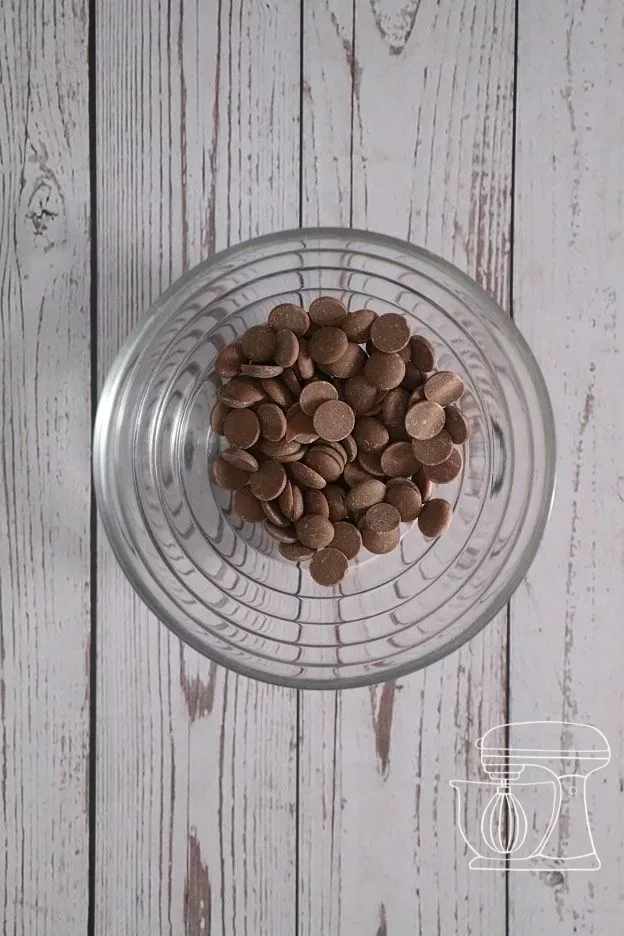
Milk couverture drops 500 g
Infrared thermometer
Cool down with couverture drops
Once the chocolate has the right temperature, add 60 g Milk couverture. Stir well and let the drops melt slowly.
Important: do not heat the chocolate again now. If you kept to the temperatures beforehand, the drops will melt slowly and the chocolate will reach the right temperature on its own.
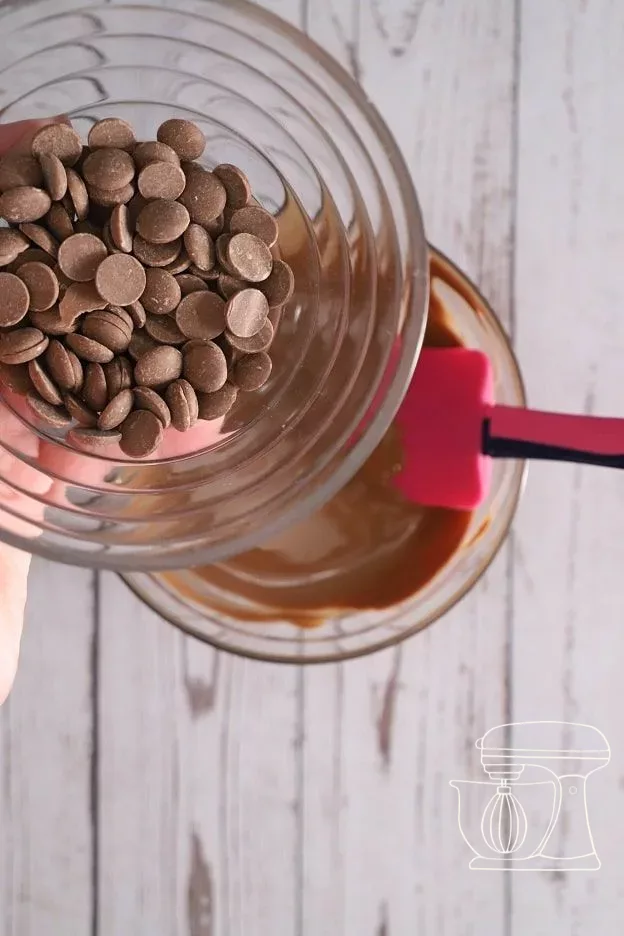
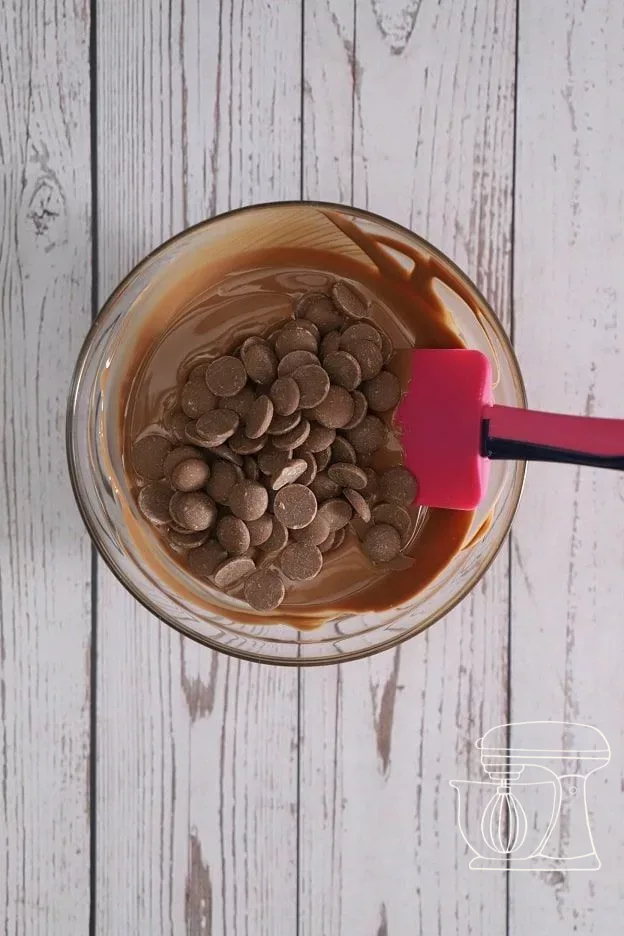
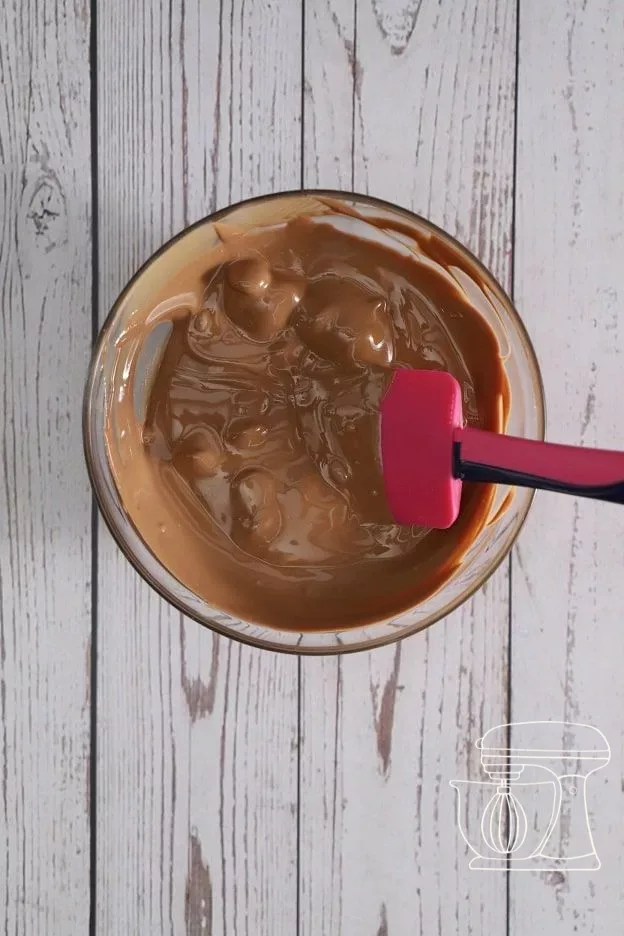
Milk couverture drops 500 g
Prepare the molds
In the meantime, prepare the molds. I use two molds for mini eggs. Polish all the cavities with a piece of cotton wool: this removes fine dust and prevents marks on the chocolate.
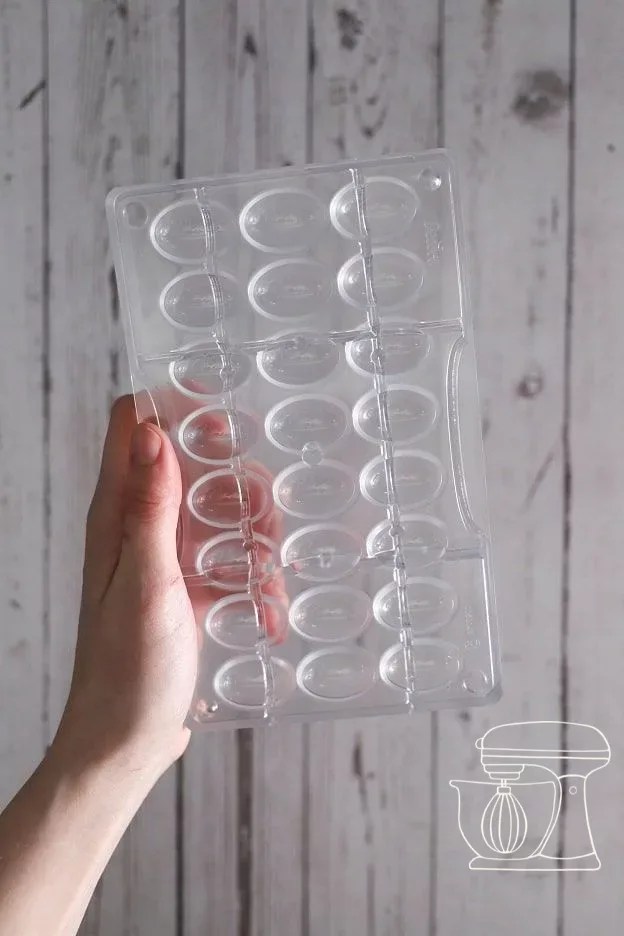
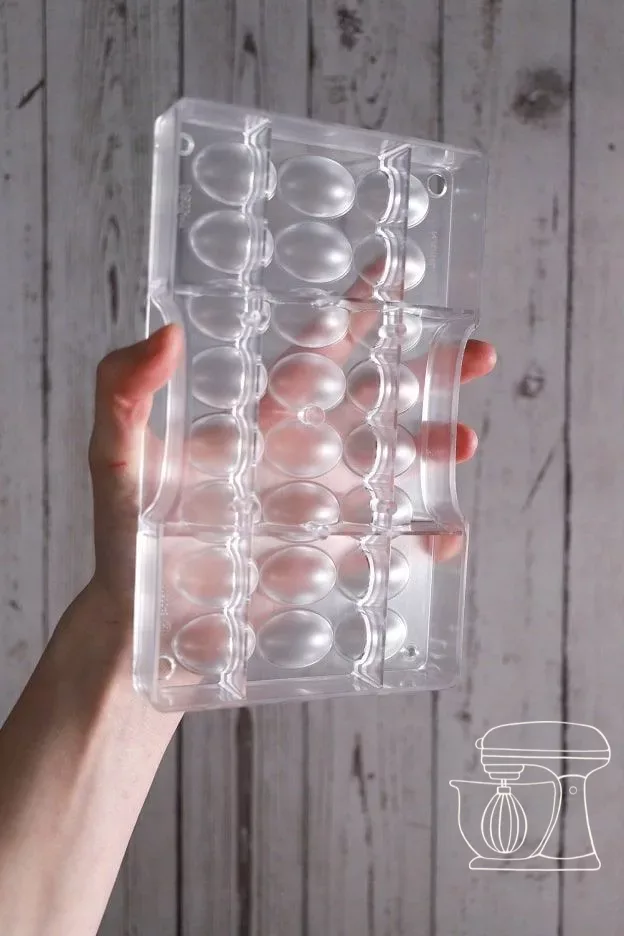
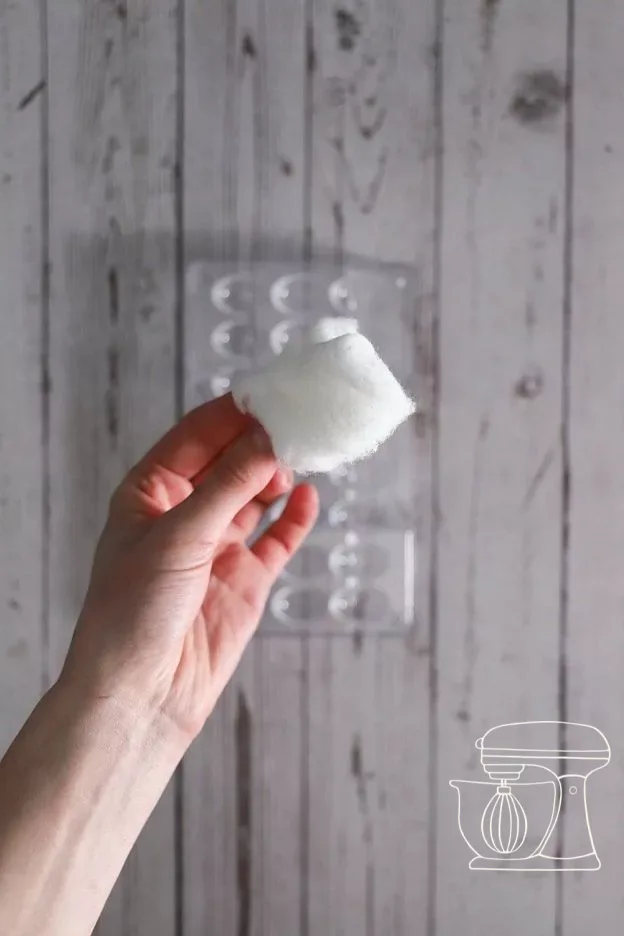
Mini Easter egg chocolate mold
Check the temperature
The chocolate is ready as soon as all the drops have melted. Check the temperature: it should now have dropped to 30 to 32 °C.
Place a cake rack over a catch tray or a sheet of baking paper so that excess chocolate is caught.
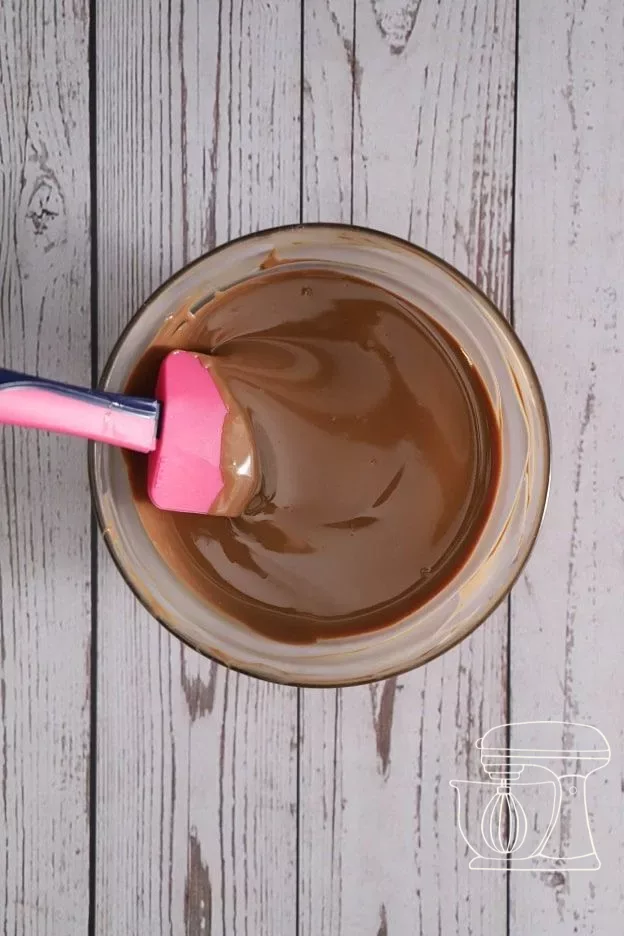
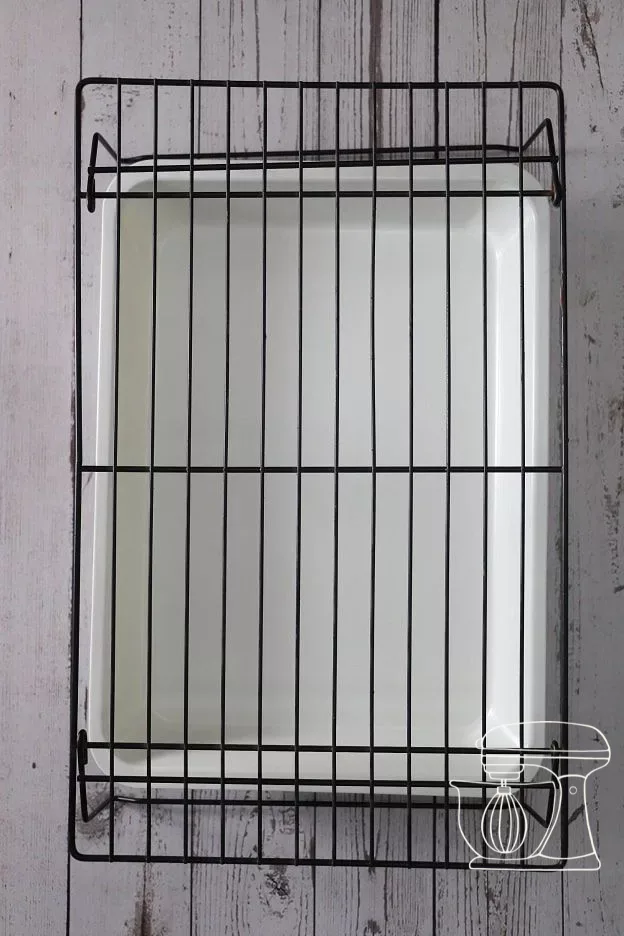
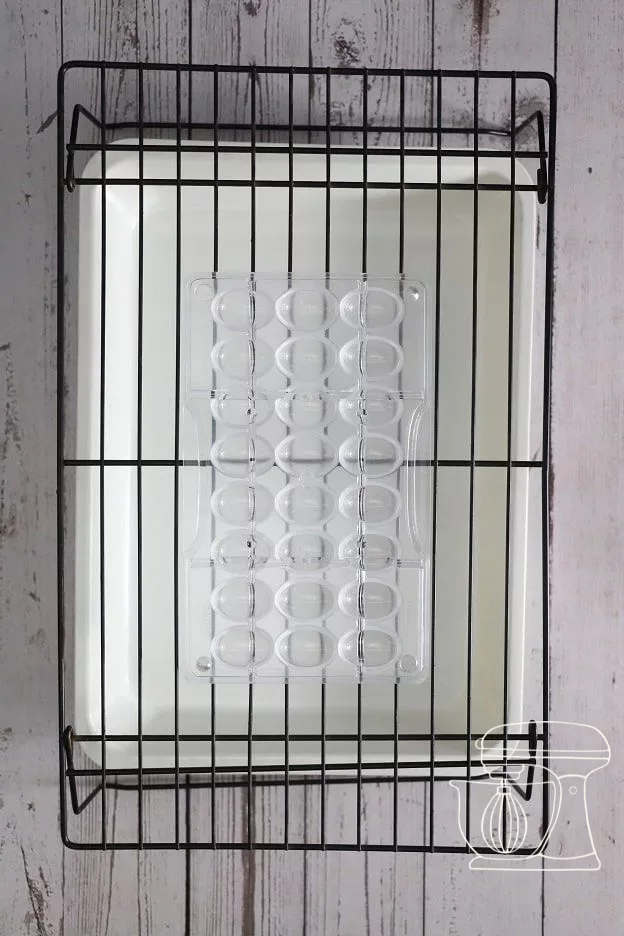
Pour the moulds
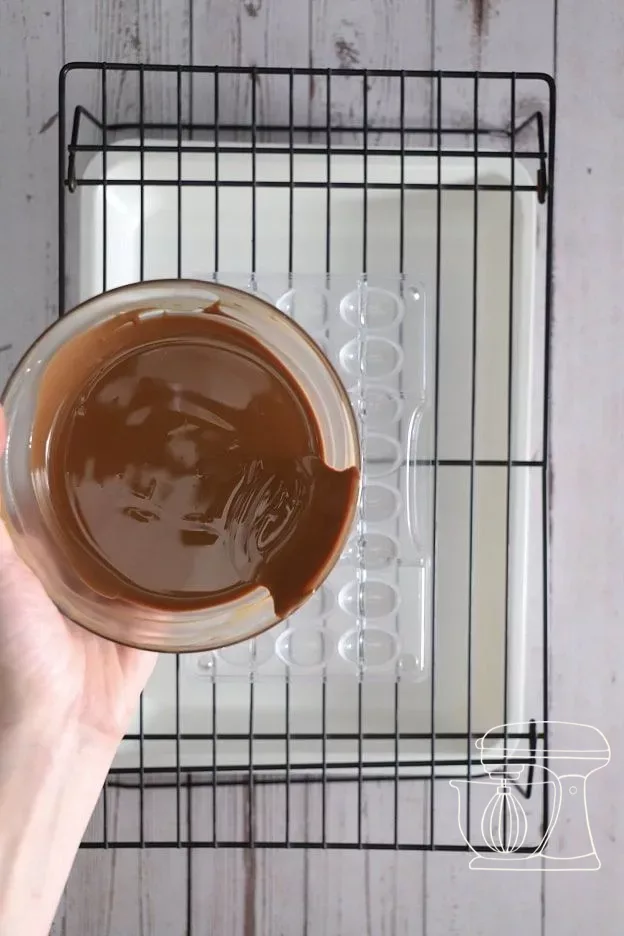
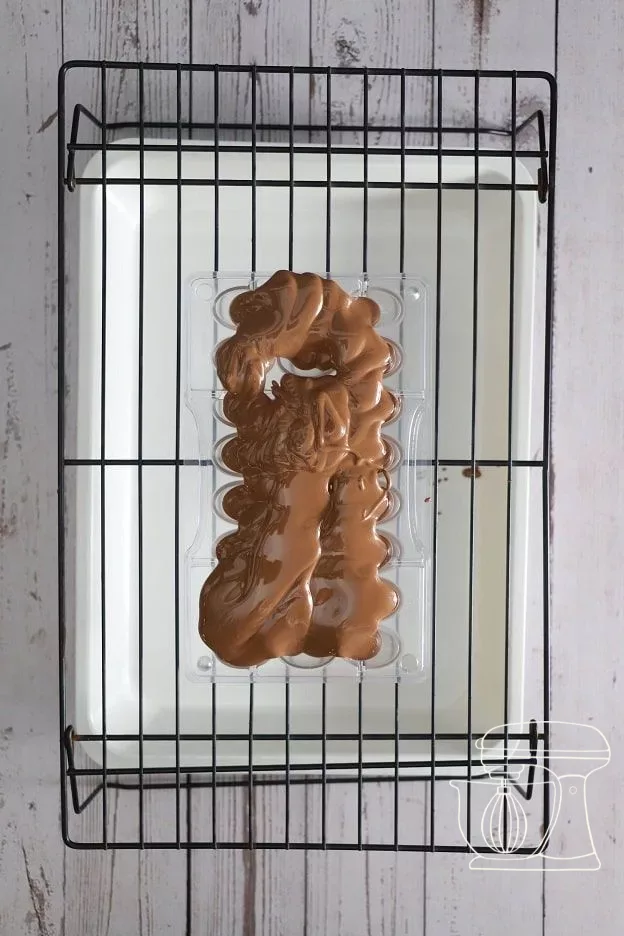
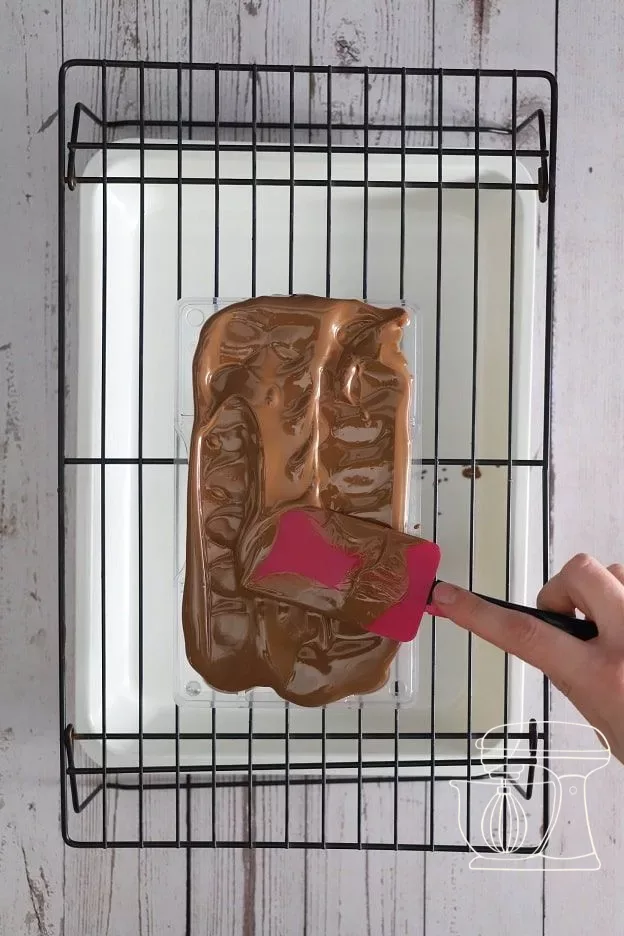
Pour the chocolate into the mould and fill the cavities completely. Spread the chocolate with a dough scraper so that it reaches every corner.
Plastic dough scraper
Let it drip off
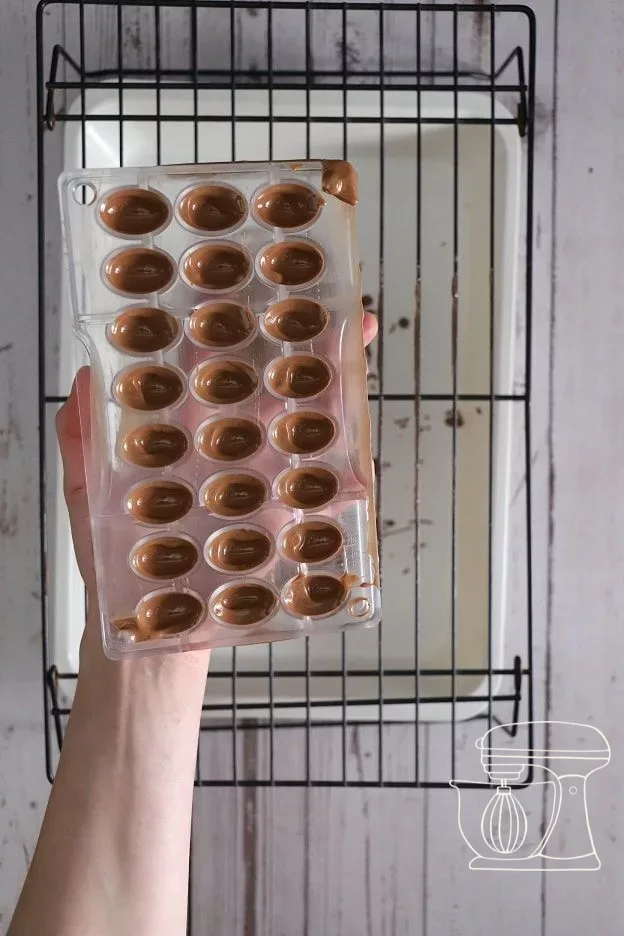
Turn the mould over and tap the handle of the chocolate scraper on it so that the excess chocolate runs out.
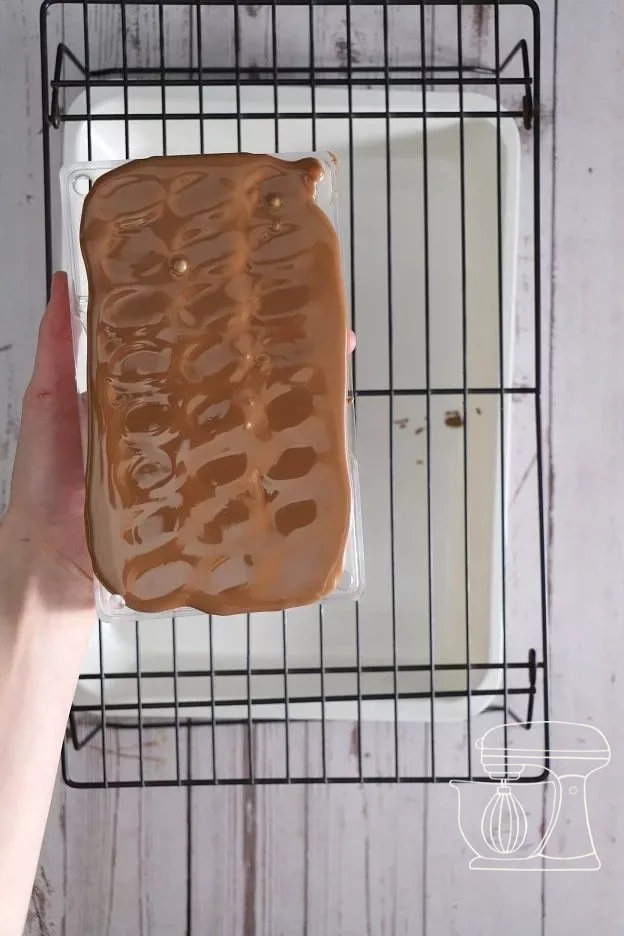
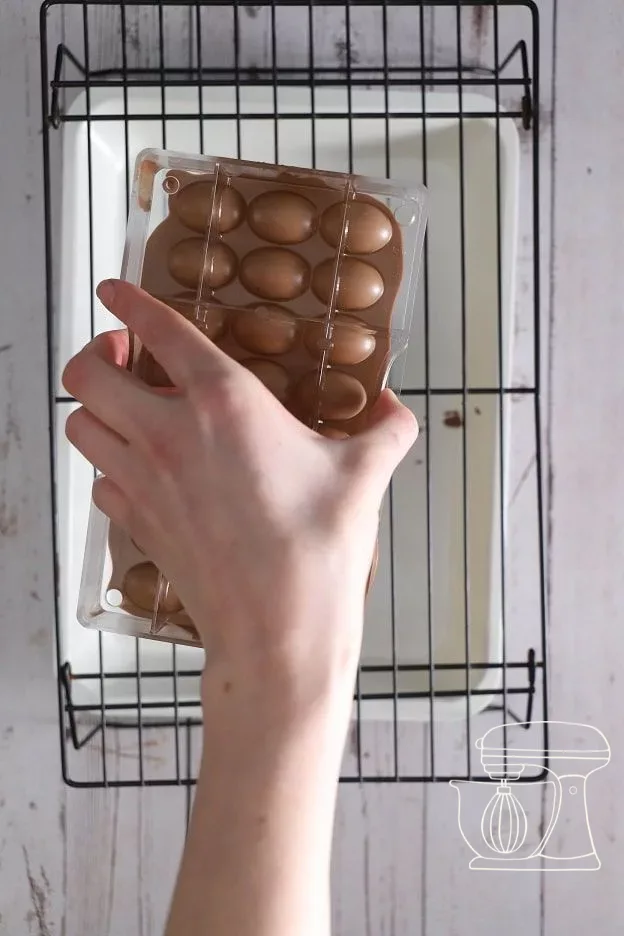
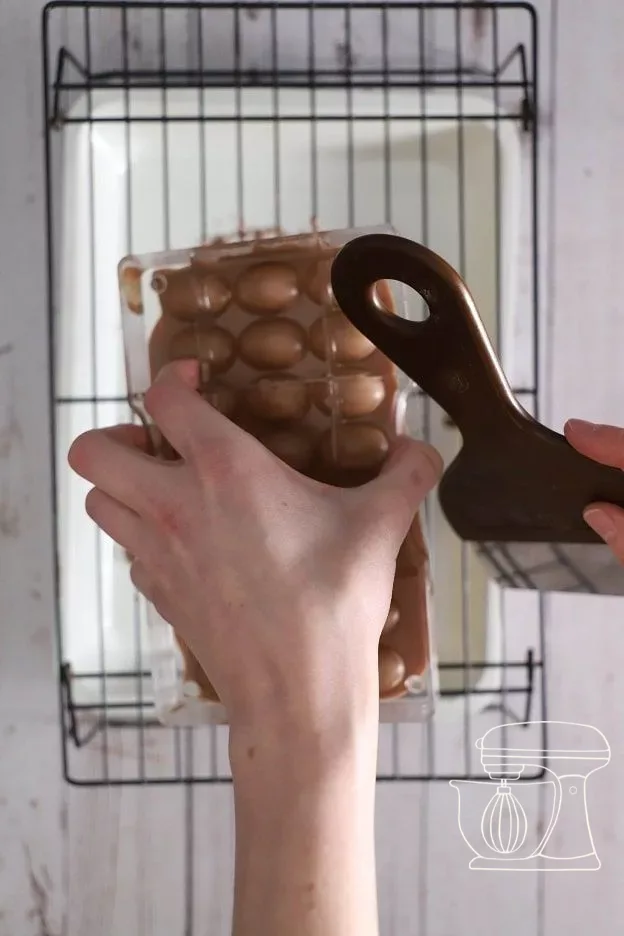
Chocolate scraper, 16 cm
Scrape off and chill
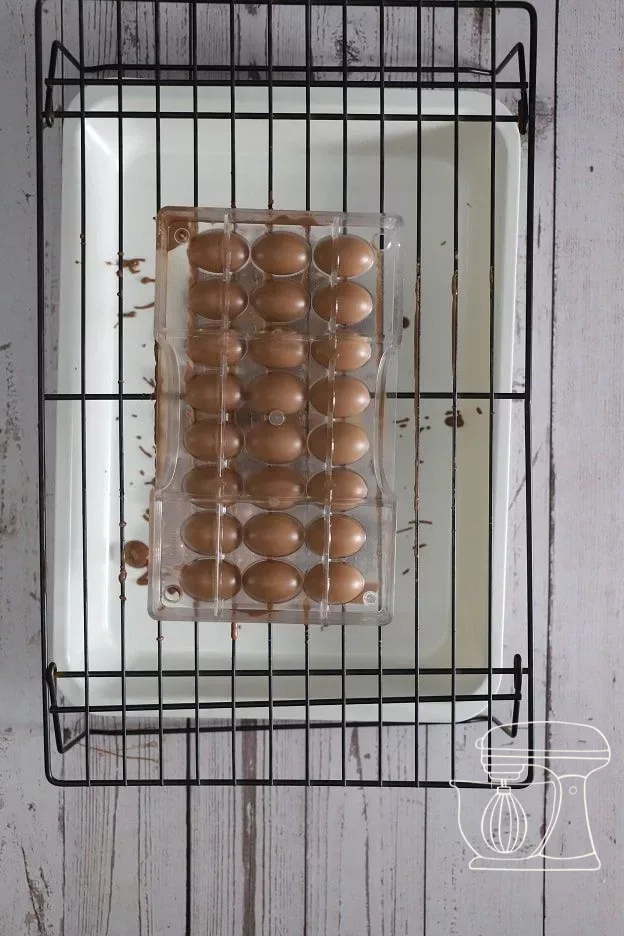
Scrape off the excess with the chocolate scraper so that the mould is as clean as possible. Place the mould upside down on the cake rack for 5 minutes. Scrape off the excess chocolate once more, then put the mould in the freezer for 10 minutes.
Check the temperature of the chocolate before you pour the second mould. It should always be between 30 and 32 °C. If it isn't, warm it in the microwave at 600 watts for 10 seconds.
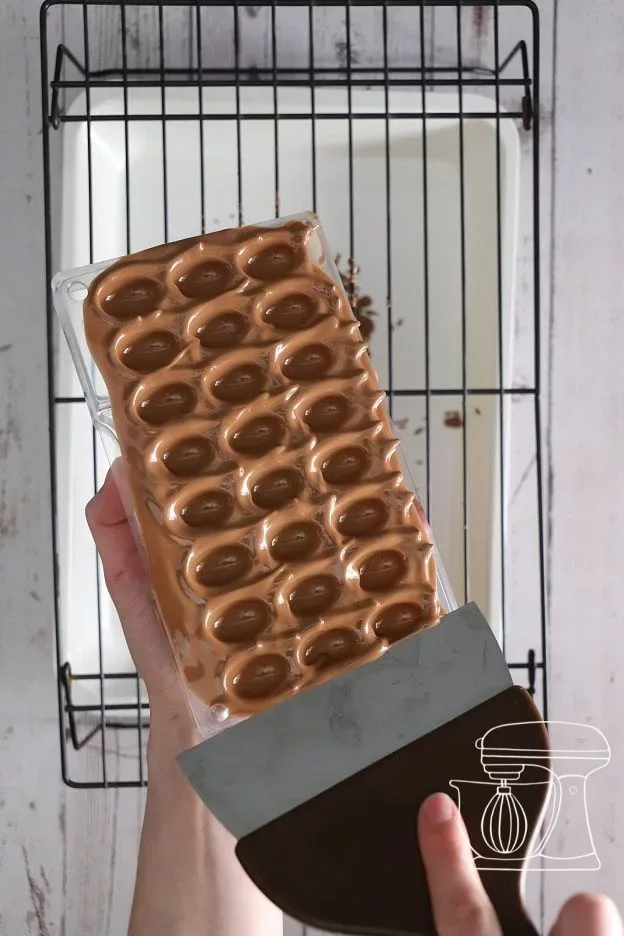
Chocolate scraper, 16 cm
Filling and closing
Fill with ganache
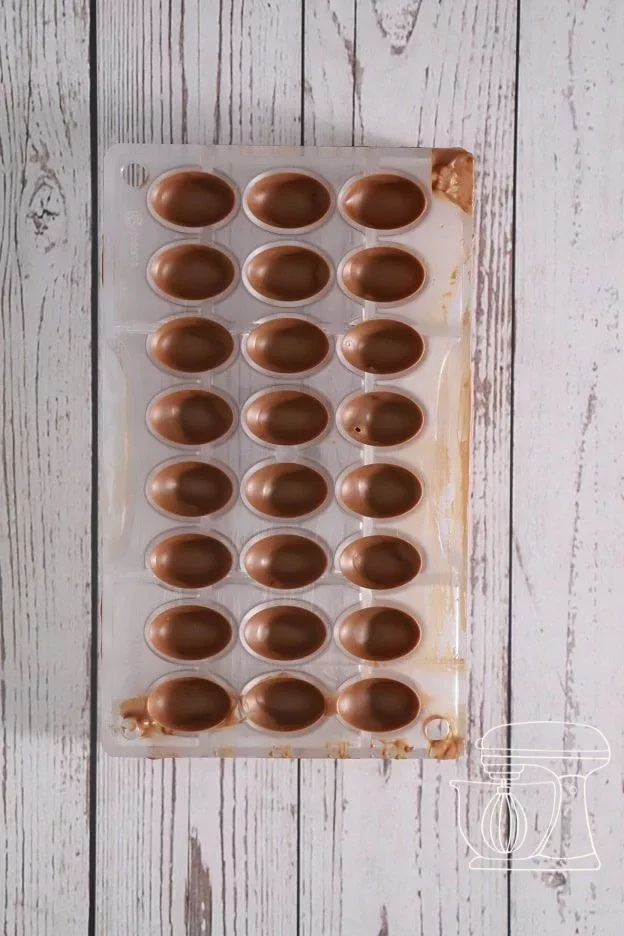
After the 10 minutes, fill the cavities with the ganache. Note: don't fill them completely, but leave about 2 mm free so that you can close them neatly later. Put the mould back in the freezer for another 10 minutes.
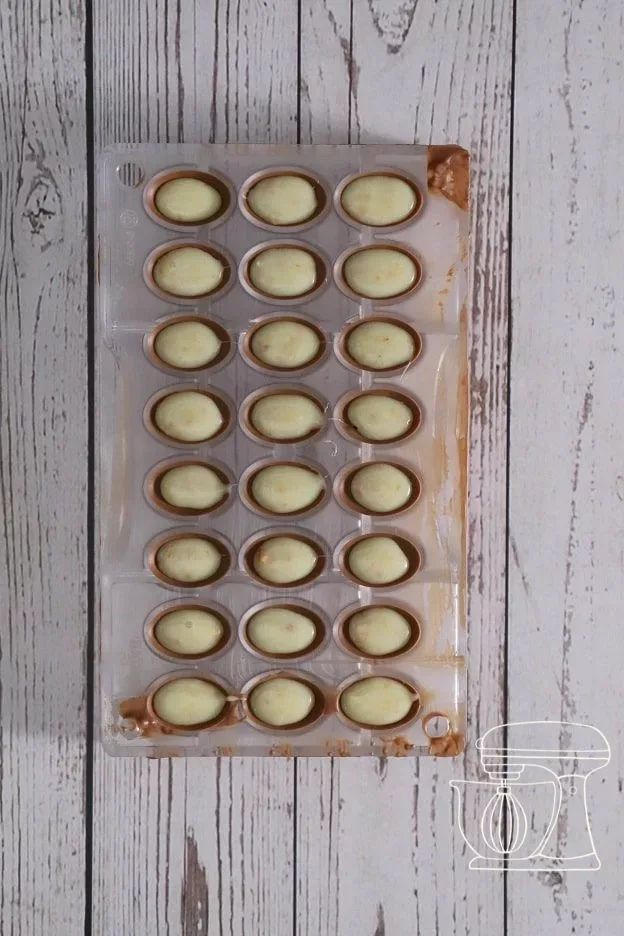
Retempering the chocolate
While the ganache sets in the freezer, check the temperature of the chocolate. If it is too cold, put it in the microwave for a few seconds. It should be 30 to 32 °C.
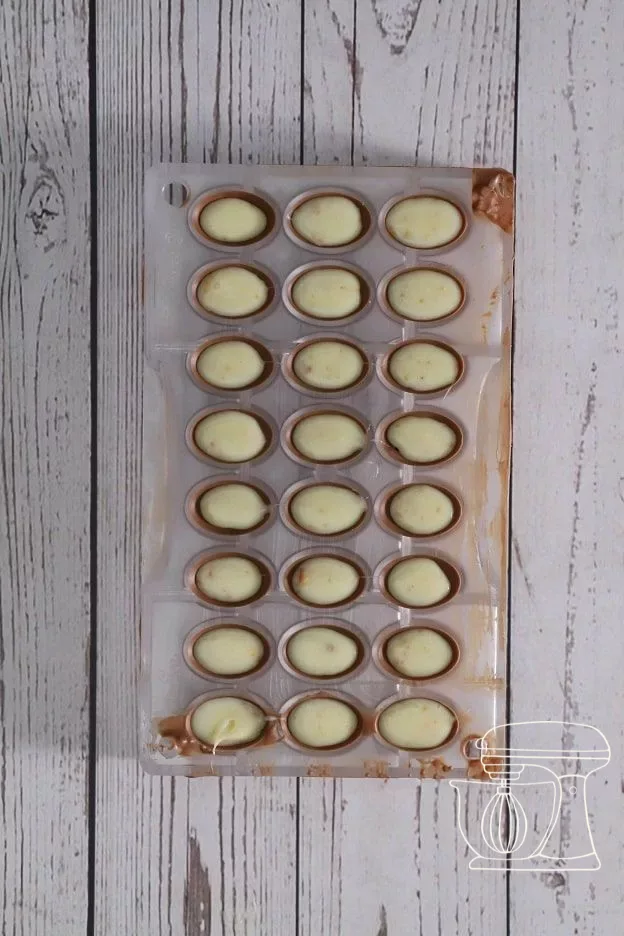
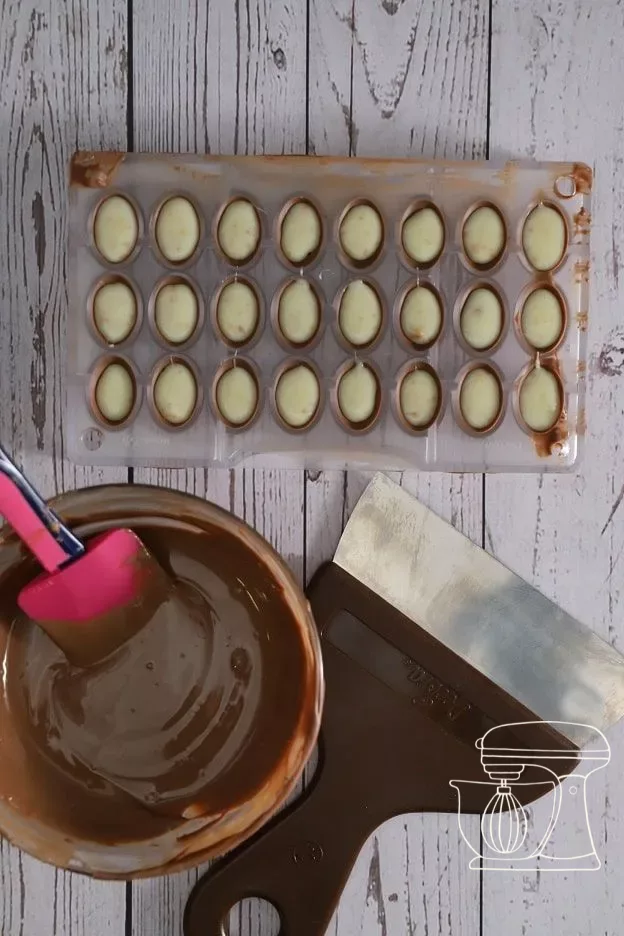
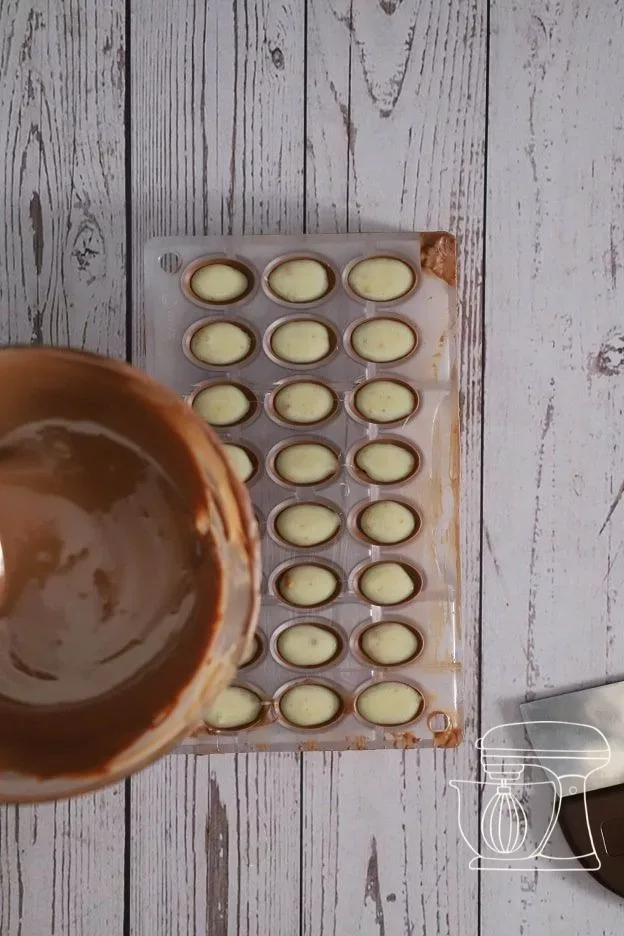
Closing
Pour the chocolate over the mould and spread it with a dough scraper. Use the chocolate scraper to remove the excess. If a little ganache shows through, that's no problem.
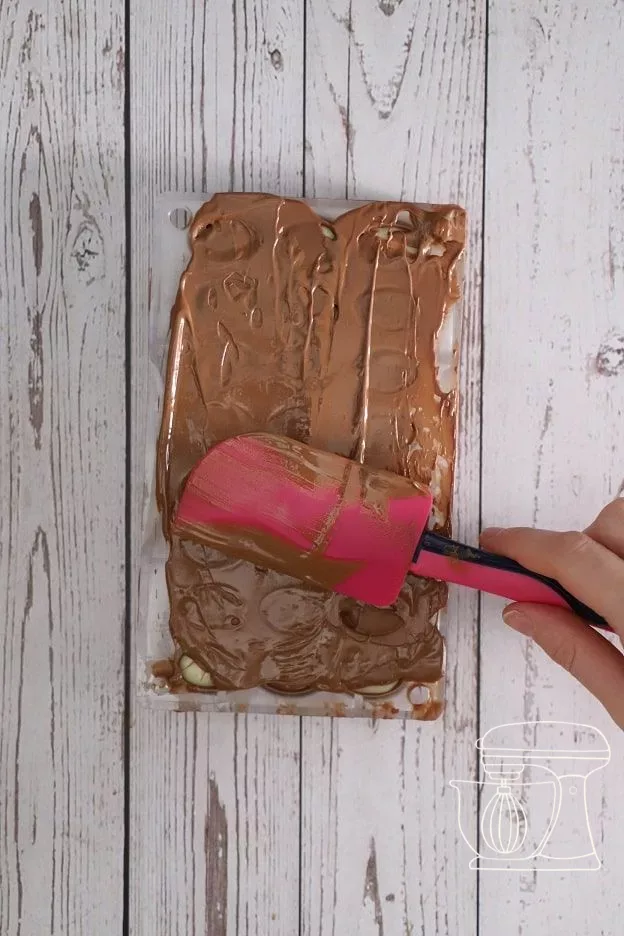
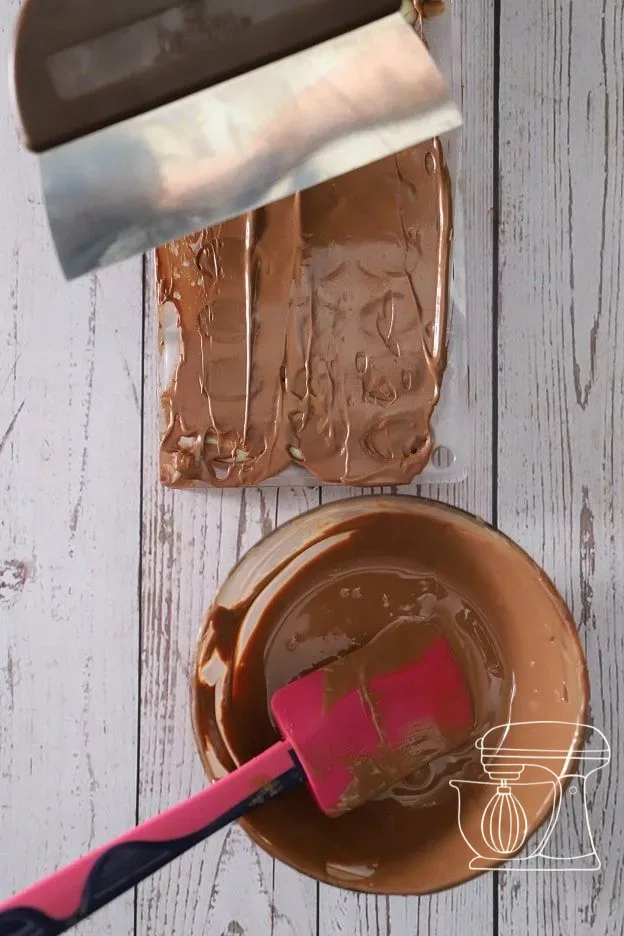
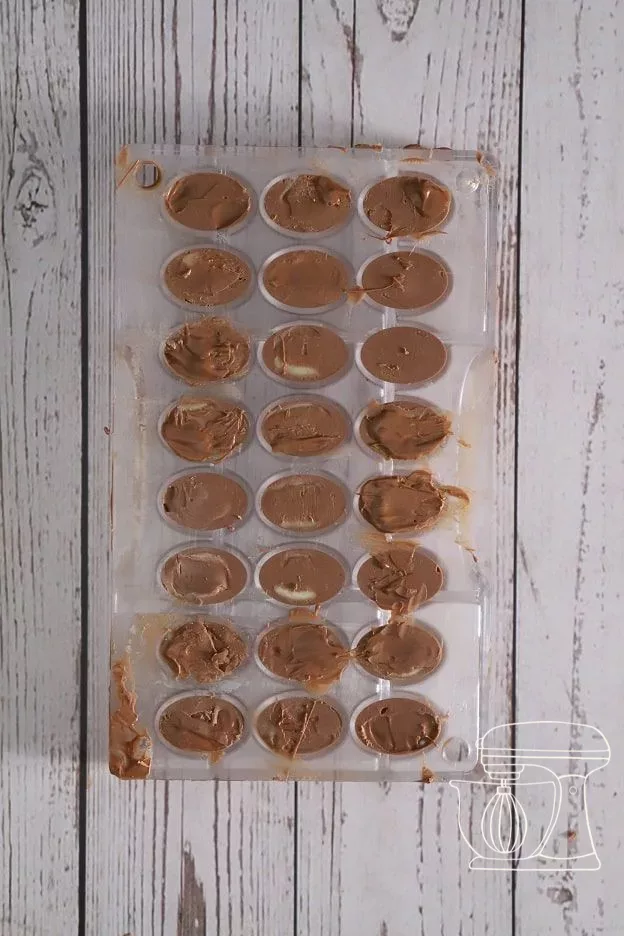
Chocolate scraper - 16 cm
Demoulding
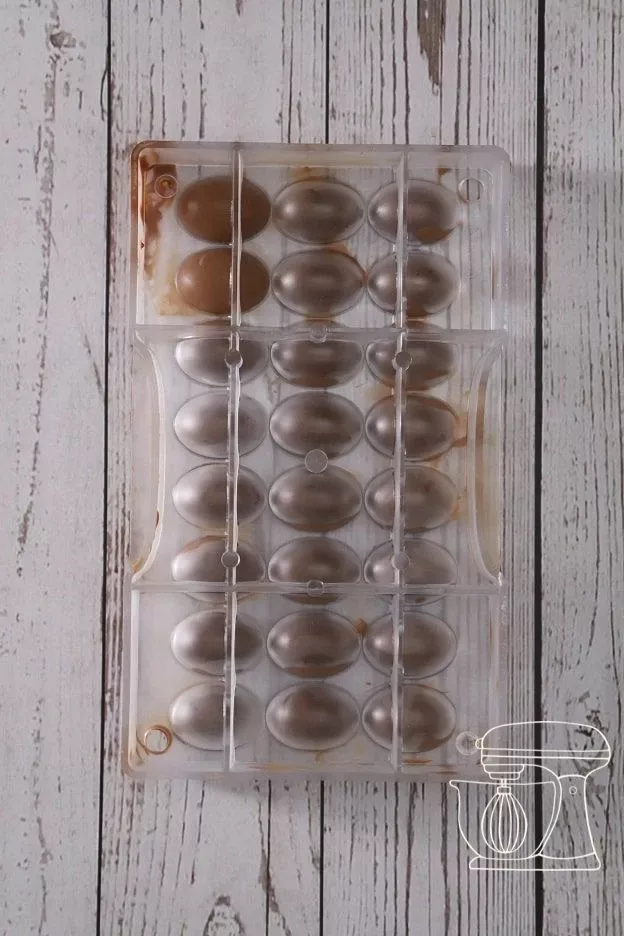
Put the moulds in the freezer for 10 to 15 minutes. If you have kept to the temperatures exactly, the egg halves will release from the mould by themselves!
If some are still stuck, tap the mould lightly on the work surface. If they still don't come loose, put the mould back in the freezer for a few more minutes and try again.
For assembling, warm an empty pot for just a few seconds so that the base becomes warm.
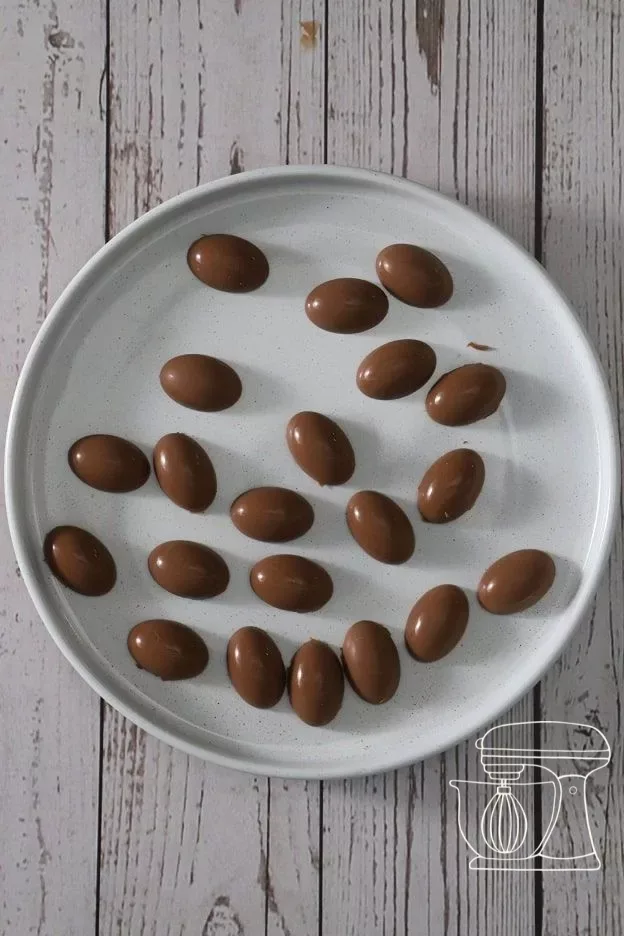
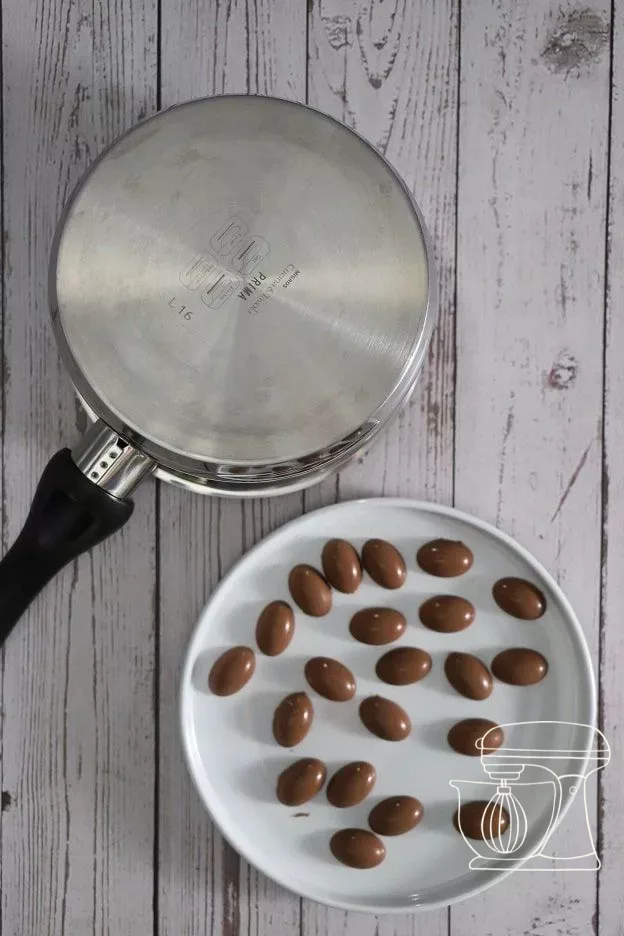
Assembling
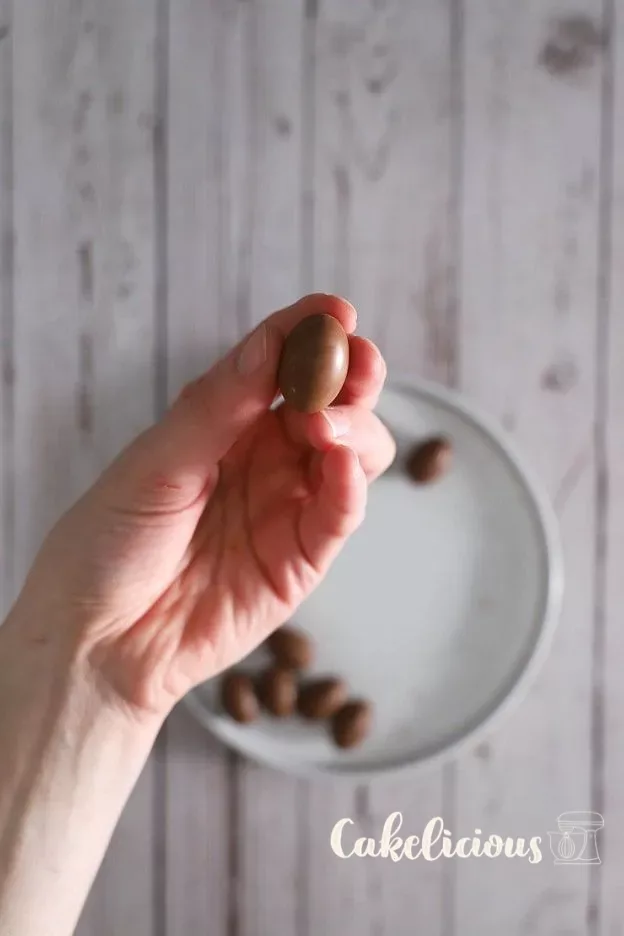
Place two egg halves with their flat side briefly on the warm base of the pot. This melts them very slightly so they stick together. Press the two halves together, and your little chocolate bonbons are ready!
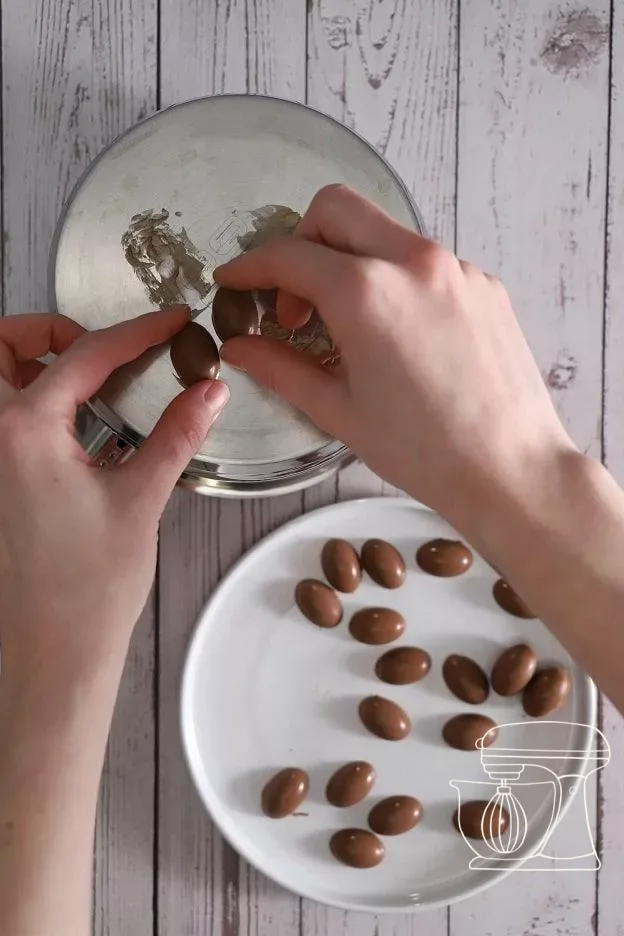
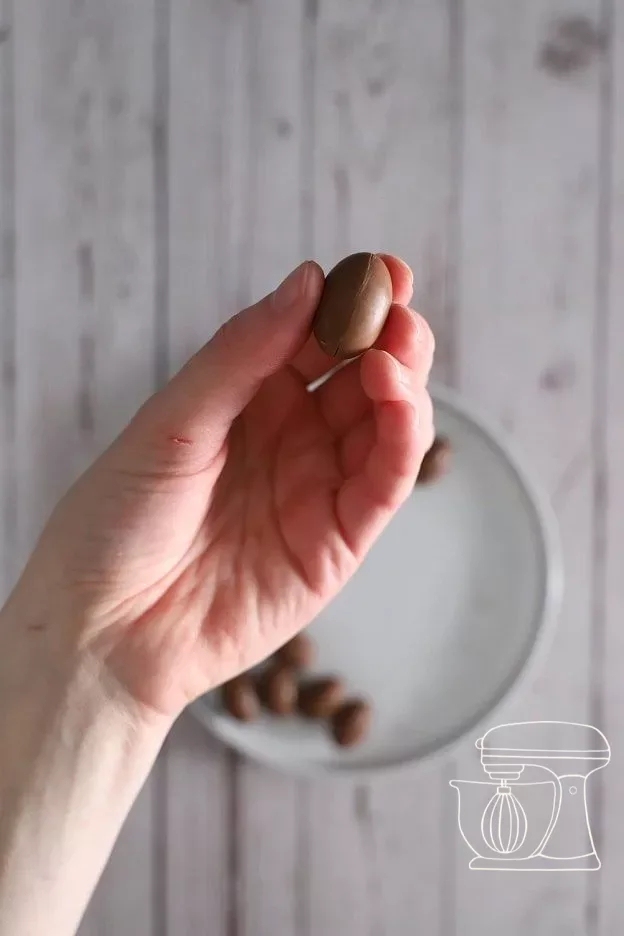
Packaging
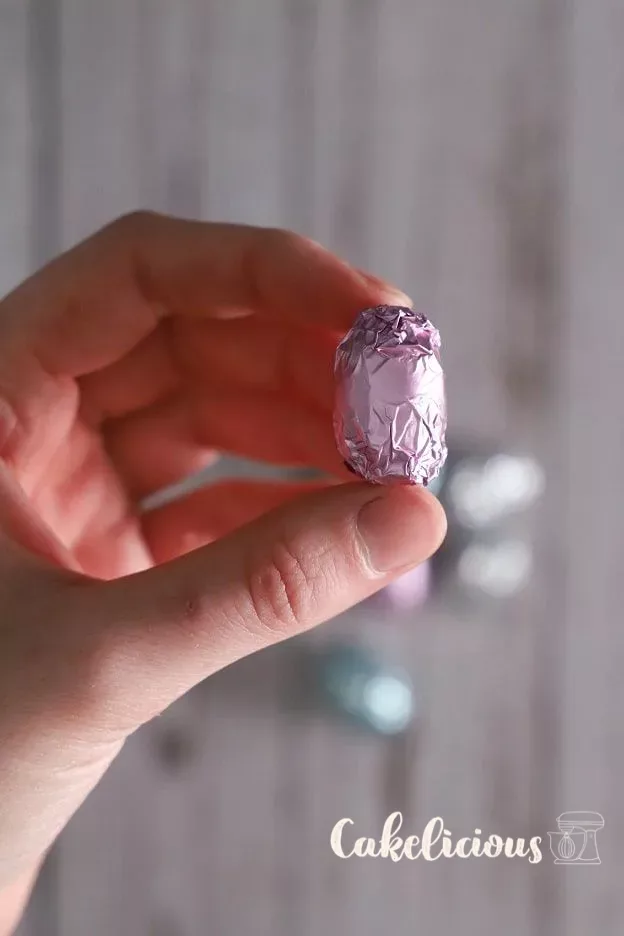
Wrapped in colourful foil, the chocolate bonbons look really pretty: ideal for a homemade Easter nest or as a gift. In any case, they were gone in no time at our place!
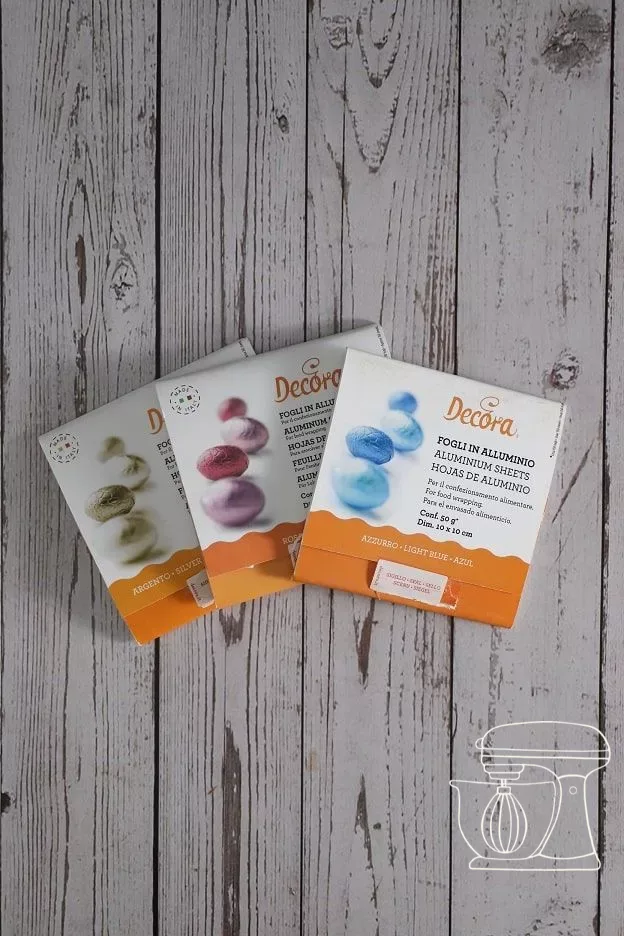
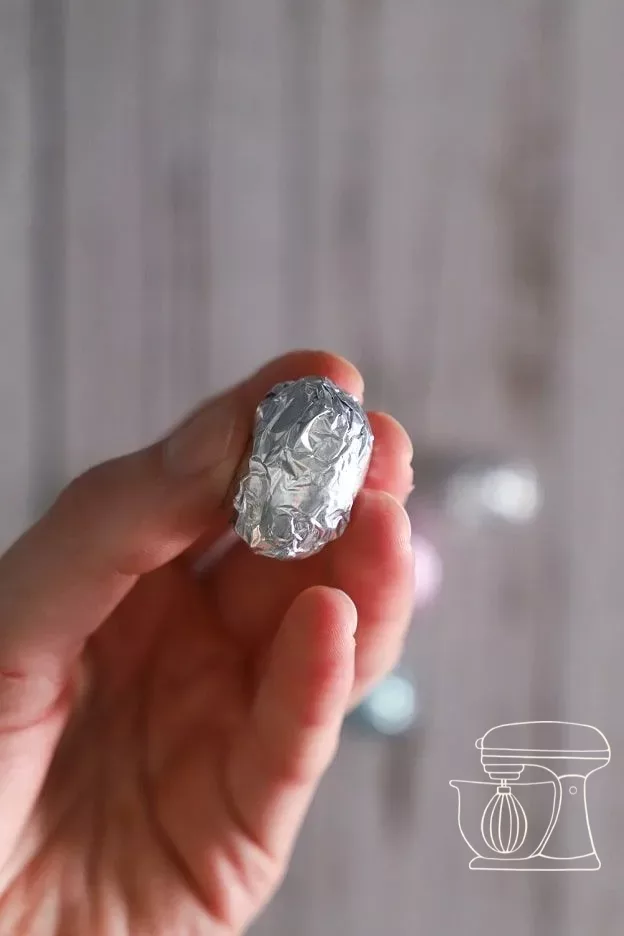
Aluminium foil for chocolate light blue
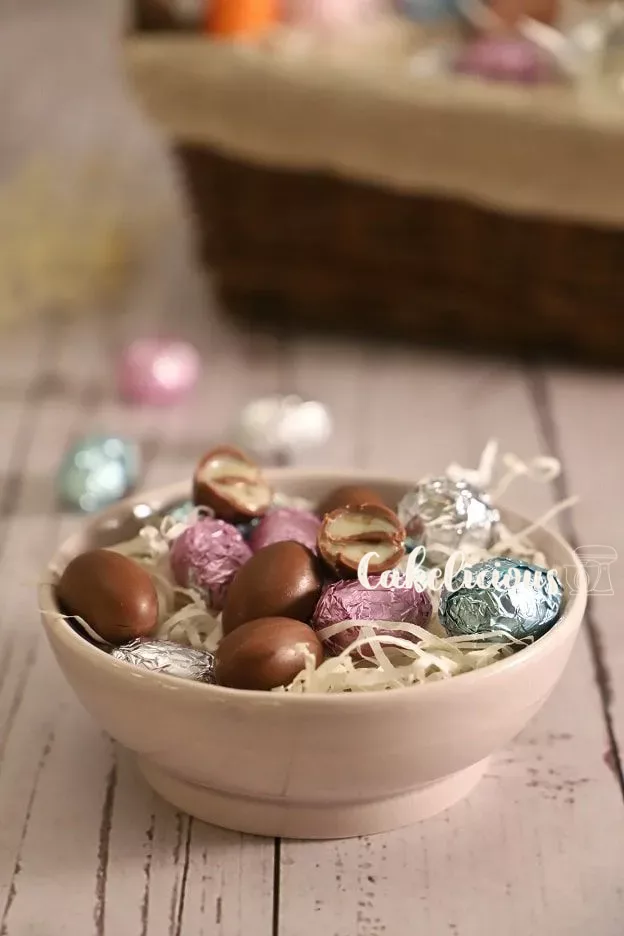
Homemade chocolate bonbons
Ingredients
Ganache
Chocolate shells
Equipment
Preparation
- Ganache: Melt 58 g white couverture. Stir 18 g whole milk powder, 33 g milk and 5 g sugar together, add the chocolate, heat to 70 °C while stirring, stir in 1 EL brittle, fill into the piping bag and chill.
- Tempering: Melt 180 g milk couverture to 43 to 45 °C (max. 50 °C), stir in 60 g couverture until 30 to 32 °C is reached.
- Shells: Polish the molds with cotton wool, pour in, tap out, let drain, scrape off, freeze for 10 min.
- Filling: Pipe in the ganache, leave 2 mm free, freeze for 10 min.
- Sealing: Cover with chocolate (30 to 32 °C), scrape off, freeze for 10 to 15 min, unmold.
- Assembling: Melt the halves on a slightly warmed pot base and stick them together, wrap in aluminium foil if desired.
Nutritional values per 100 g
Storage & shelf life
Everything for this recipe
Recommended by our bakery team: exactly the sizes this recipe has been tested with.
Ingredients
White couverture drops 500 g
Whole milk powder
Caramelised hazelnuts, 200 g
Milk couverture drops 500 g
Chocolate mold mini Easter eggs
Aluminium foil for chocolate, light blue
Accessories
Digital thermometer from -50 to 300°C
Disposable piping bag - 41cm - 24 pcs
Infrared thermometer
Plastic dough scraper
Chocolate scraper - 16 cm
Delivery in 1 to 2 working days · Free shipping from CHF 100
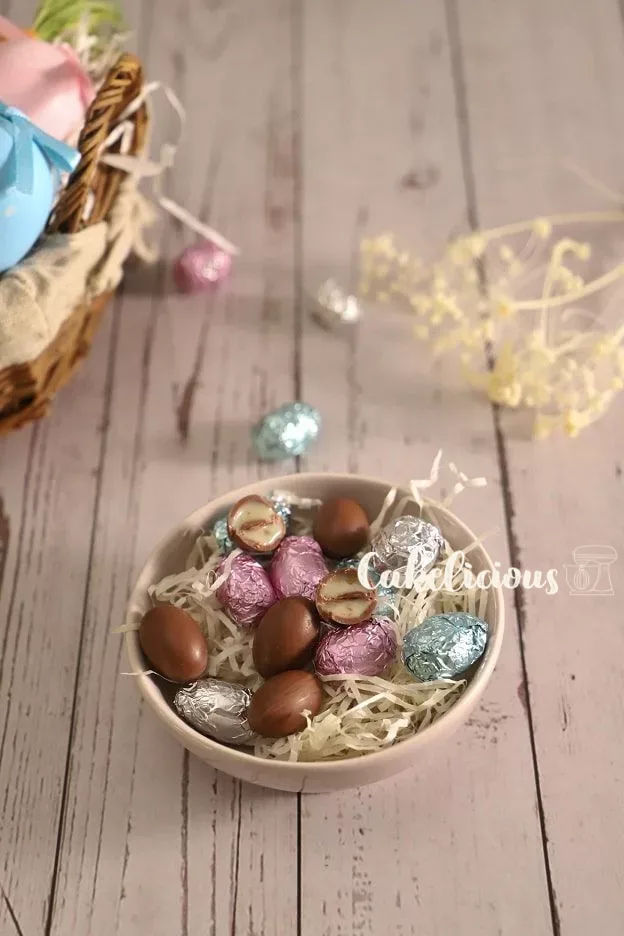
To make sure they turn out perfectly
I make this recipe with two moulds, so you only need to temper the chocolate once. With a single mould, halve the recipe and make it twice, but then you will also have to temper the chocolate twice.
Polish the cavities with cotton wool before pouring and keep the temperature at exactly 30 to 32 °C. Then the eggs will be shiny and will release from the mould all by themselves.
You will find everything worth knowing about tempering in our article Tempering chocolate properly.
Frequently asked questions
It comes down to quality and flowability. Chocolate bars are often not fluid enough to pour nice, thin chocolate shells. Couverture is made specially for Praline and patisserie and usually costs no more than chocolate bars, sometimes even less.
Yes. Then halve the recipe and make it twice. Note that you will also need to temper the chocolate twice.
Tap the mould lightly on the work surface. If they still don't come out, place the mould in the freezer for a few minutes and try again.
Print recipe
Choose what should appear on the printout.
Related posts
 Juicy Matcha Muffins with Pecan Nuts & White Chocolate
Matcha Iced Latte & Coconut Variant
Pull-apart bread with fresh wild garlic pesto
Mini Banana Bread with Chocolate Chips
Leave a comment
Comments
Question de Sylvie
By: Sylvie V. On 2022-05-05Bonjour !
Juste une petite question : quelle est la différence entre le chocolat en plaques et le chocolat de couverture ?
Merci et belle soirée.
Replied by: Karin On 2022-05-06