
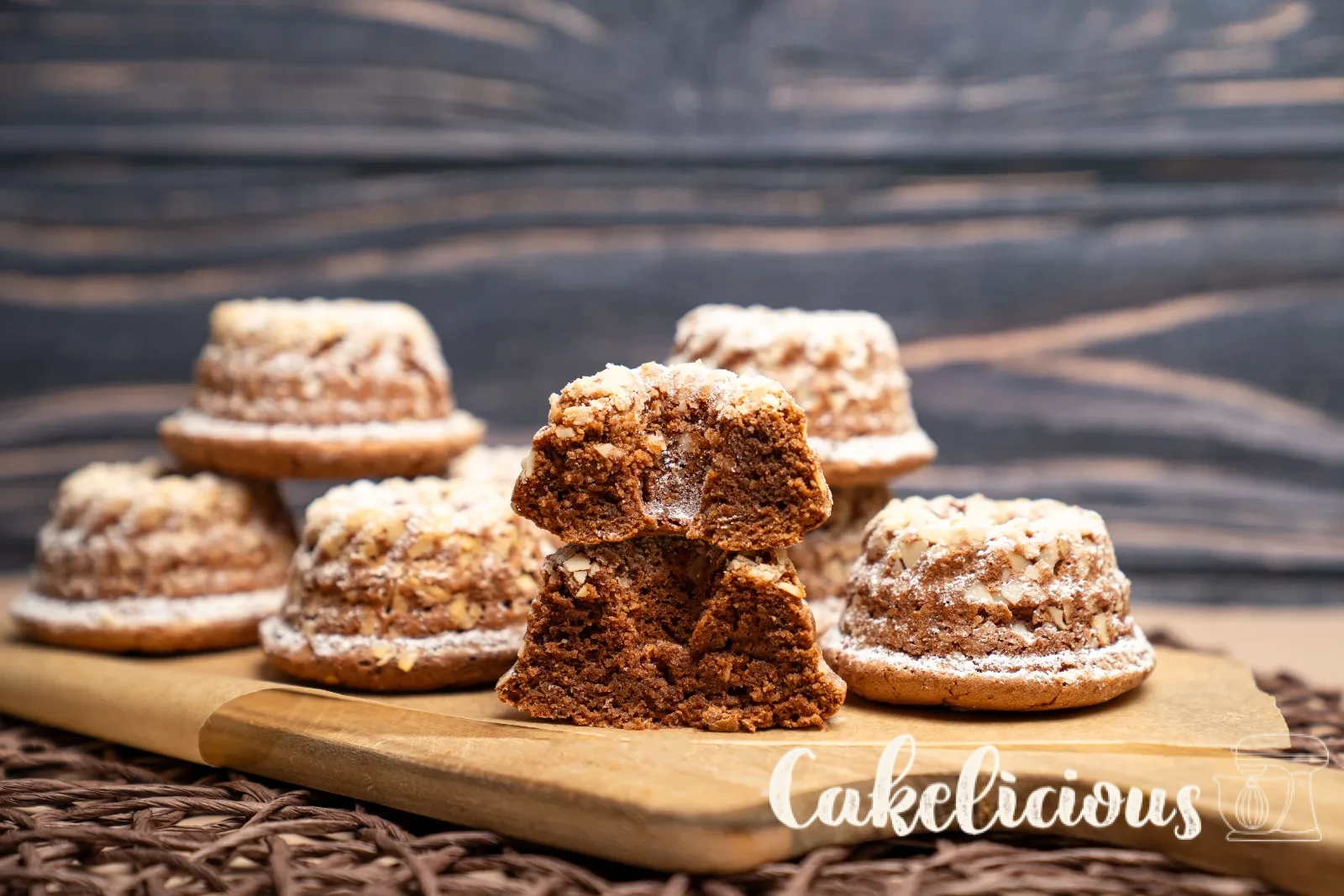
Mini Bundt Cakes with Chocolate and Hazelnuts
Chocolatey, nutty, airy – and without baking powder
Hello foodie
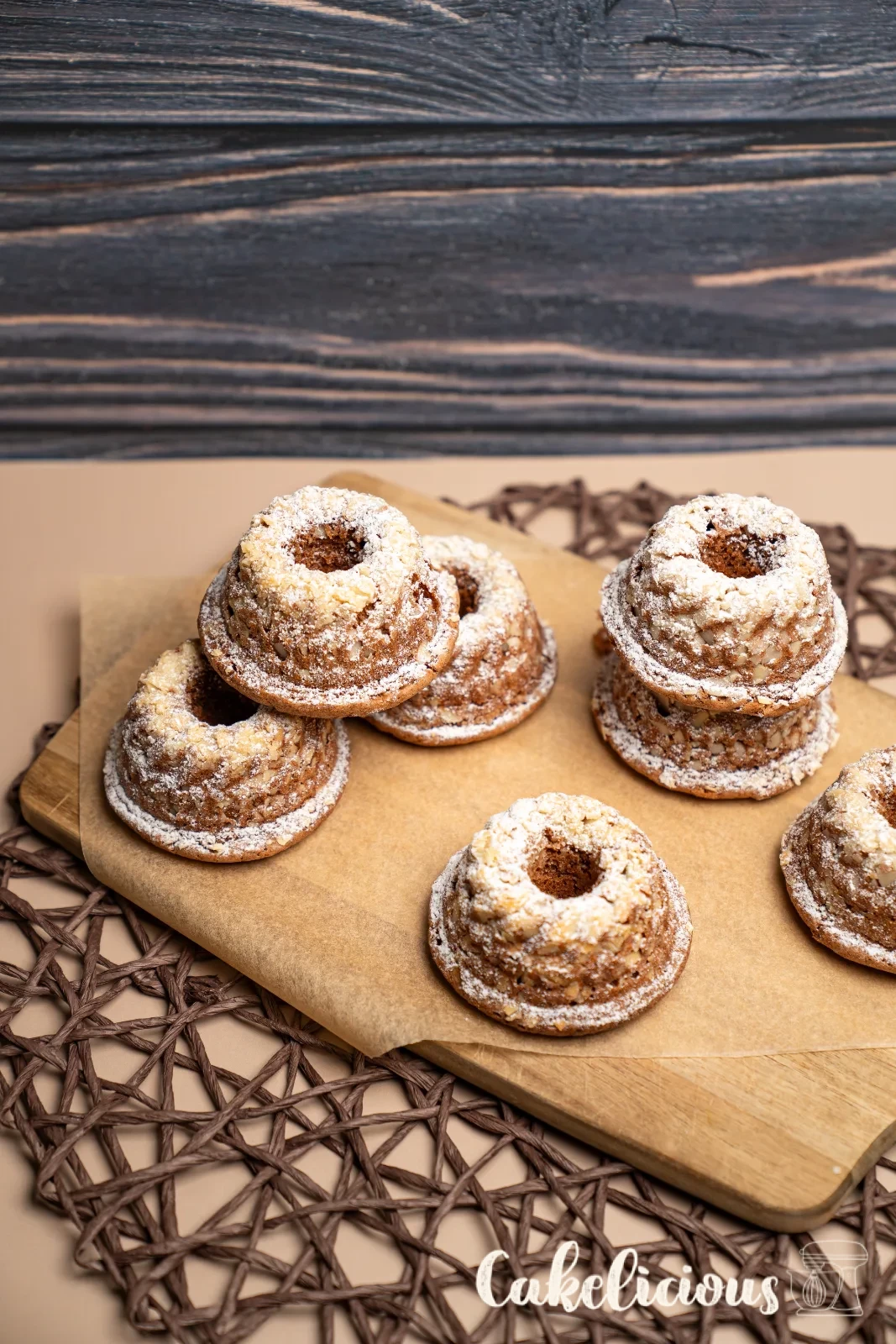
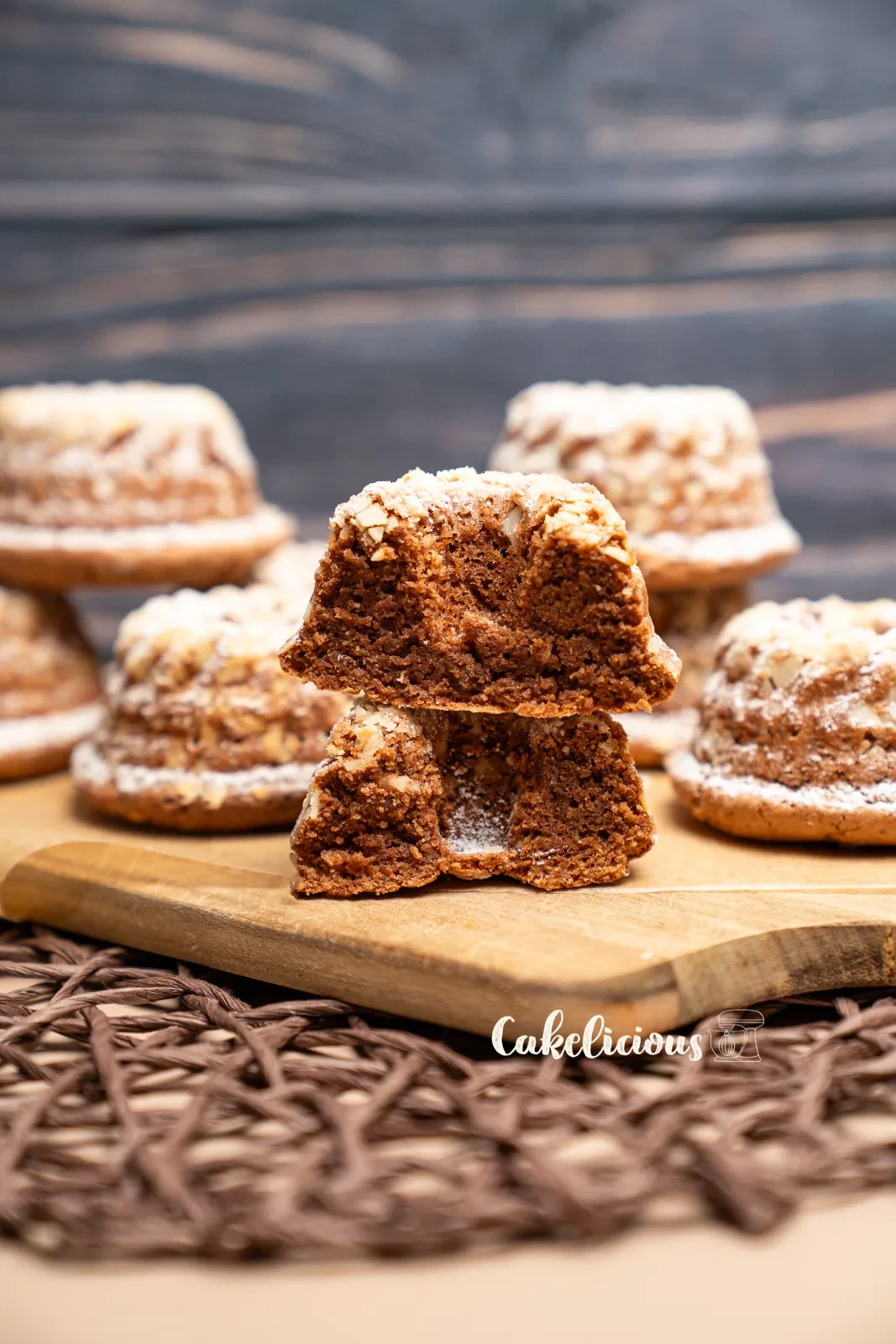
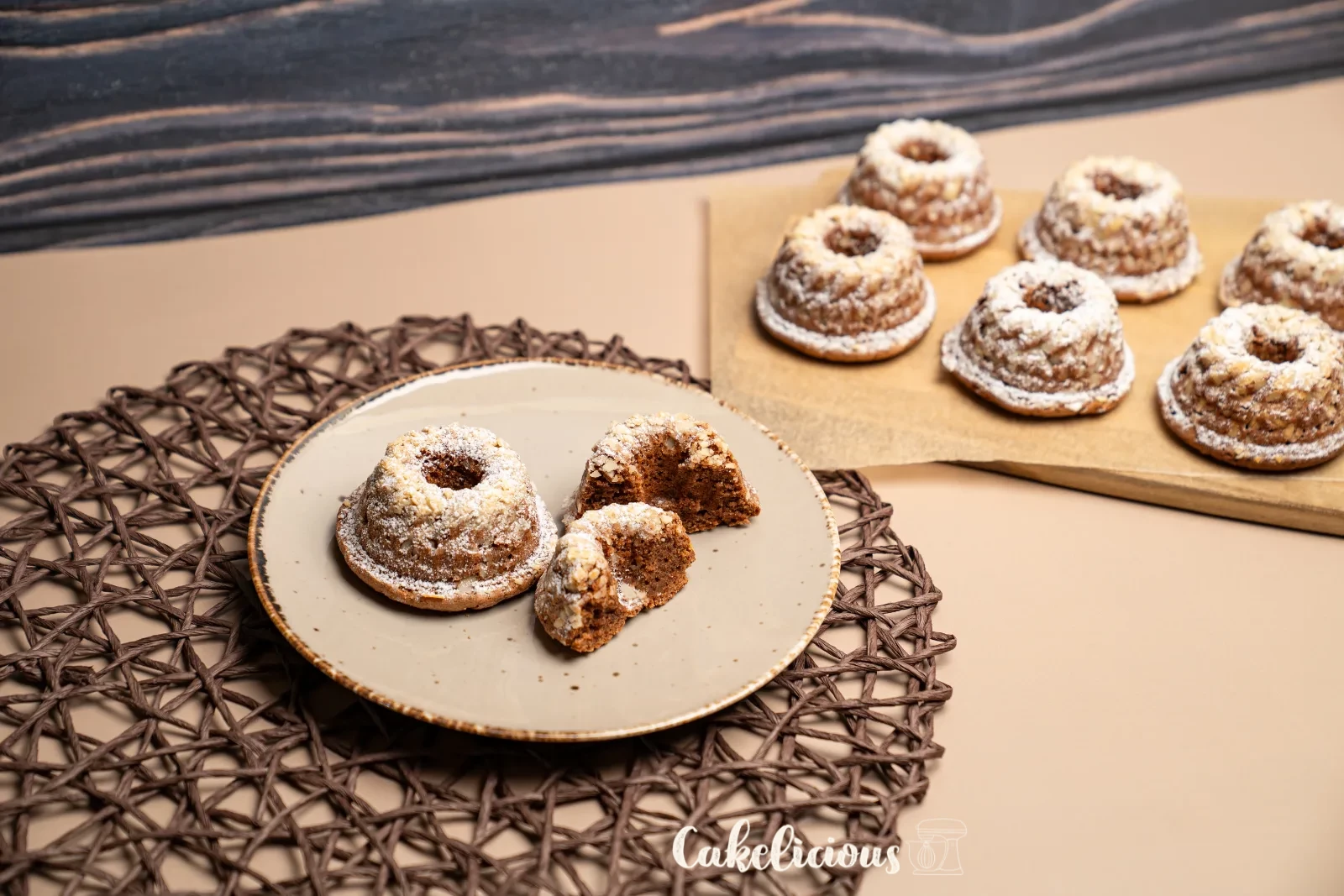
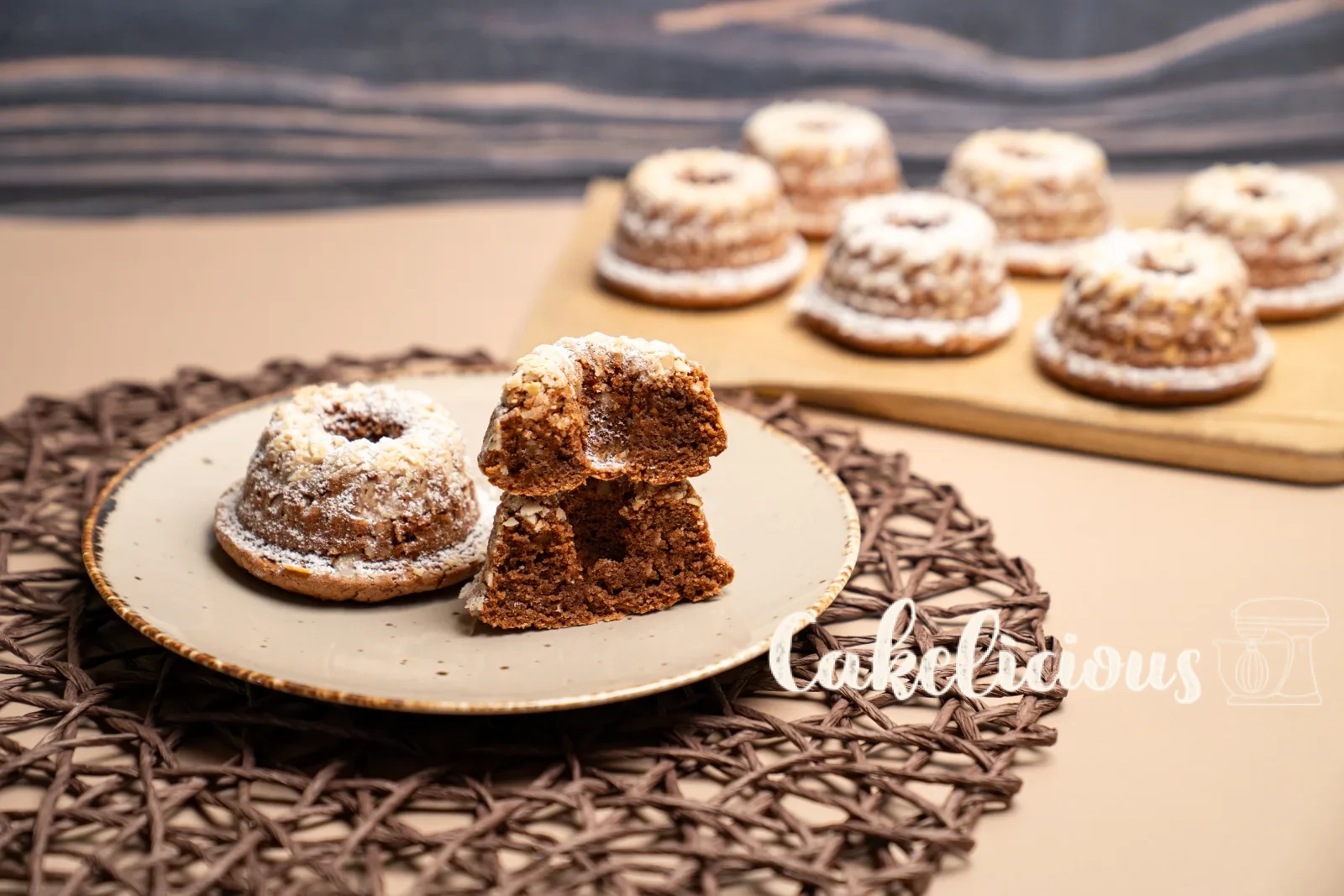
Do you know that feeling when a cake looks so good you can hardly bring yourself to cut it? That's exactly what happens with these little bundt cakes. Twelve of them, each with a domed top of white almond slivers and a dusting of snow sugar – and inside a dark, nutty crumb that looks wonderfully airy when you slice into it.
The best part: there's **no baking powder** in it. All the airiness comes from the beaten egg whites, folded into the batter in three parts right at the end. That's exactly why this bundt cake tastes different from an ordinary sponge cake – finer, a little like a torte, and yet it keeps for five days.
A word about the eggs before you start: 100 g of egg yolk is about five to six yolks, 100 g of egg white about three whites. So if you separate six eggs, you'll have egg white left over – around 80 g. Don't throw it away: frozen, it later becomes a Meringue, or you can turn it into an omelette the next morning.
And one more thing I'll tell you straight away, because it's the only point where something can go wrong: the tin. A bundt cake tin has grooves, and batter sticks in grooves. Butter, almonds, flour – in that order, generously, and don't skip a step. Then every single one comes out on its own.
Ingredients
EGG WHITE MIXTURE
CHOCOLATE MIXTURE
FOR THE TIN AND DECORATING
Step by step
The batter
Beat egg whites with salt and sugar
First preheat the oven to 180 °C fan. The batter contains no baking powder, only the air from the beaten egg whites – when it's ready, the oven should be waiting for it and not the other way round.
Beat the egg whites together with a pinch of salt in a truly grease-free bowl. Sprinkle in the granulated sugar (part 1) little by little as you go – not all at once, or the beaten whites become heavy and lose volume. Keep beating until they're glossy and a peak stays standing when you lift out the whisk. Then set them aside.
"Grease-free" is no empty phrase here: a trace of butter or a drop of egg yolk in the bowl is enough to stop the whites stiffening properly. If in doubt, wipe the bowl out with a little lemon juice.
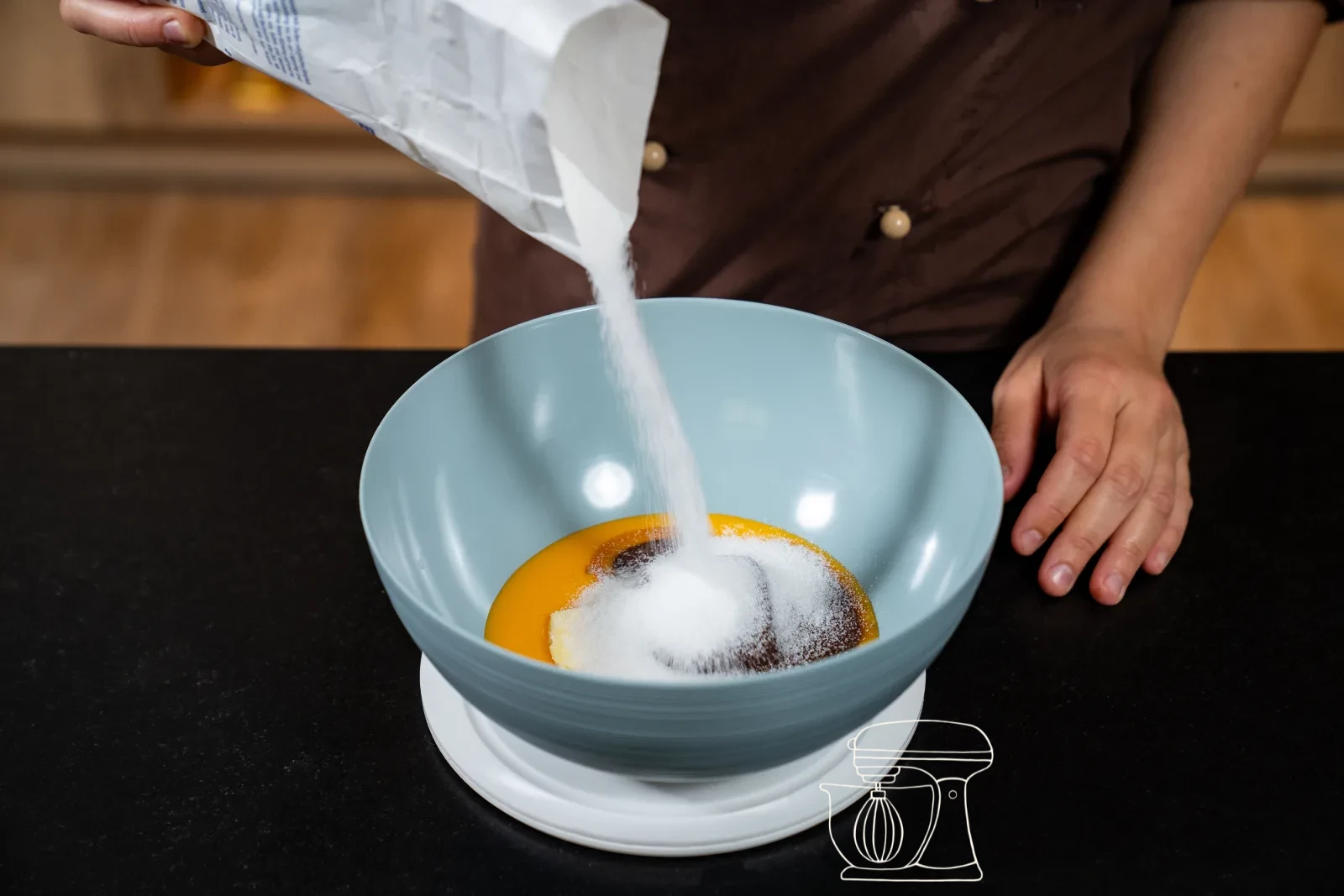
Beat egg yolk, butter, couverture and sugar until fluffy
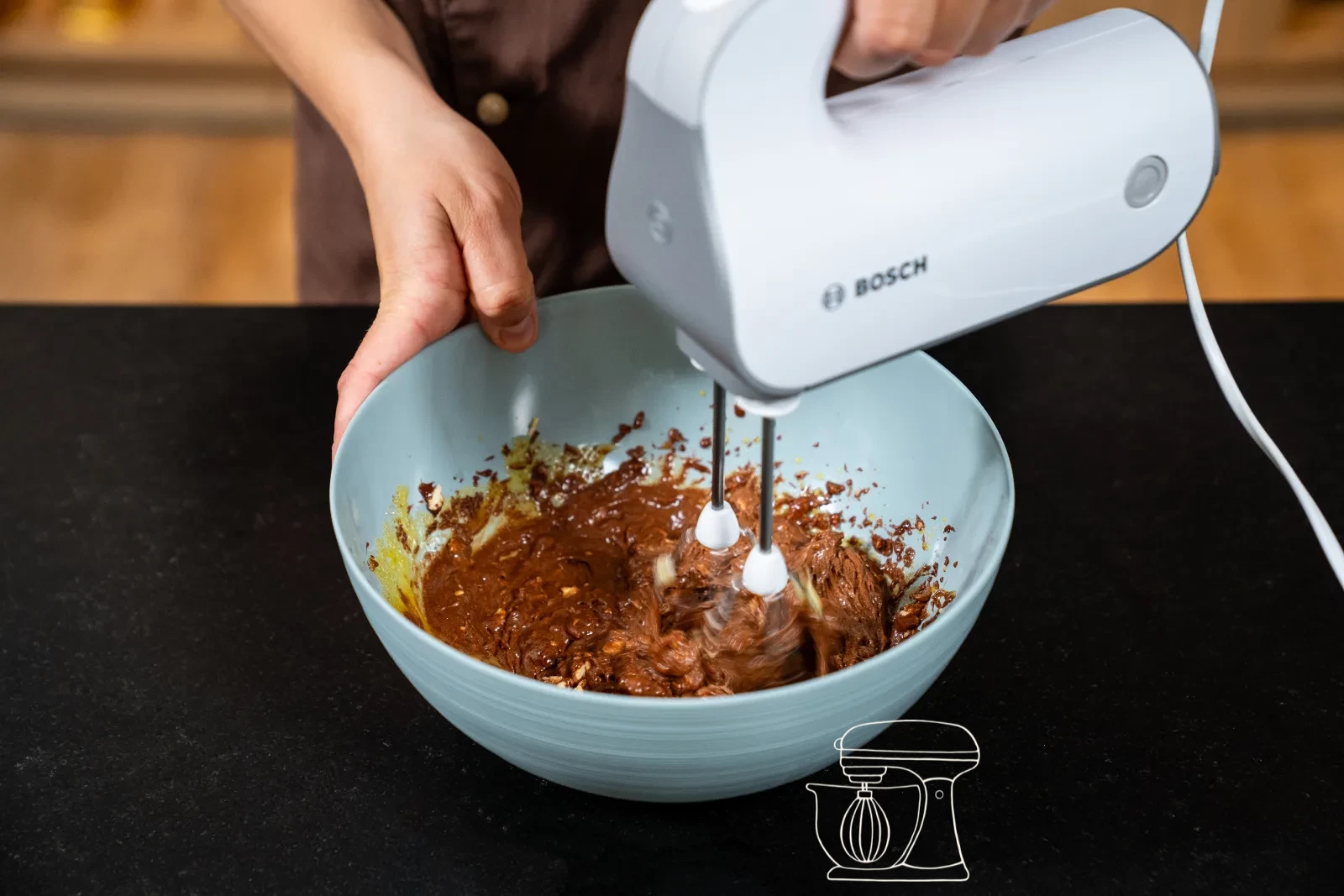
In a separate bowl, weigh out the egg yolk, the soft butter, the couverture melted to 40 °C and the granulated sugar (part 2). Beat everything lightly until fluffy with the food processor.
The temperature of the couverture is important: 40 °C feels hand-warm. If it's hotter, the egg yolk sets and you get little lumps. If it's cold, the butter firms up and the mixture curdles. The easiest way is to melt the couverture while you beat the egg whites – then it's at exactly the right temperature when you need it.
Dark couverture drops 500 g
Dark couverture drops 2.5 kg
Domori dark couverture, Criollo 62%, 1 kg
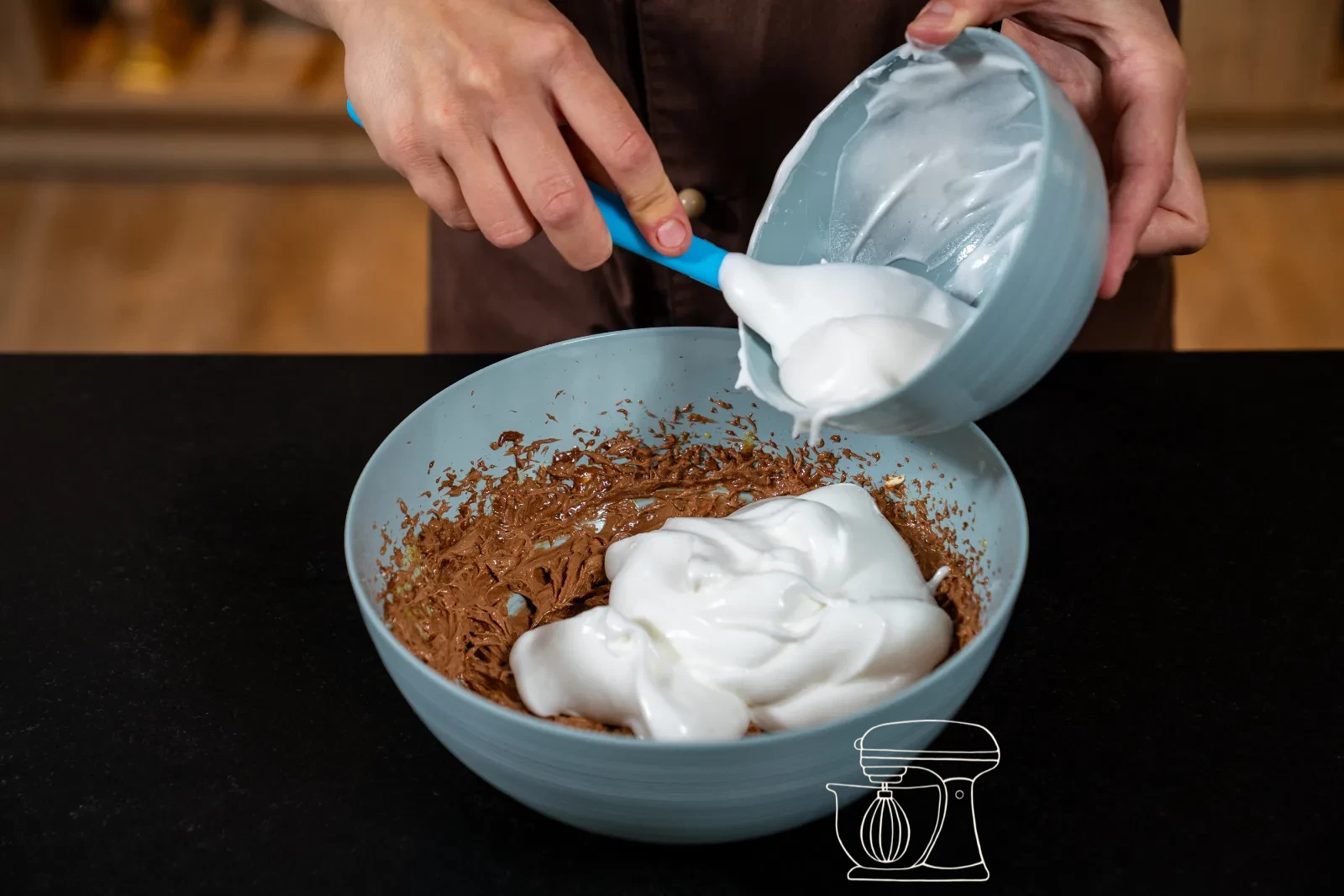
Fold in the beaten egg whites in three parts
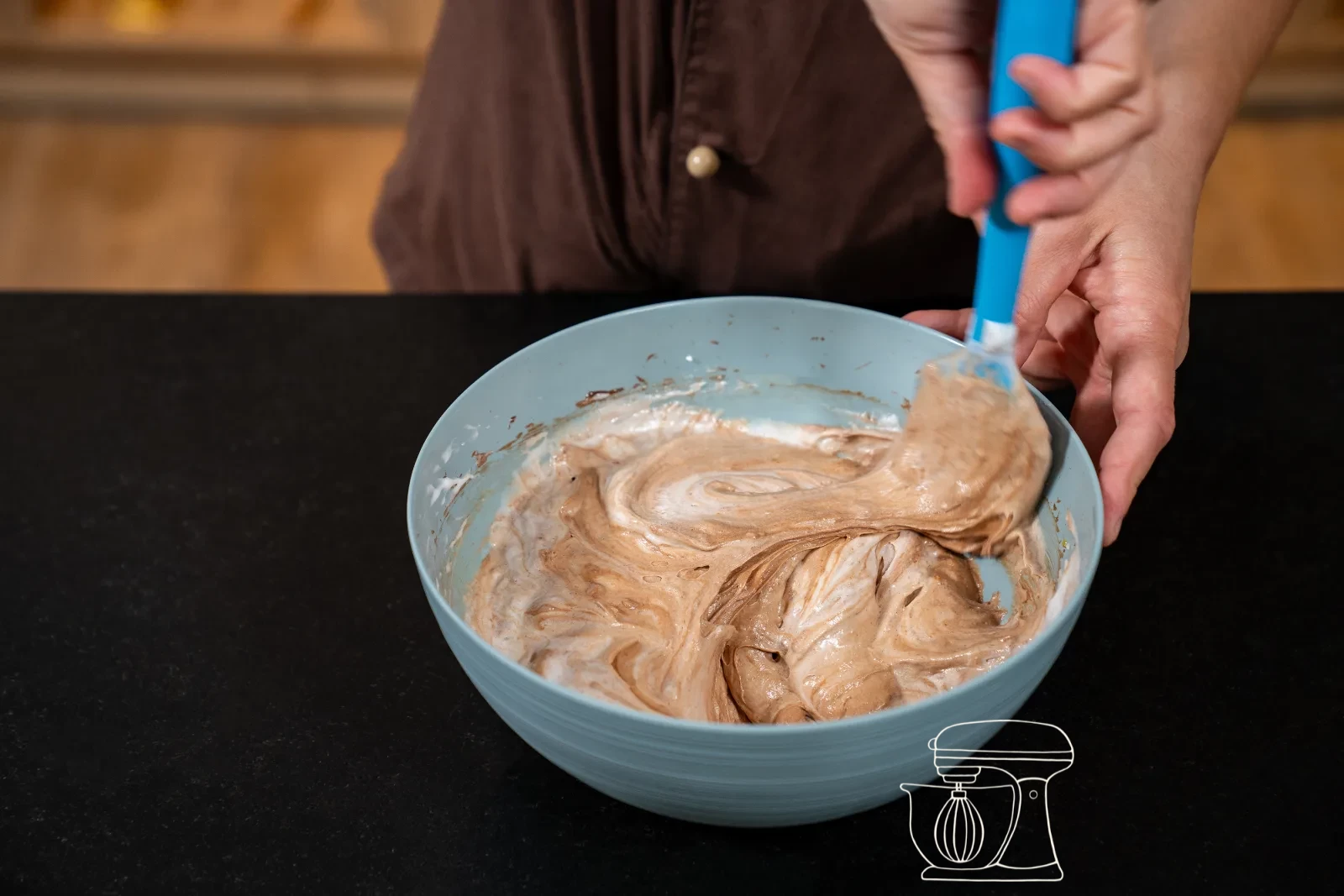
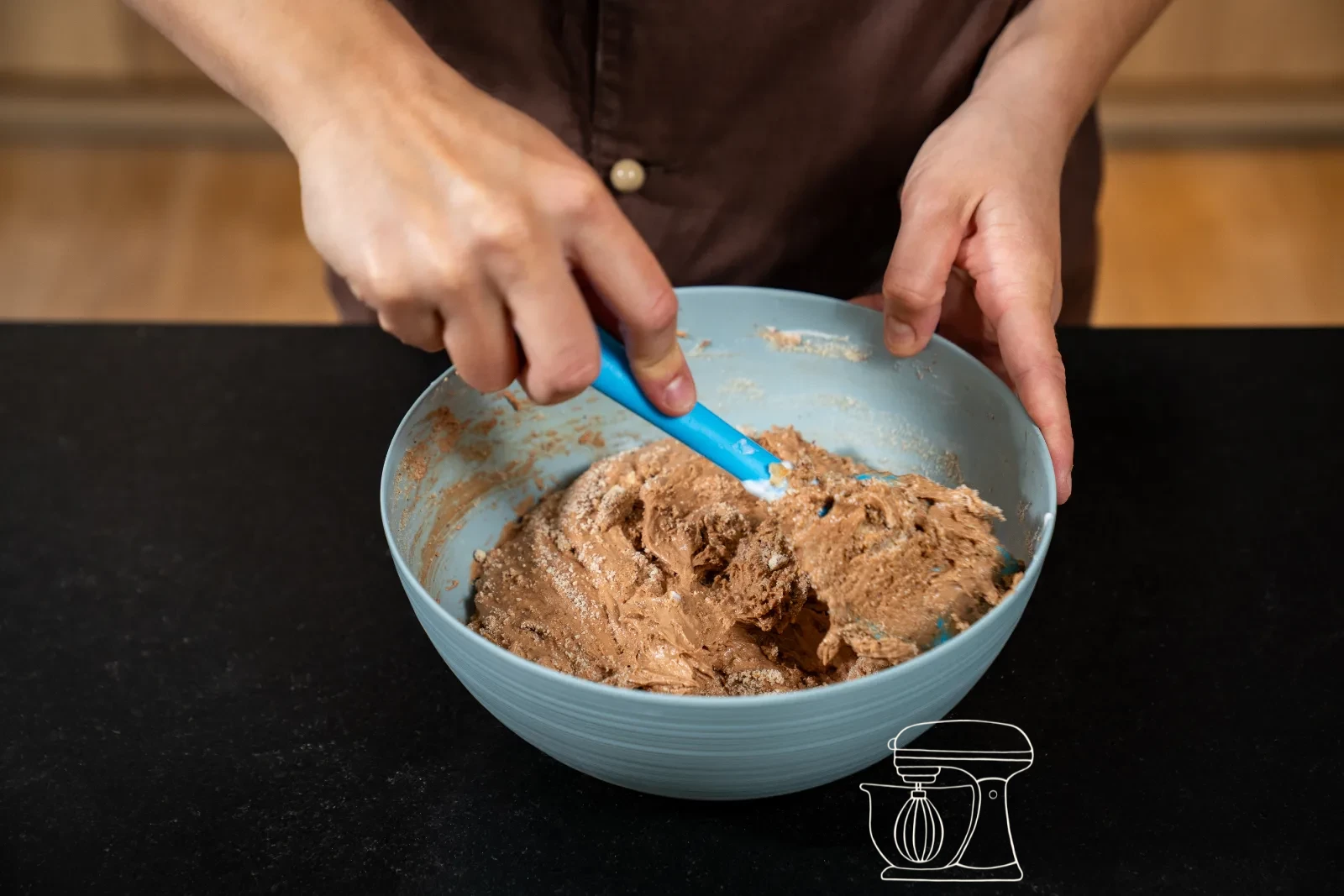
Now comes the step that decides how airy it turns out. Fold the stiffly beaten egg whites into the chocolate mixture in three portions using the rubber scraper – don't stir, but lift from the bottom upwards while turning the bowl.
The first portion can be worked in a bit more firmly; it makes the heavy mixture supple. With the second and third, work gently and stop as soon as no white streaks remain. Every extra stroke costs volume – and because there's no baking powder to help out here, the lost volume can't be brought back.
Rubber scraper red, small
Mix in flour and hazelnuts
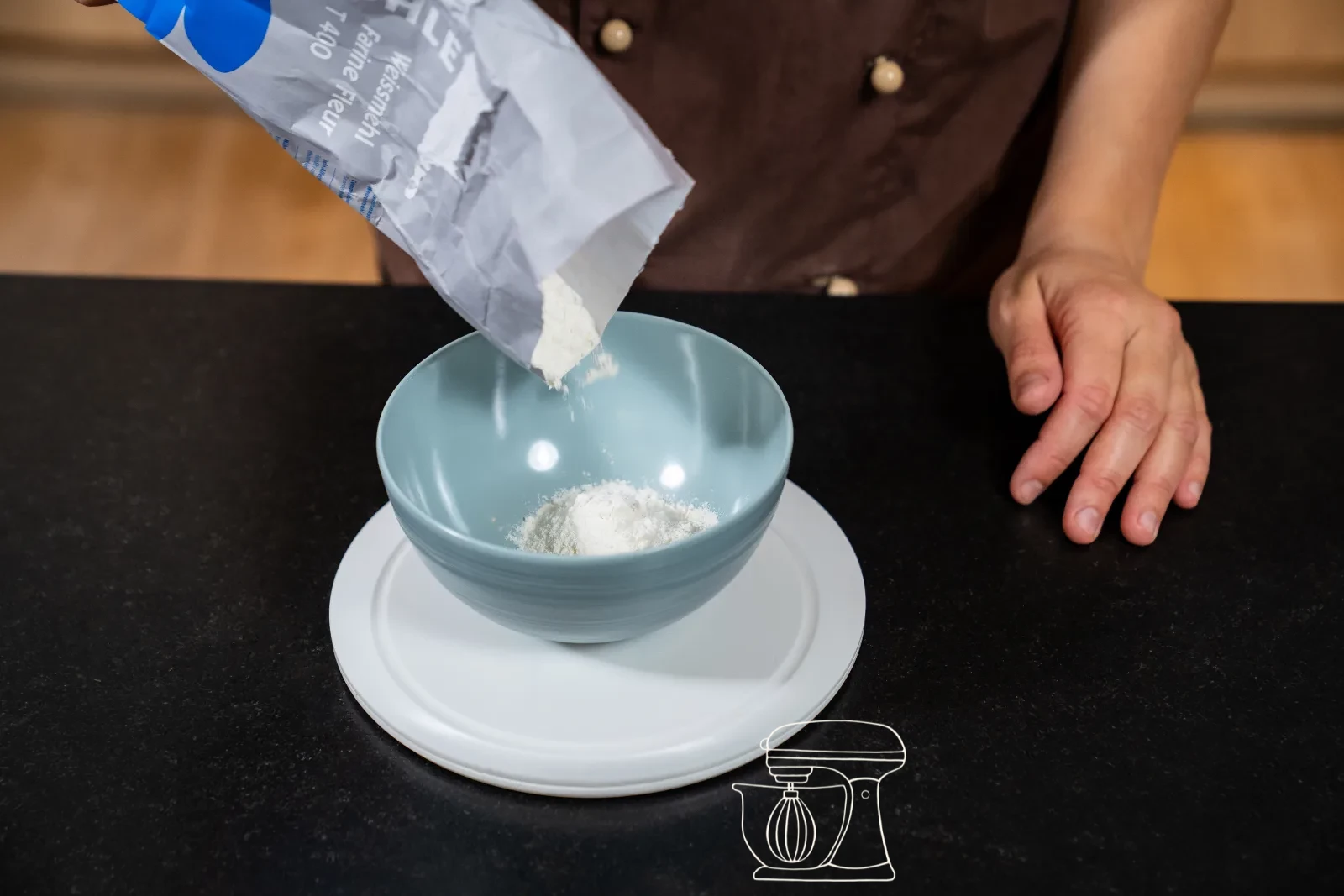
In a separate bowl, weigh out the White flour and the ground hazelnuts and mix them briefly by hand – that way the small amount of flour is evenly distributed among the nuts and won't clump later.
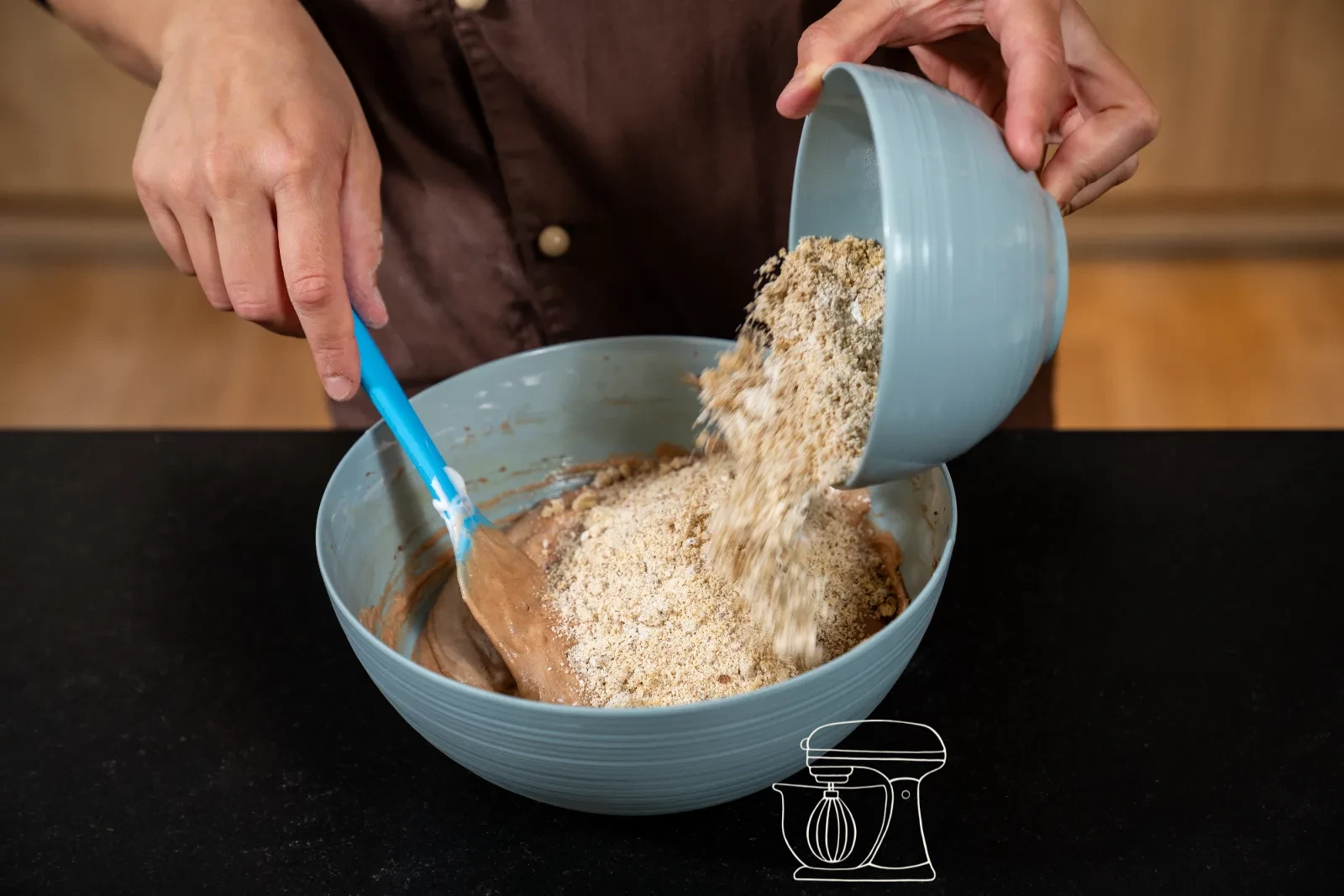
Add the mixture to the batter and again fold it in gently with the rubber scraper until everything is homogeneous. Just 35 g of flour to 100 g of nuts: this recipe lives on the hazelnuts, the flour only holds it together. Then fill the finished batter into a piping bag.
Swiss white flour, 1 kg
Rubber scraper red, small
Disposable piping bag S - 30cm - 10pcs
Prepare the tin and bake
Grease the tin, scatter in almond slivers and flour
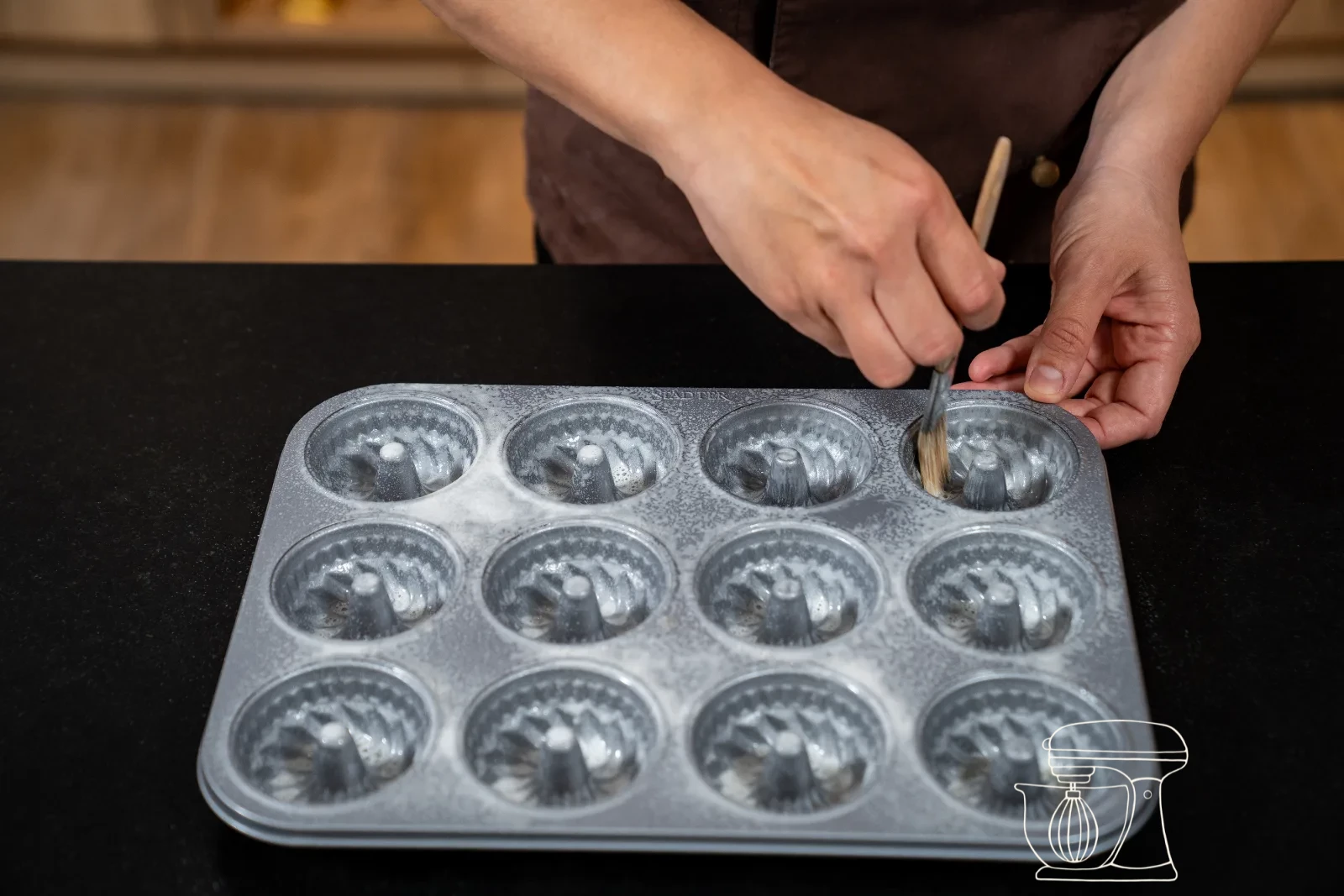
Grease the bundt cake tin generously with soft butter – and really into every groove. Take a brush or your finger and work cavity by cavity, including the cone in the middle. This is the step people like to rush, and then half the dome stays in the tin when you turn it out.
Scatter chopped flaked white almonds into each individual cavity and turn the tin so the slivers stick everywhere to the butter. Whatever's too much, simply tip out again.
This isn't a decorative flourish but doubly useful: the almonds also help release the bundt cake from the tin, and after turning out they sit on the outside. So the pretty, lightly speckled dome is created now, not at the end.
Finally, dust the tin generously with White flour and tap it out briefly. Butter, almonds, flour – that's the order the release layer sits in, and that's the order in which each one later comes out on its own.
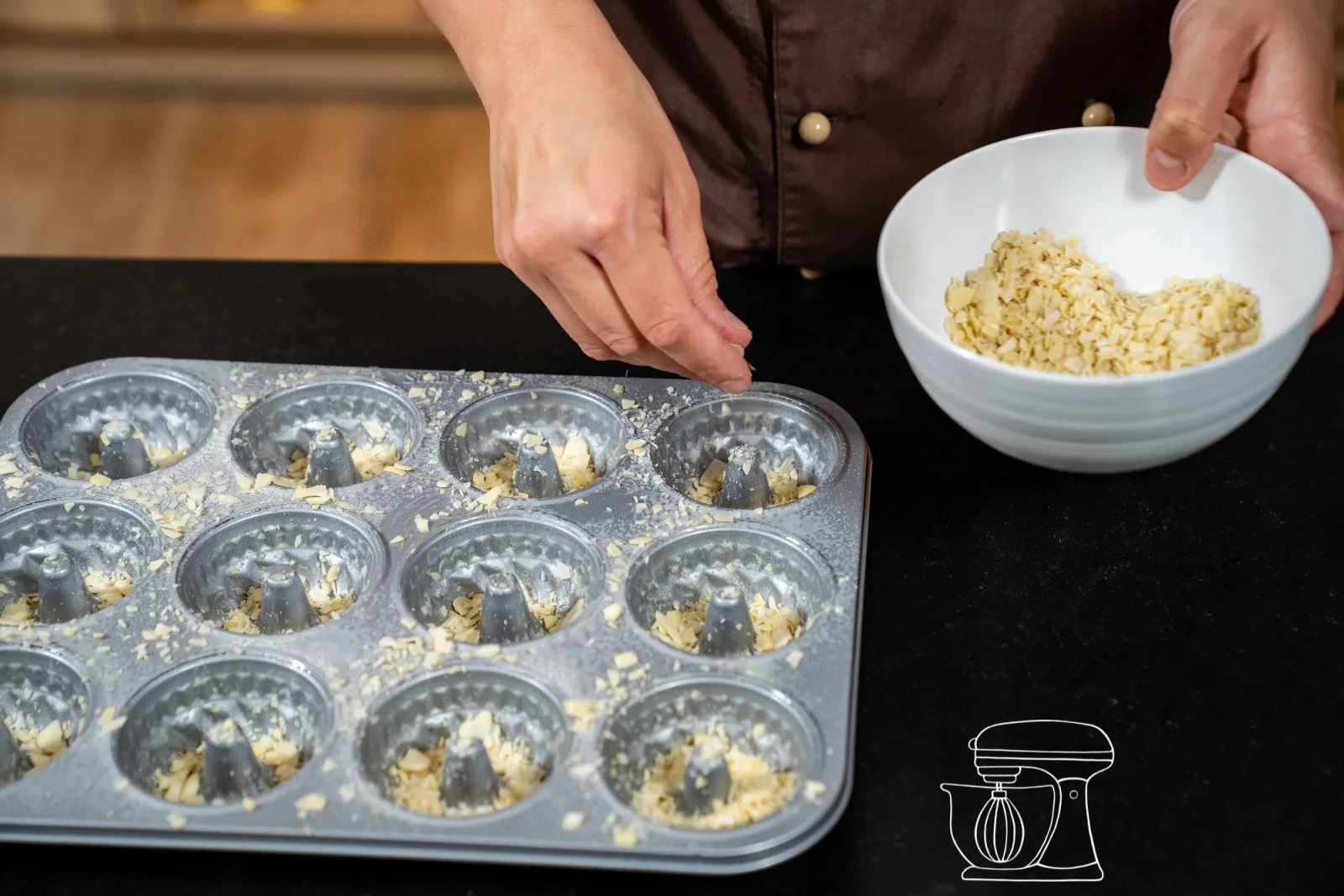
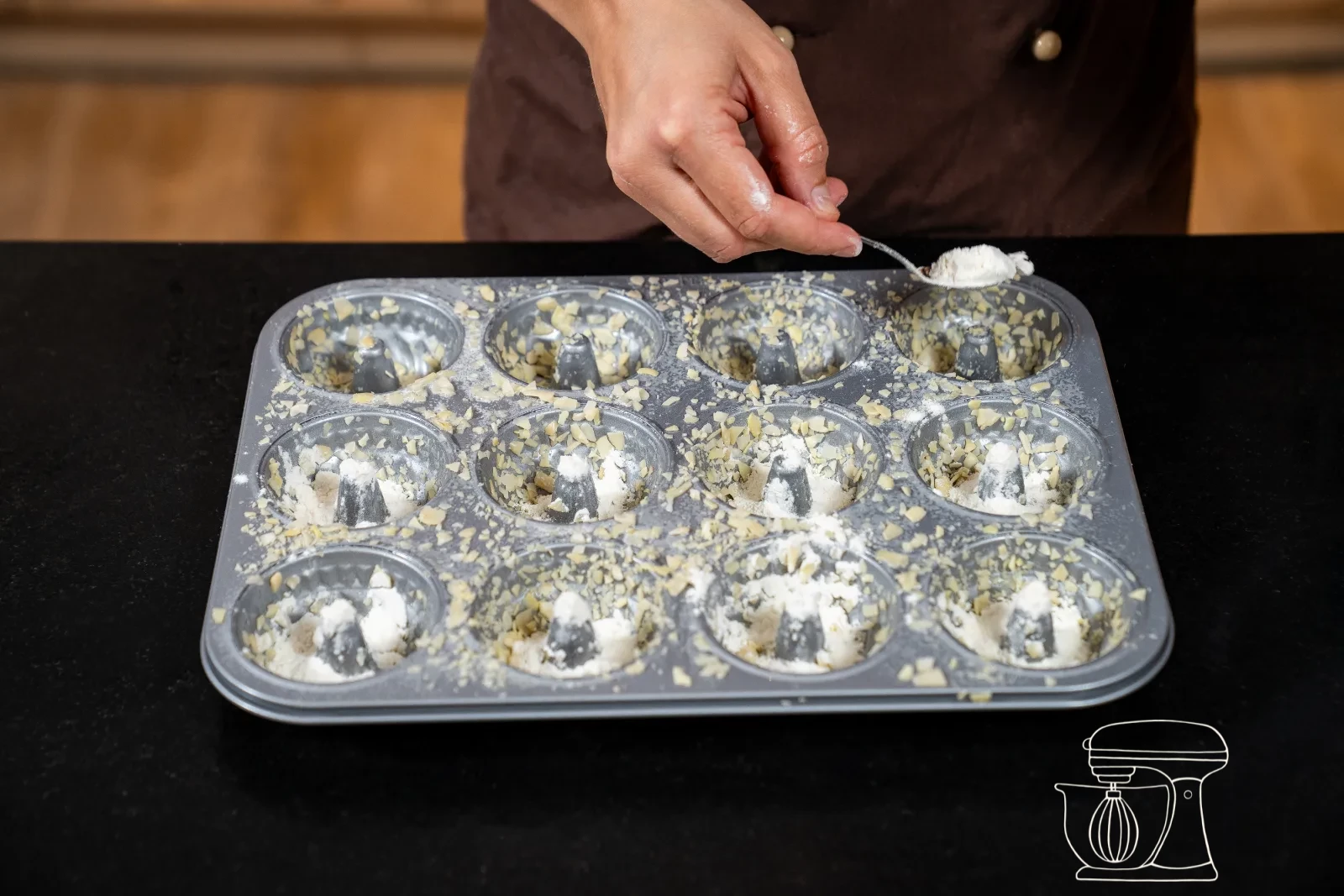
Bundt cake tin small, 6 pieces
Swiss white flour, 1 kg
Non-stick spray, 400 ml
Fill 50 g each and bake for 12–15 minutes
Fill each cavity with 50 g of batter – the quickest way is with the piping bag straight onto the scale. Bake the bundt cakes at 180 °C fan for around 12 to 15 minutes.
The test: a wooden skewer inserted into the thickest spot should come out with moist crumbs, not with liquid batter and not completely dry. Better a minute too early than one too late – at 50 g per piece it goes quickly.
Afterwards, let the bundt cakes cool **in the tin**. Only then turn them out: while warm they're still soft and tear at the dome. Finally dust with a little Snow sugar.
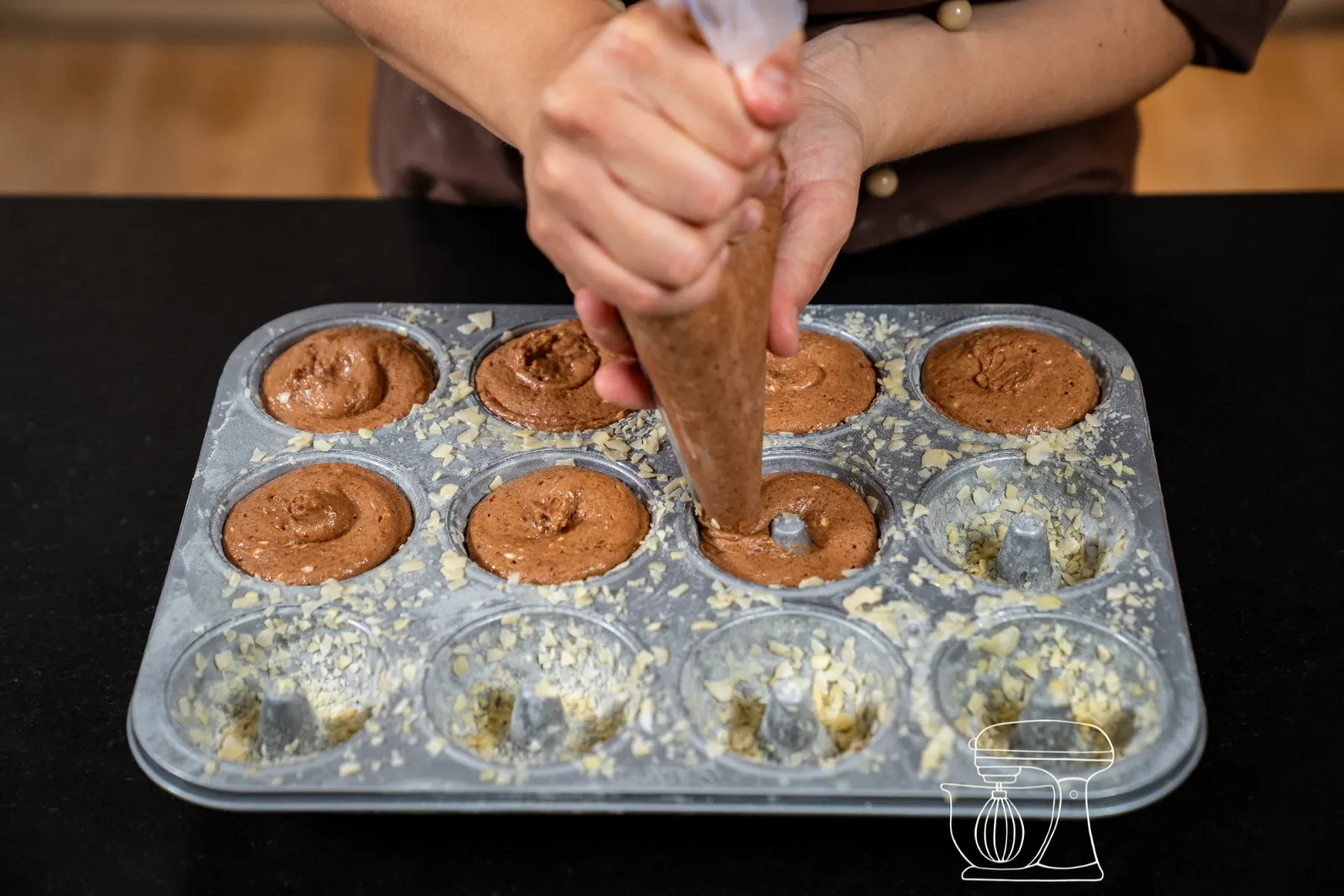
Snow sugar
Disposable piping bag S - 30cm - 10pcs
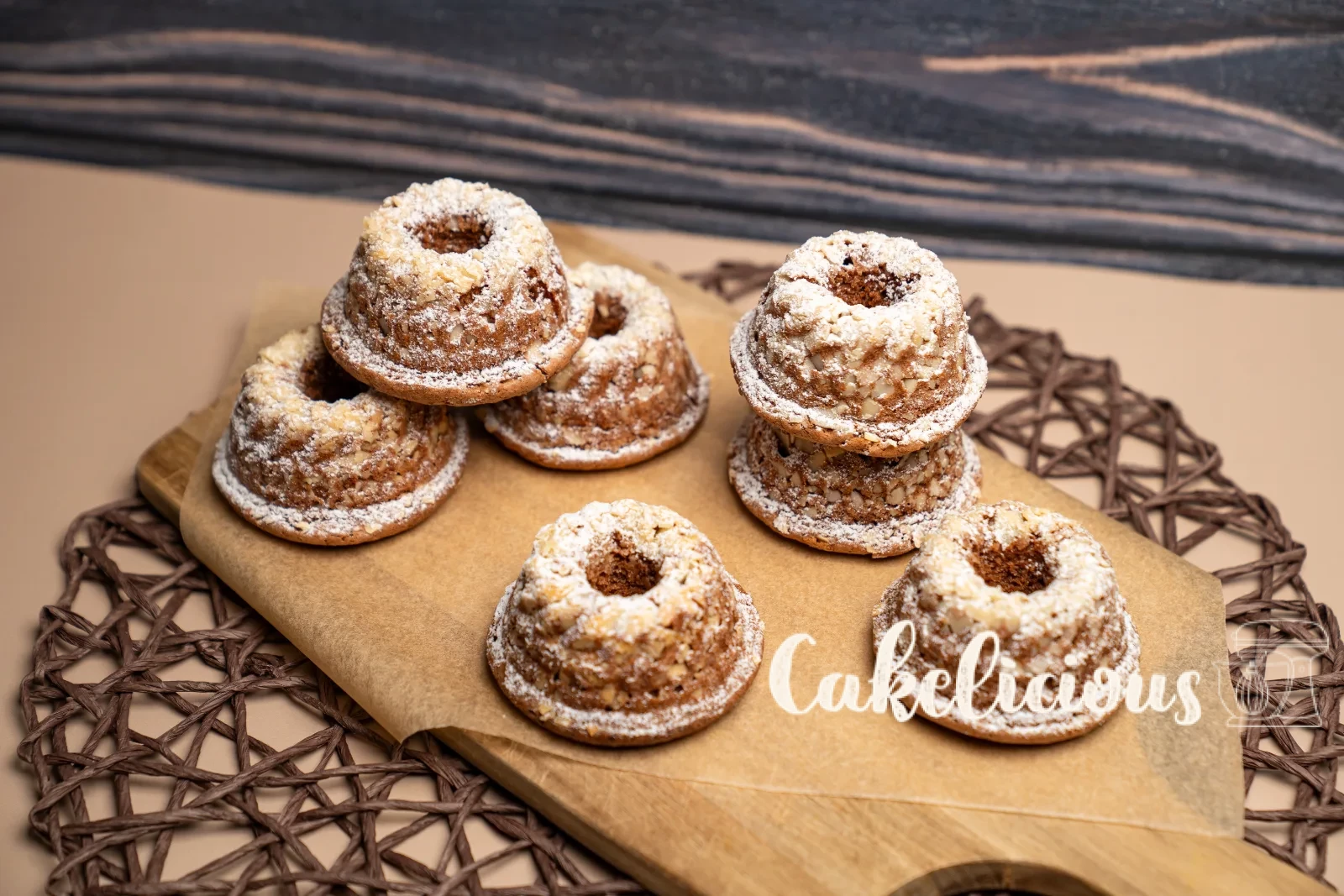
Mini bundt cakes with chocolate and hazelnuts
Ingredients
EGG WHITE MIXTURE
CHOCOLATE MIXTURE
DRY INGREDIENTS
FOR THE TIN AND DECORATING
Method
- Egg whites: beat 100 g egg white with salt, sprinkle in 50 g sugar.
- Chocolate mixture: beat egg yolk, soft butter, couverture (40 °C) and 50 g sugar until fluffy.
- Fold in: fold in the egg whites in three parts.
- Dry: mix 35 g flour with 100 g ground hazelnuts, fold in, fill into the piping bag.
- Tin: butter, scatter in almond slivers, dust with flour.
- Bake: fill 50 g each, 12–15 min. at 180 °C fan.
- Cool: let cool in the tin, turn out, dust with snow sugar.
Nutritional values per 100 g
Storage & shelf life
Everything for this recipe
Recommended from our bakery — exactly the sizes the recipe was tested with.
Ingredients
Dark couverture drops 500 g
Domori dark couverture, Criollo 62%, 1 kg
Swiss white flour, 1 kg
Snow sugar
Non-stick spray, 400 ml
Equipment
Bundt cake tin small, 6 pieces
Rubber scraper red, small
Disposable piping bag S - 30cm - 10pcs
Delivery in 1–2 working days · Free shipping from CHF 100
Nice alongside
Not needed for the recipe — but it goes well.
Mini bundt cake tin, 24 pieces
Dark couverture drops 2.5 kg
So they turn out perfectly, guaranteed
With a grooved bundt cake tin, the release layer is half the work. Butter first, so the almonds stick. Then the almond slivers, because they break up the surface. And finally the flour, which seals it all. Skip any one of the three steps and you'll be picking the dome out of the tin later instead of off the plate.
40 °C feels warm on the back of your hand, but not unpleasant. Too hot and the egg yolk sets and makes lumps; too cold and the butter firms up and the mixture separates. The simplest trick: melt the couverture while you beat the egg whites – by the time you need it, it's reached the right temperature on its own.
There's no raising agent in this batter. The volume the beaten egg whites bring is exactly the volume the bundt cake has at the end. That's why you fold in three parts, why you fold rather than stir, and why you preheat the oven beforehand. If the filled tin sits around for ten minutes, you're baking in ten minutes of lost air.
FAQ
You don't need to, and I'd leave it out. The recipe is calculated around the beaten egg whites, and with baking powder the crumb takes on a different, coarser structure – exactly that fine, torte-like crumb gets lost in the process. If you're unsure, invest the care in the beating and the folding instead.
That's normal: for 100 g of egg yolk you need five to six eggs, and those give more egg white than the recipe calls for. Around 80 g is left over. Egg white freezes wonderfully (best in portions, labelled with the weight) and later becomes Meringue, Macarons or an omelette.
Yes, the batter is enough for a small tin of about 18 to 20 cm. Then reckon on considerably more baking time – roughly 35 to 45 minutes at 170 °C fan – and test with the wooden skewer. The top of the dome darkens faster than the middle cooks through; cover it with baking paper in the second half if it colours too much.
Print recipe
Choose what should appear on the printout.
Related posts
 Juicy Matcha Muffins with Pecan Nuts & White Chocolate
Matcha Iced Latte & Coconut Variant
Pull-apart bread with fresh wild garlic pesto
Mini Banana Bread with Chocolate Chips
Juicy Matcha Muffins with Pecan Nuts & White Chocolate
Matcha Iced Latte & Coconut Variant
Pull-apart bread with fresh wild garlic pesto
Mini Banana Bread with Chocolate Chips
Leave a comment