
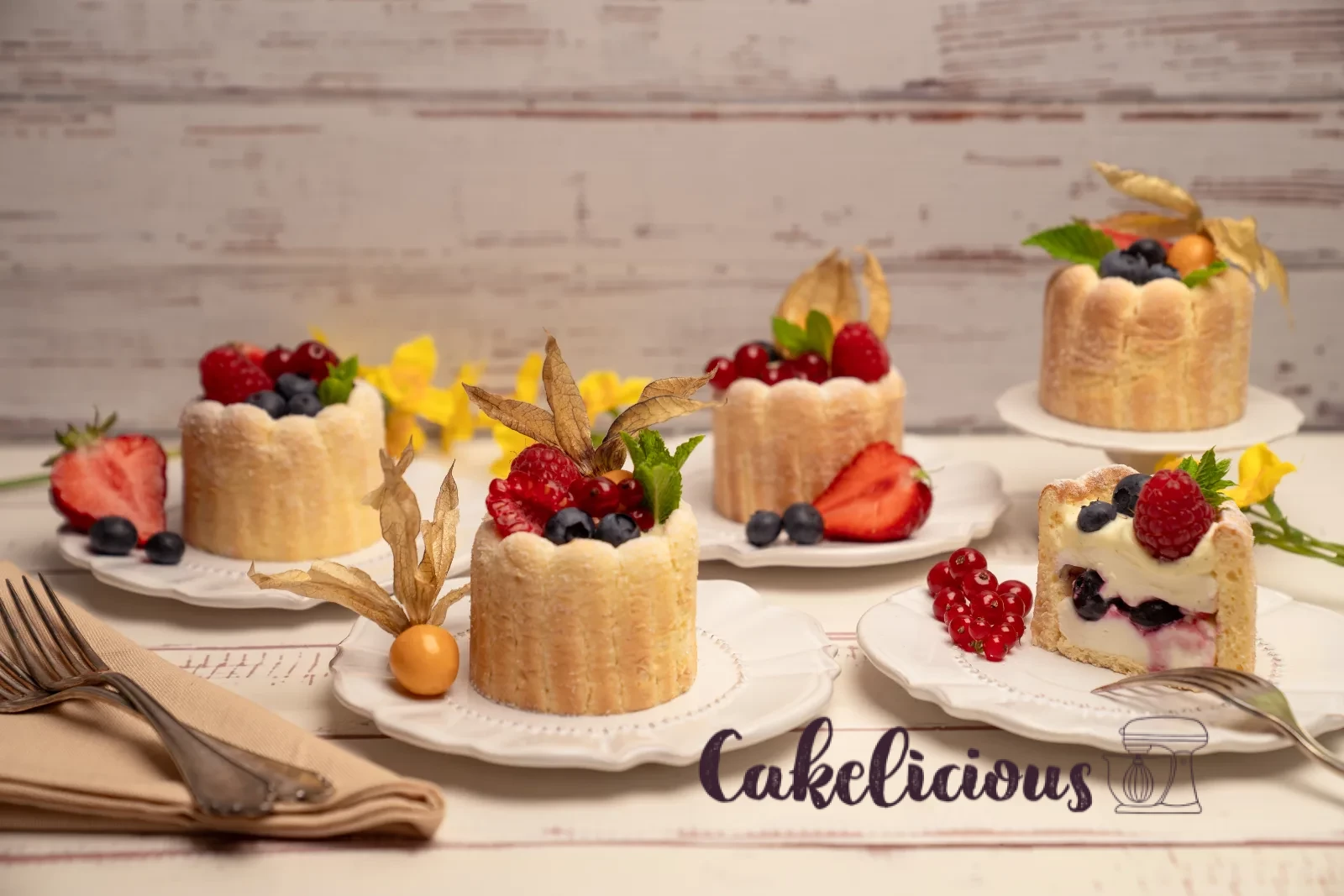
Charlotte Royale with Berries – elegant mini charlottes with quark and vanilla cream
A classic of French patisserie, portioned for your own table.
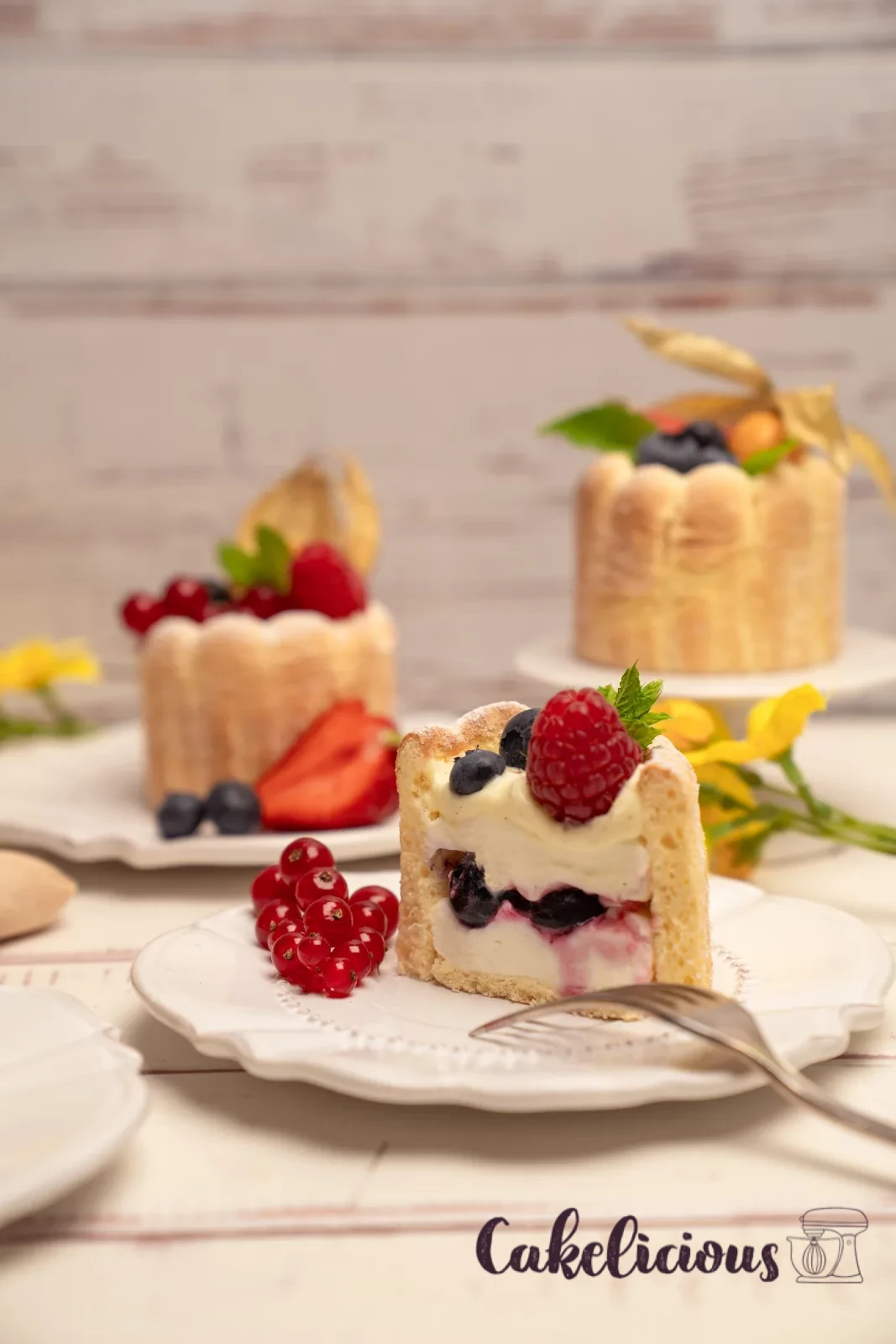
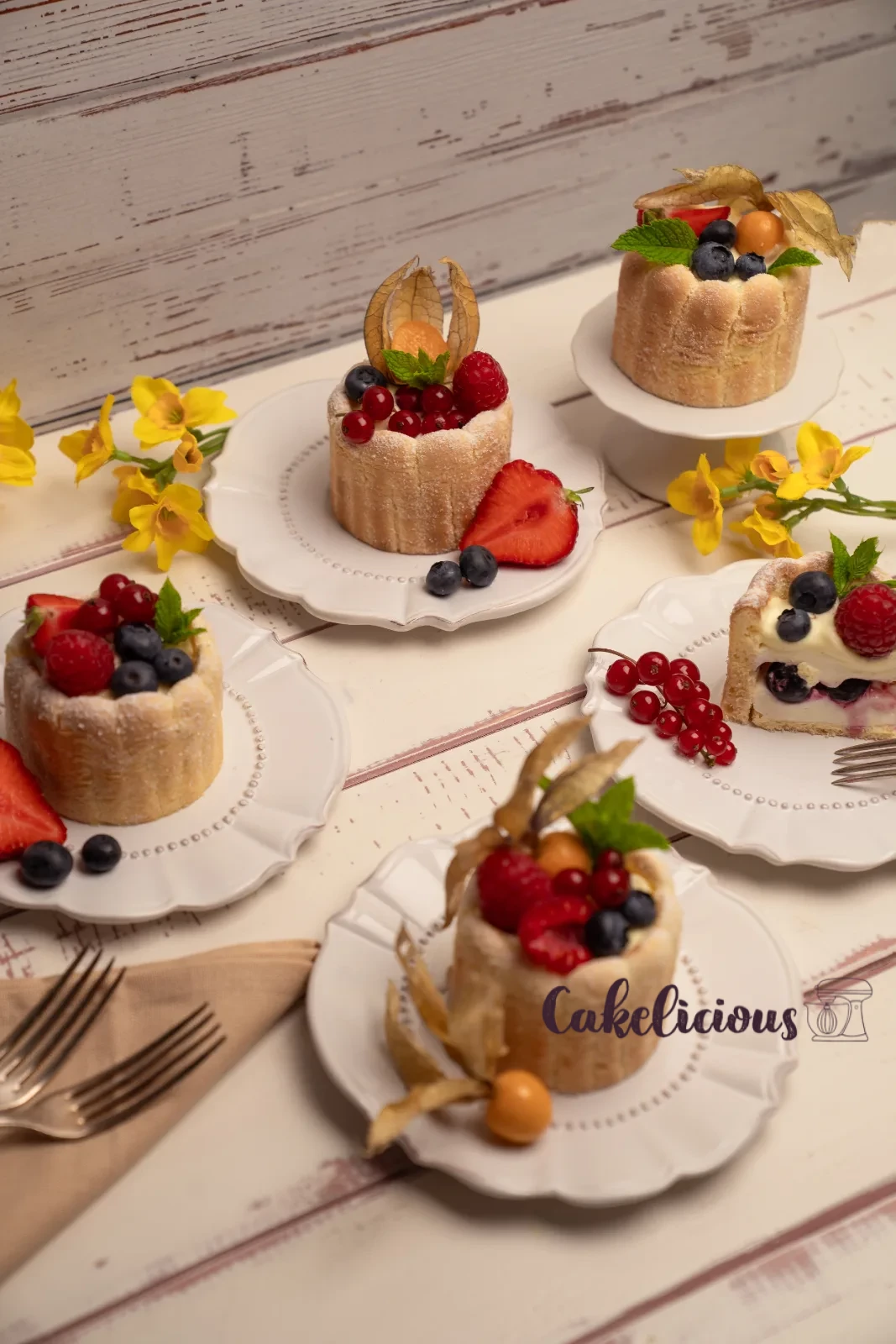
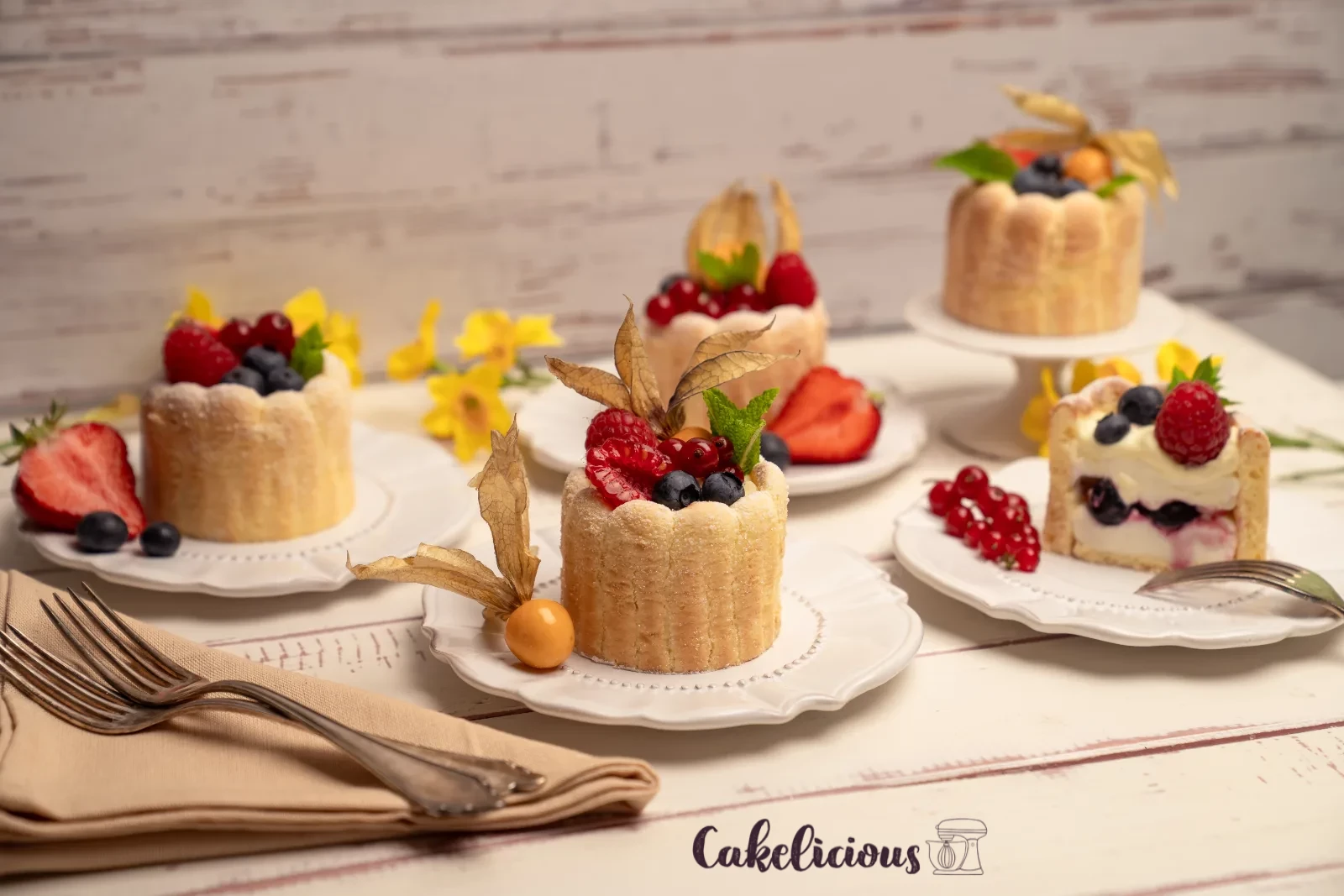
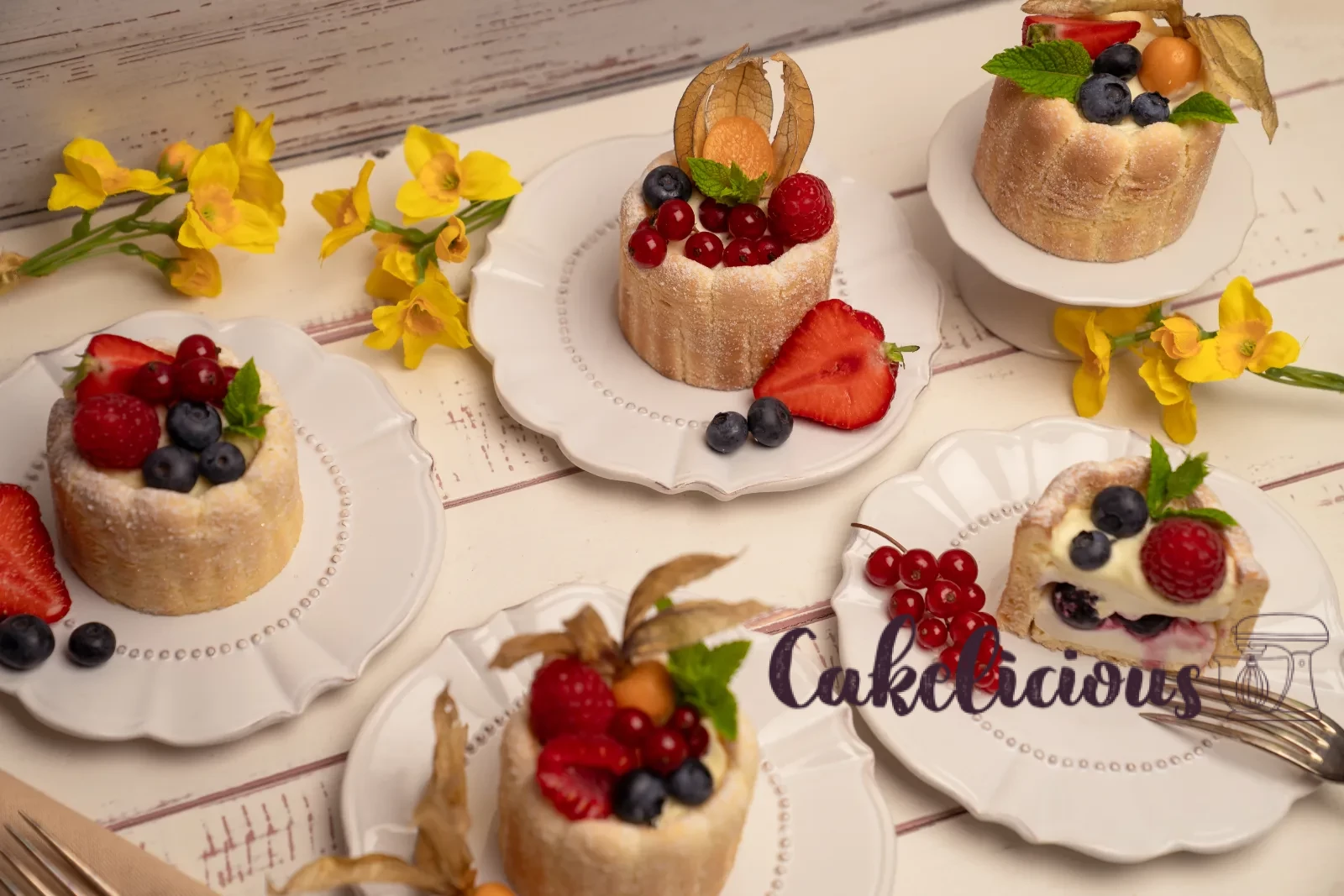
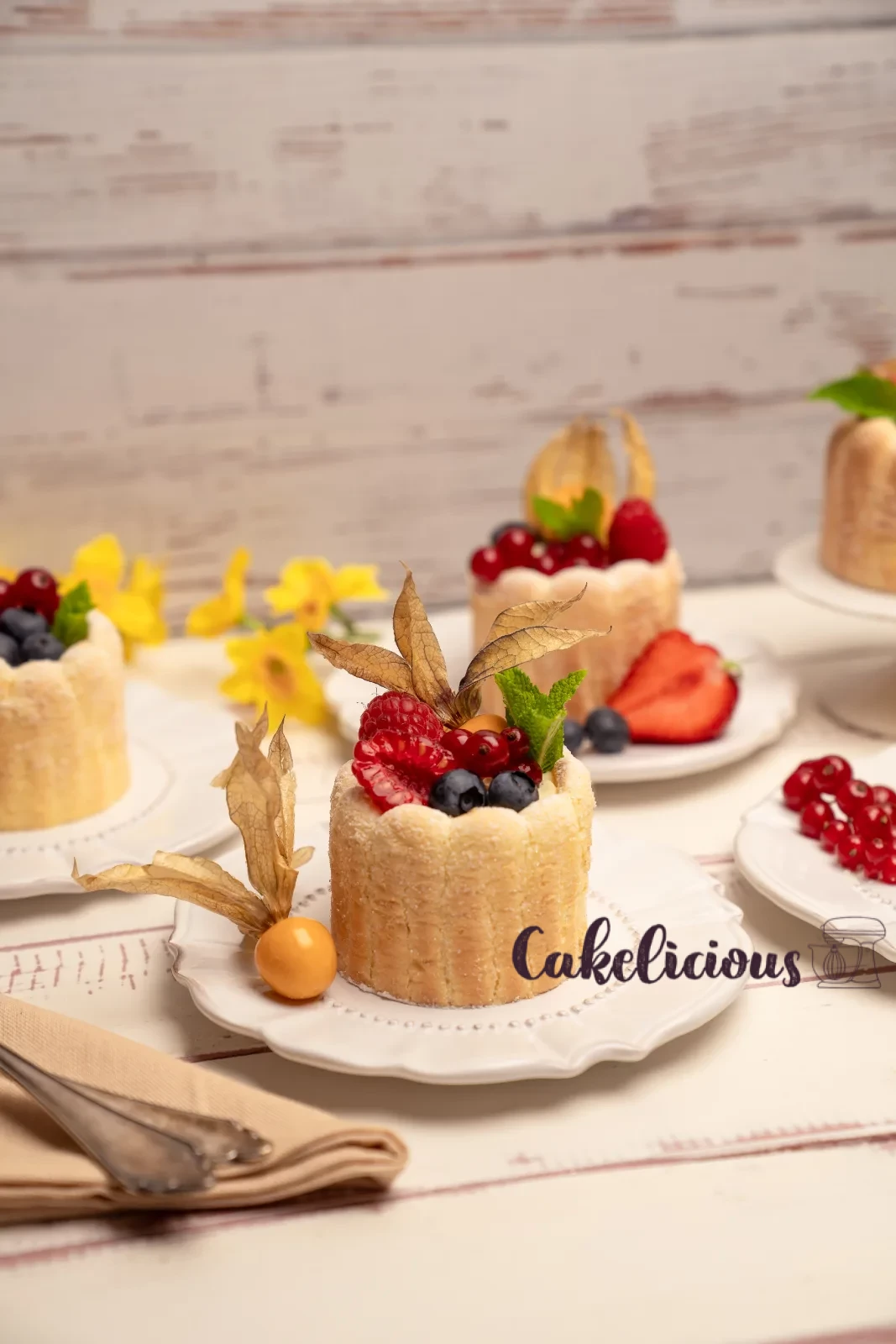
The charlotte royale is one of the loveliest inventions of classic patisserie: a coat of fine ladyfinger sponge wrapped around an airy cream. We have scaled the classic charlotte cake down – ten individual charlottes, each with quark cream, vanilla cream and ripe berries. The sponge is piped by hand onto baking paper, the creams take just a few minutes, and the fridge does the rest. The result looks like it came straight from the display case – and it can be prepared the day before.
Ingredients
Ladyfinger sponge
Quark cream (approx. 290 g / 25–30 g per charlotte)
Vanilla cream (approx. 140 g / 10–14 g per charlotte)
Filling & decoration
Step by step
Ladyfinger sponge for the charlotte royale
Draw the stencil
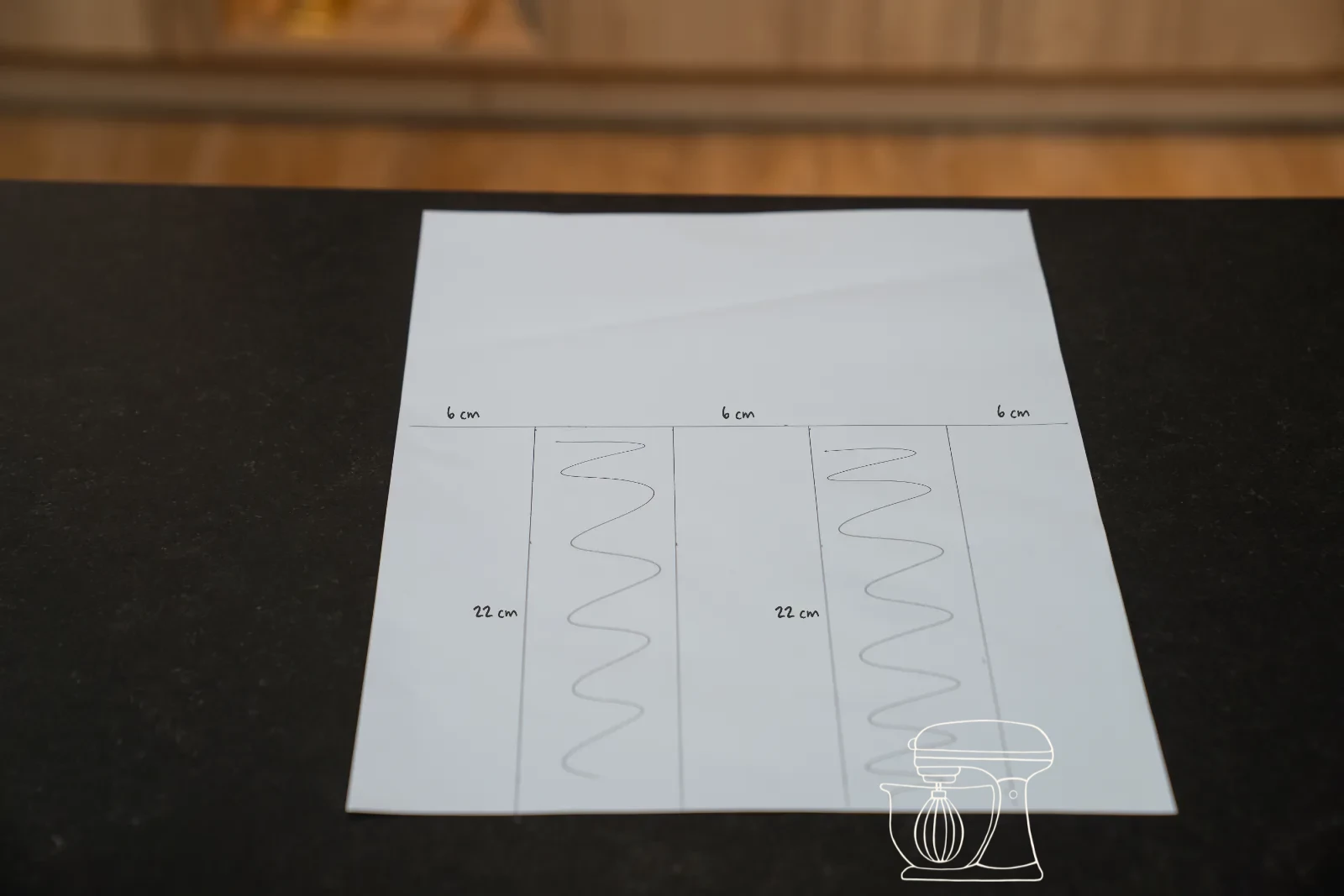
On an A3 sheet, draw strips 22 cm long and 6 cm wide – three strips fit on one sheet. Add a flat rectangle for the bases. Lay the baking paper over it: the lines show through and guide you while piping. One sheet is enough, as you reuse it as a template again and again.
Whip up the sponge mixture
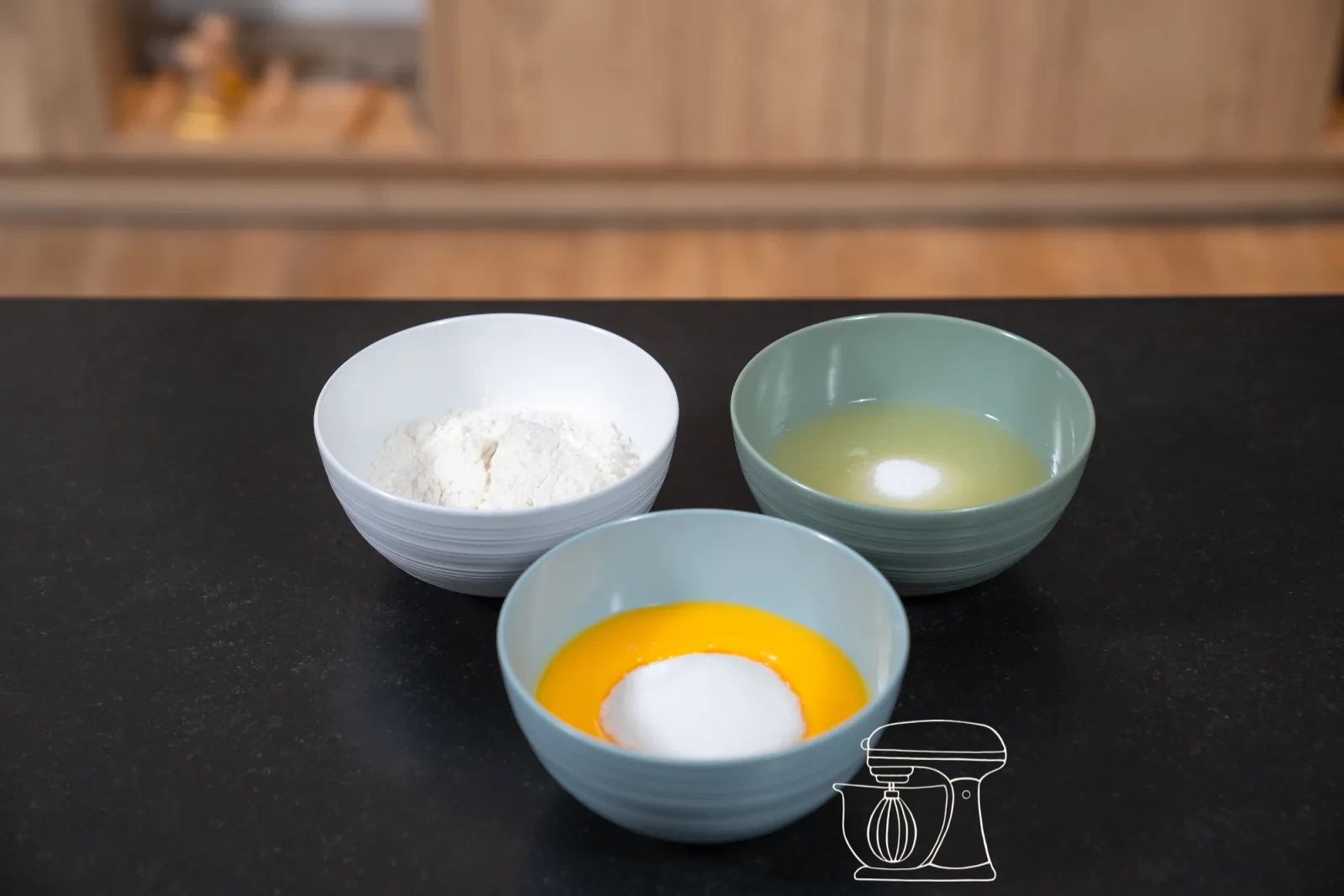
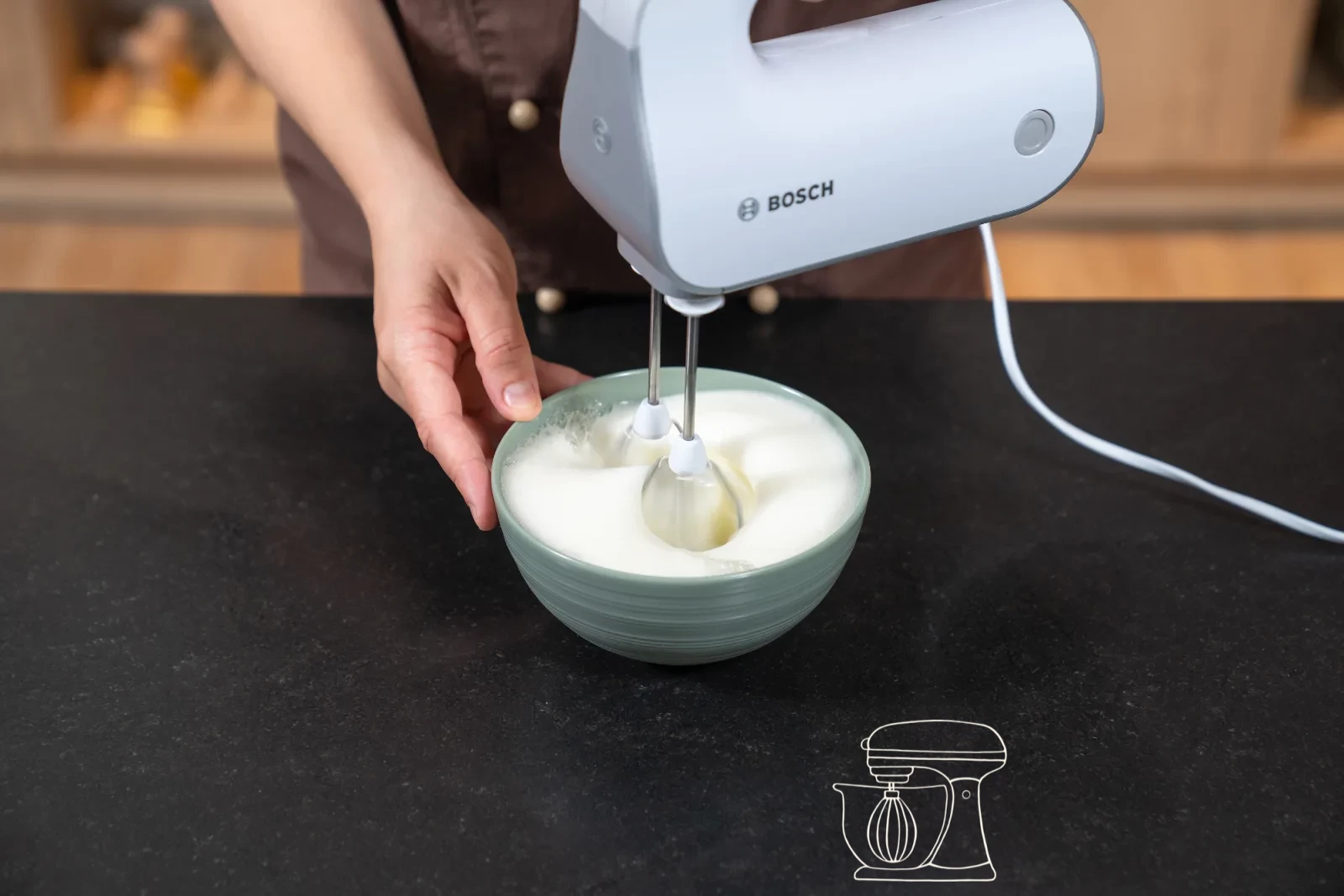
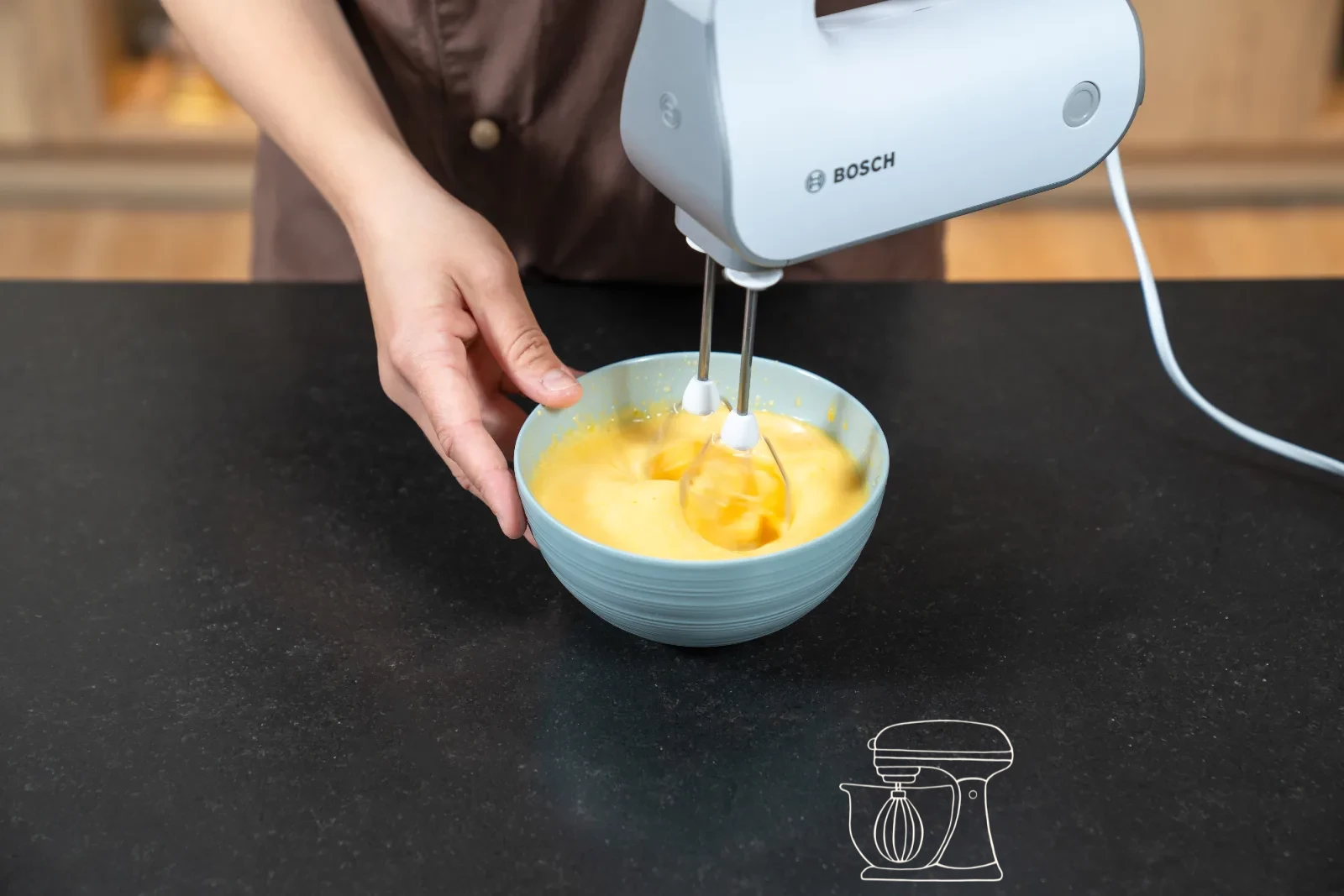
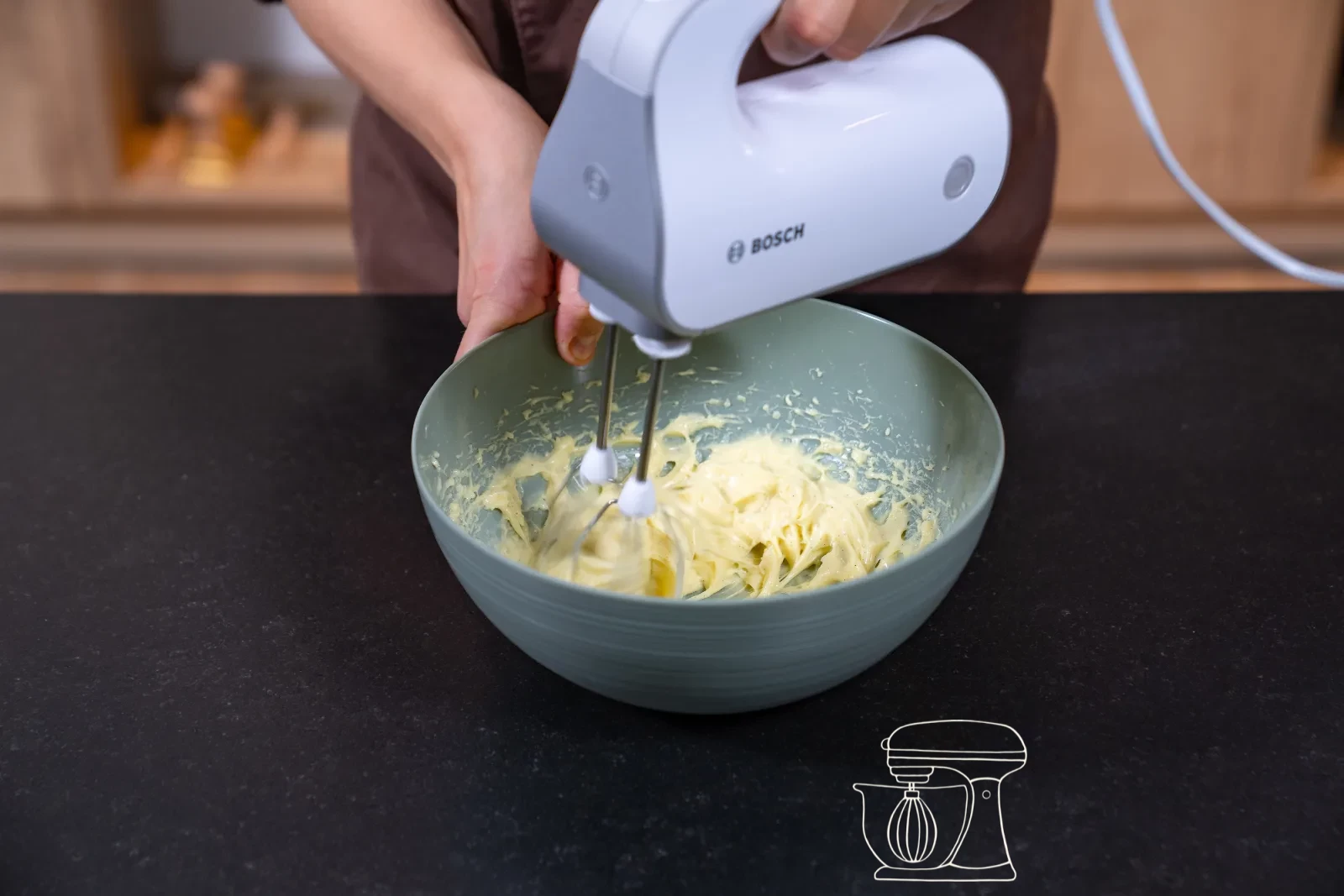
Whip 250 g egg yolk with 130 g sugar until pale and creamy and the mixture has clearly gained volume. In a second, completely grease-free bowl, whip 250 g egg white with the remaining 130 g sugar to a glossy meringue.
Bosch Hand mixer Clever Mix
Whip up the sponge mixture
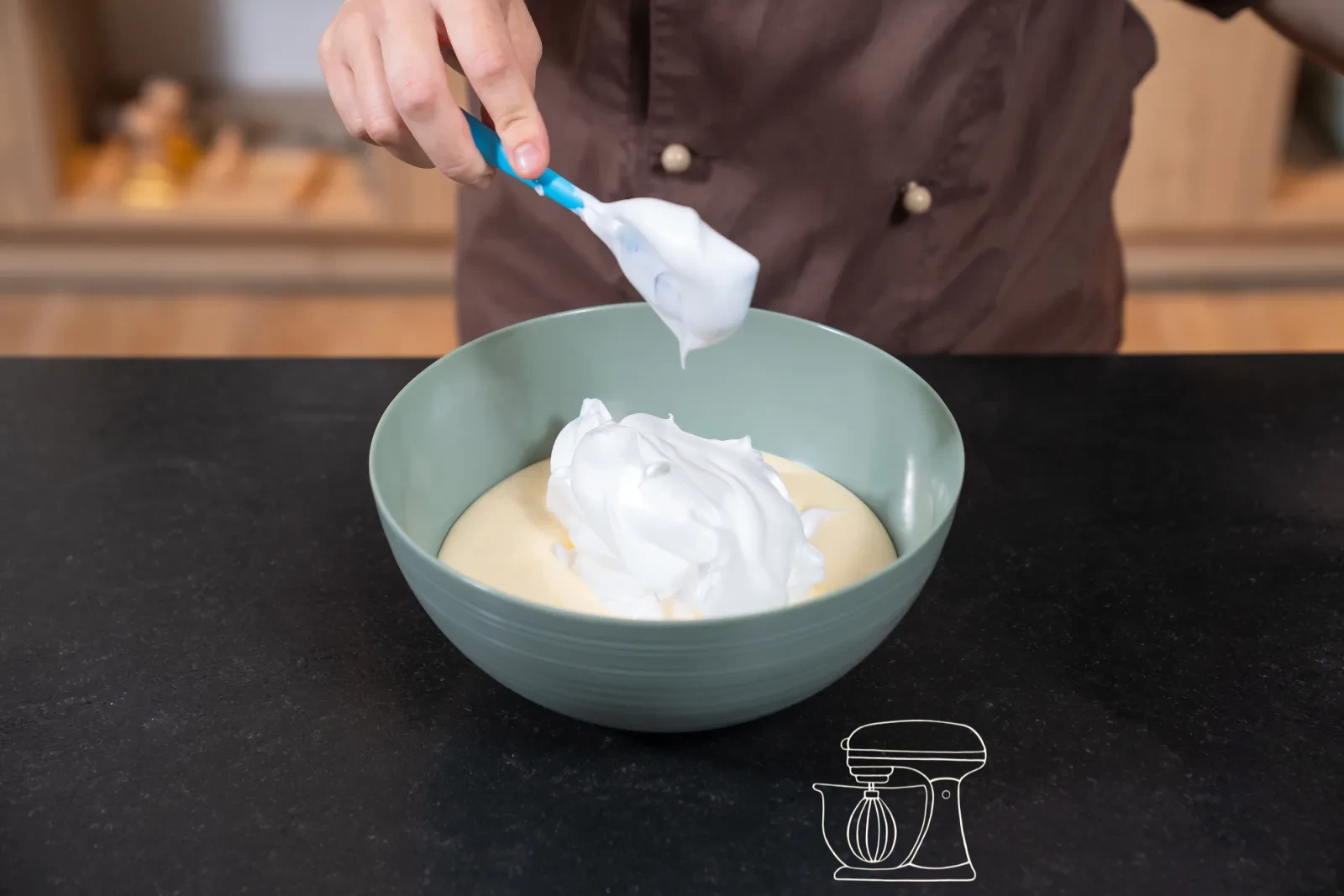
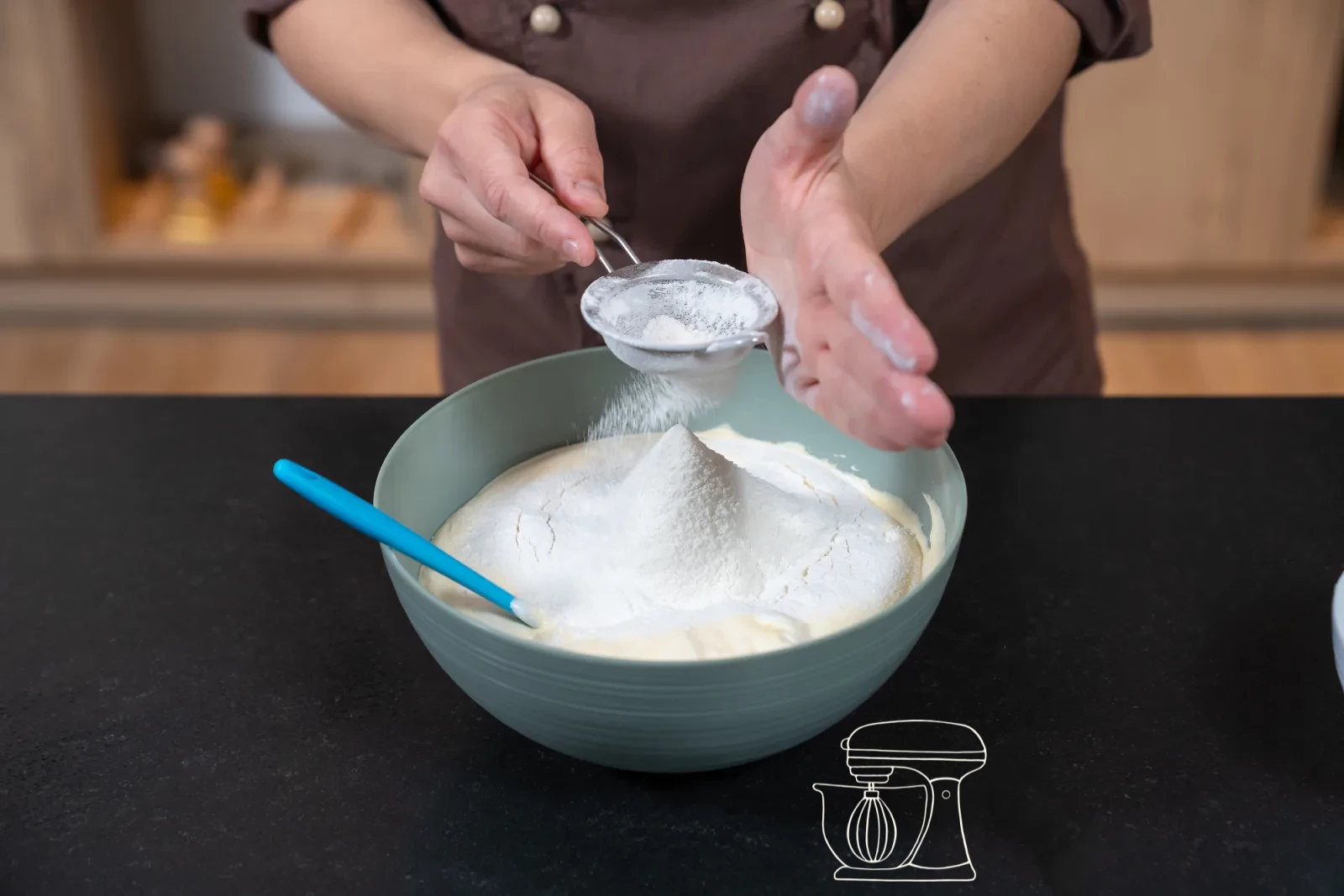
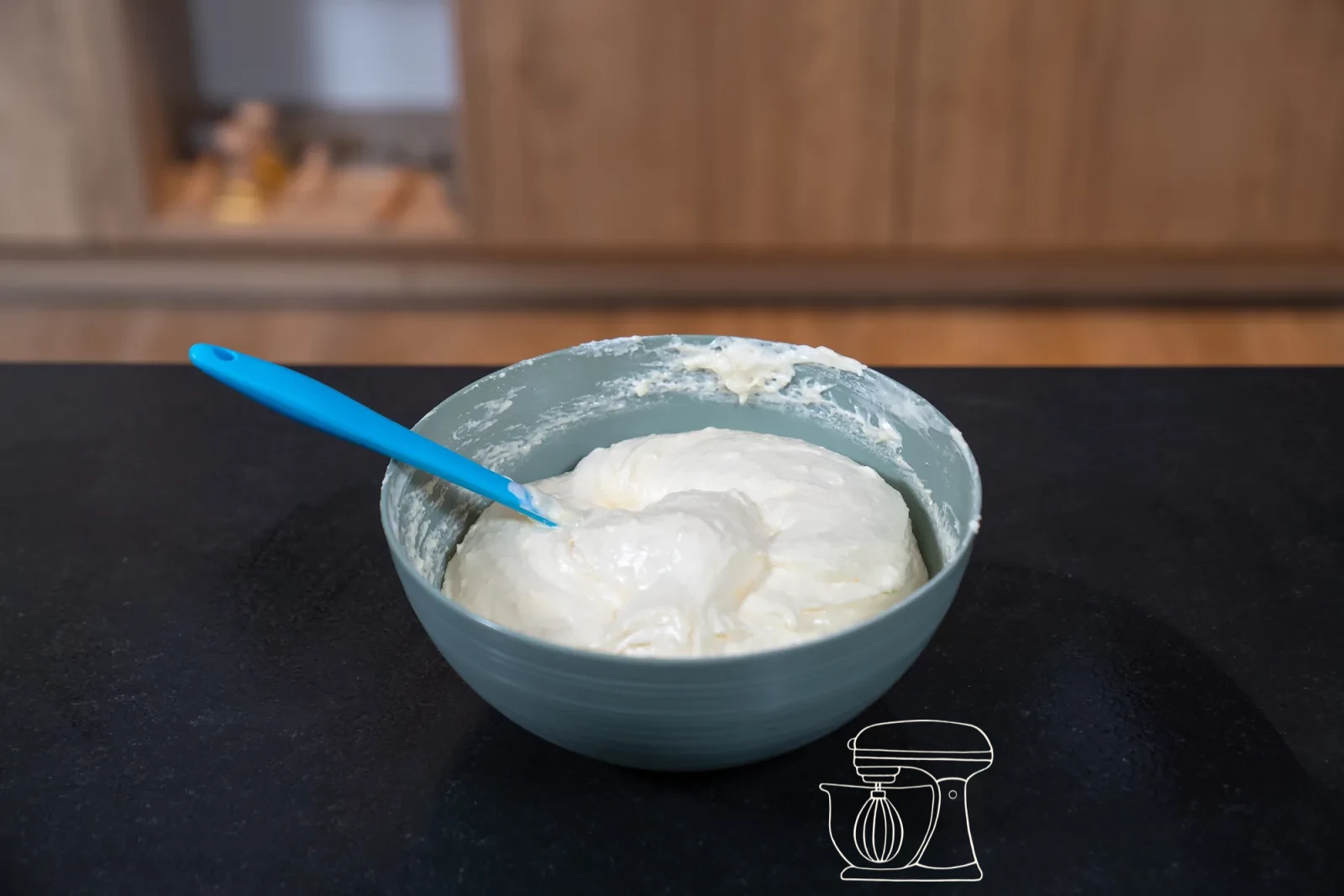
Fold half of the egg white into the egg yolk mixture, sift 250 g flour over it and fold it in gently from the bottom to the top. Finally, add the remaining egg white.
Small silicone dough scraper
Pipe the strips and bases
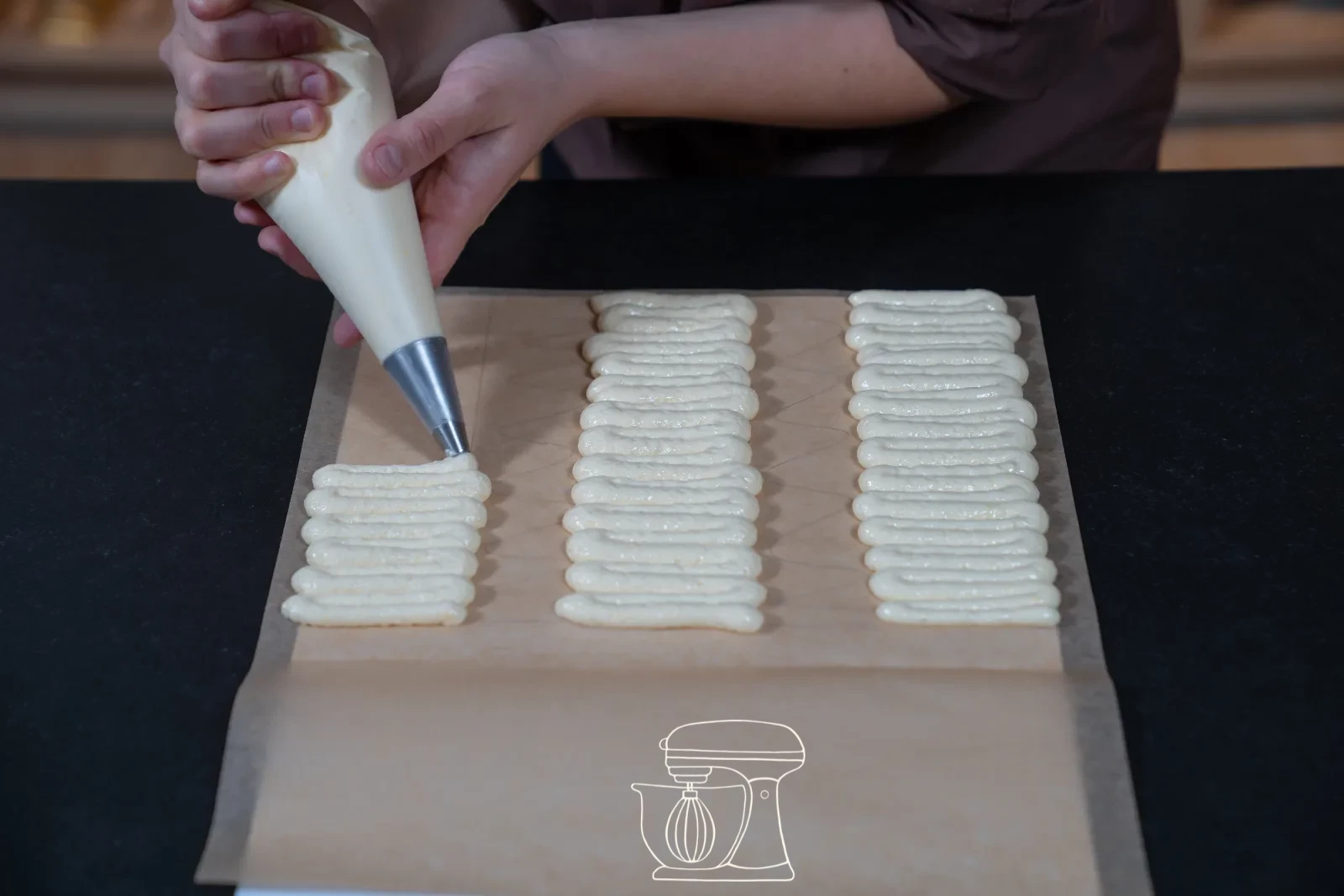
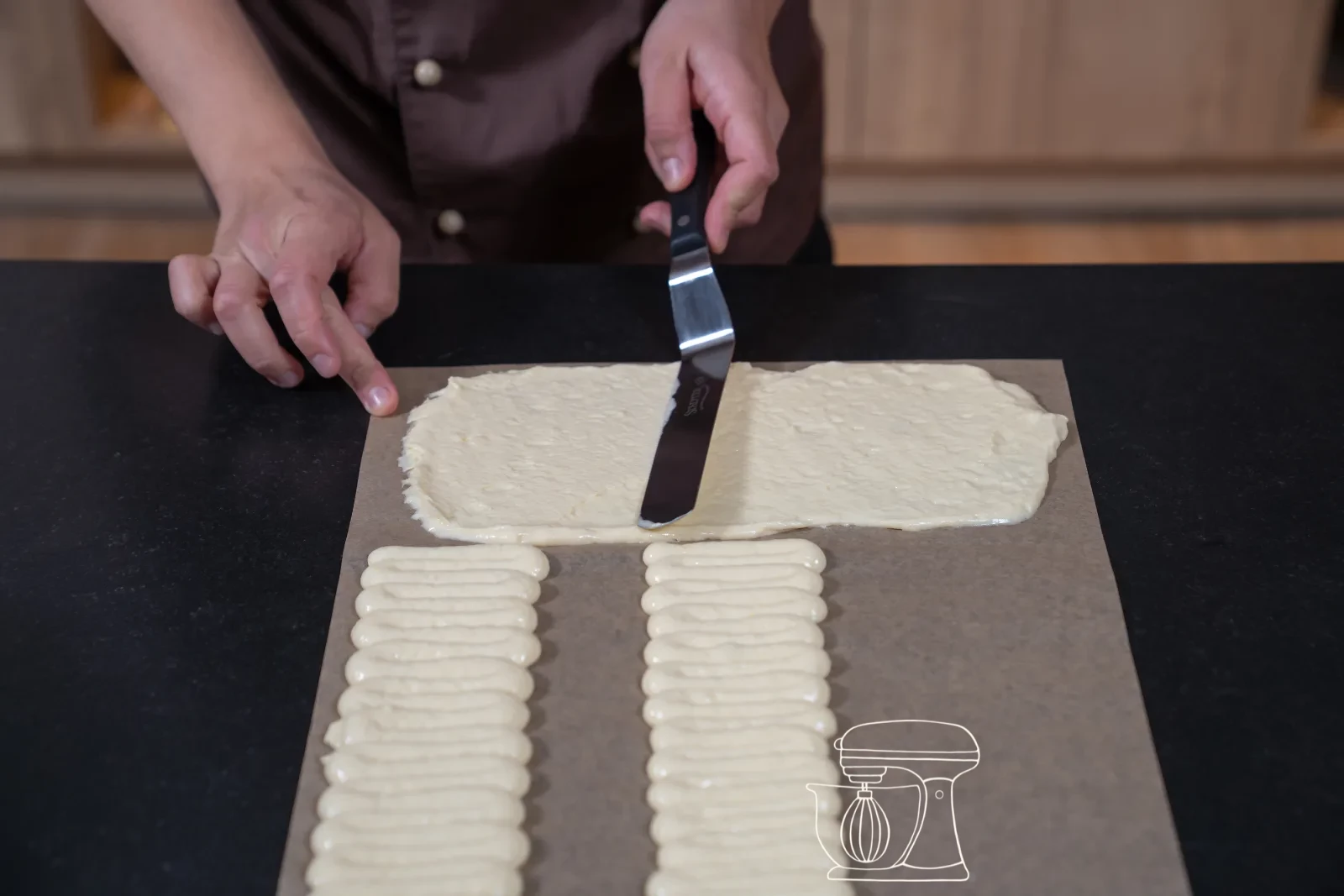
Fill the mixture into a Piping bag fitted with an 8 mm Round piping nozzle. Pipe the strips in a zigzag across the 6 cm width, close together, until the 22 cm are filled – this creates the typical ribbed pattern of the charlotte. Then pipe a flat rectangle for the bases and smooth it with the Spreading palette.
Round piping nozzle 8 mm
Disposable piping bag - 41cm - 24pcs
Angled spatula Medium with plastic handle
Bake and sugar
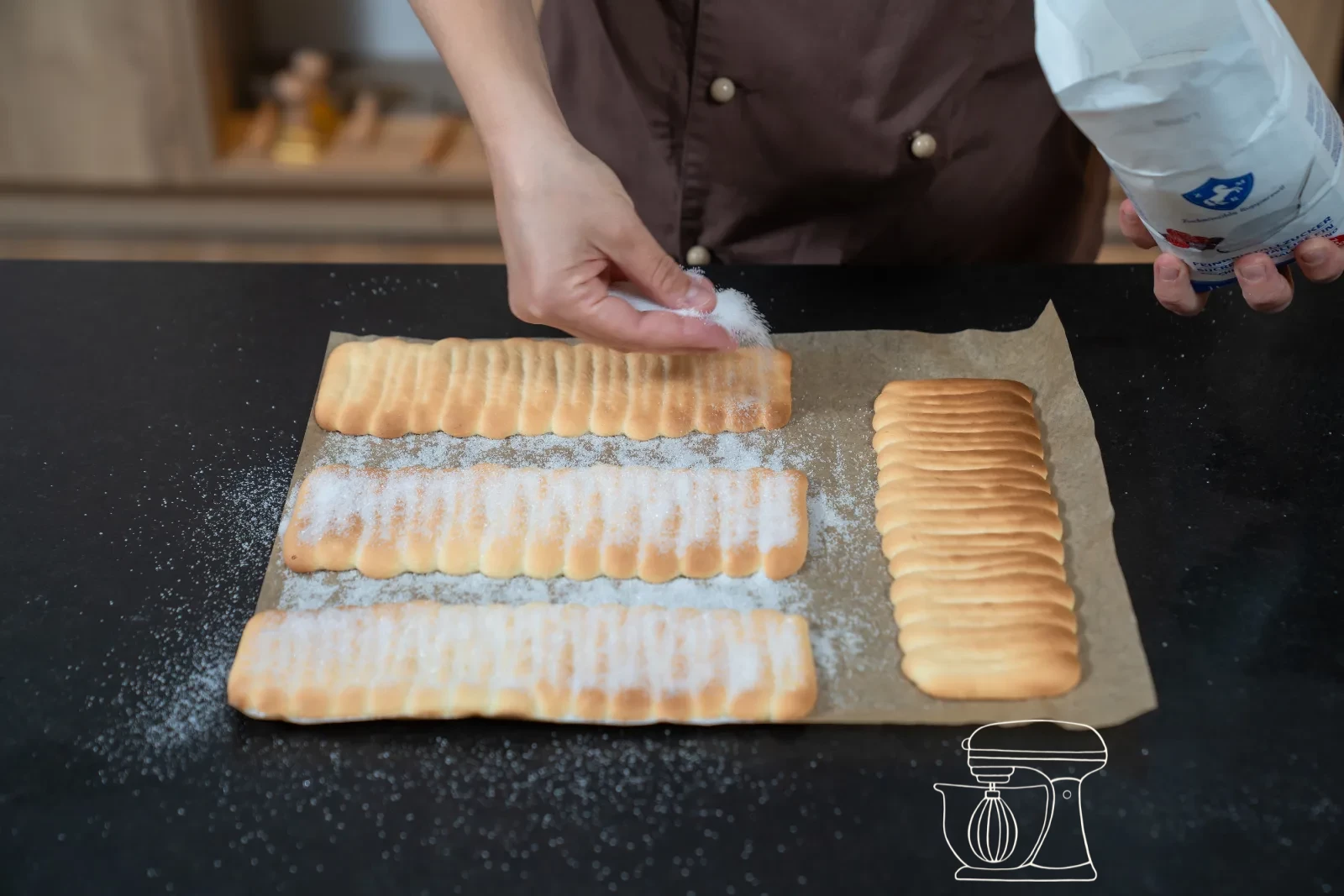
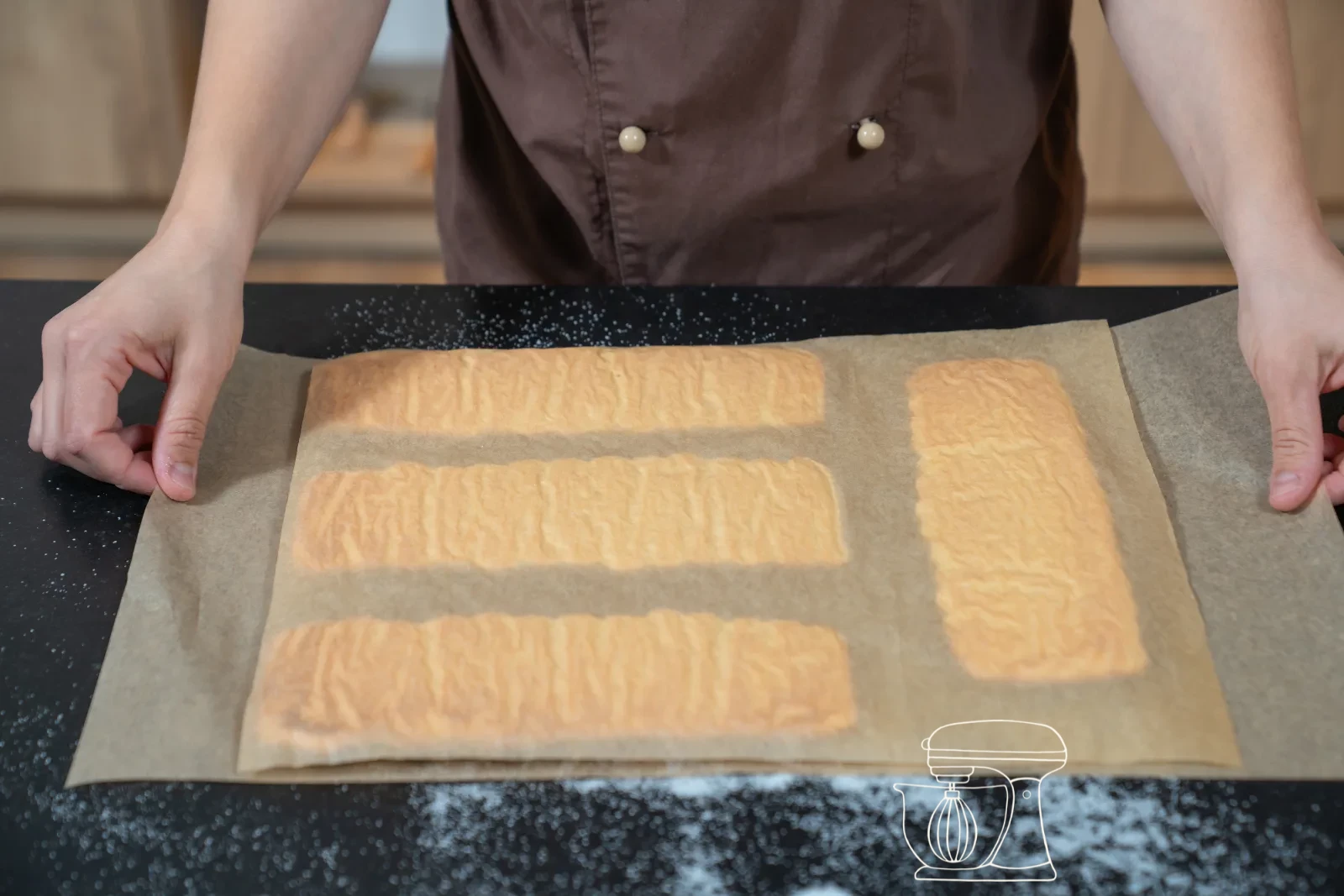
Bake the strips and bases at 230 °C fan for 5–7 minutes, until the sponge is pale golden. Dust it generously with sugar immediately after taking it out, lay a fresh sheet of baking paper over it and turn it over. The sugar prevents the hot sponge from sticking to the paper. Let it cool completely.
The two creams
Cook the vanilla cream
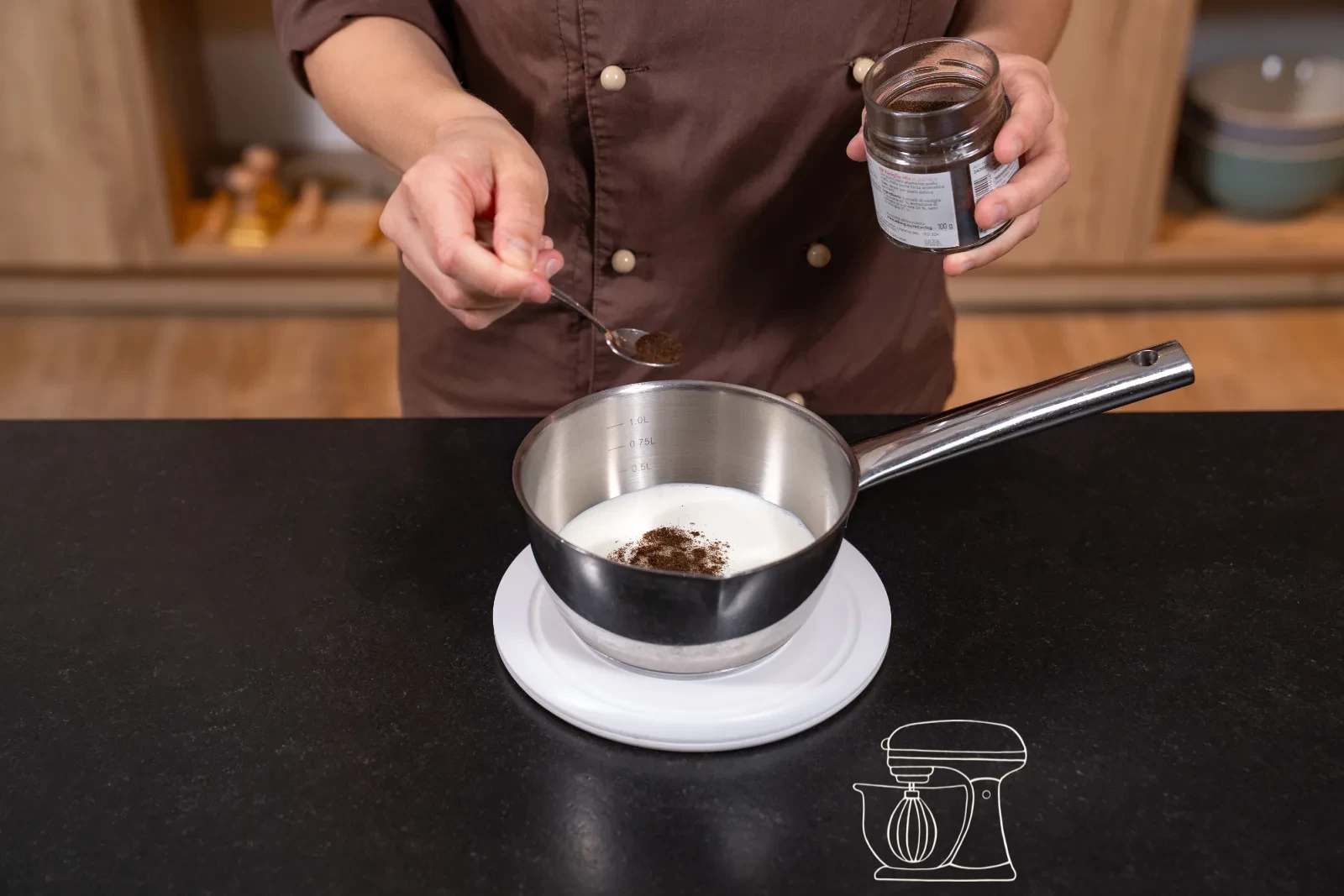
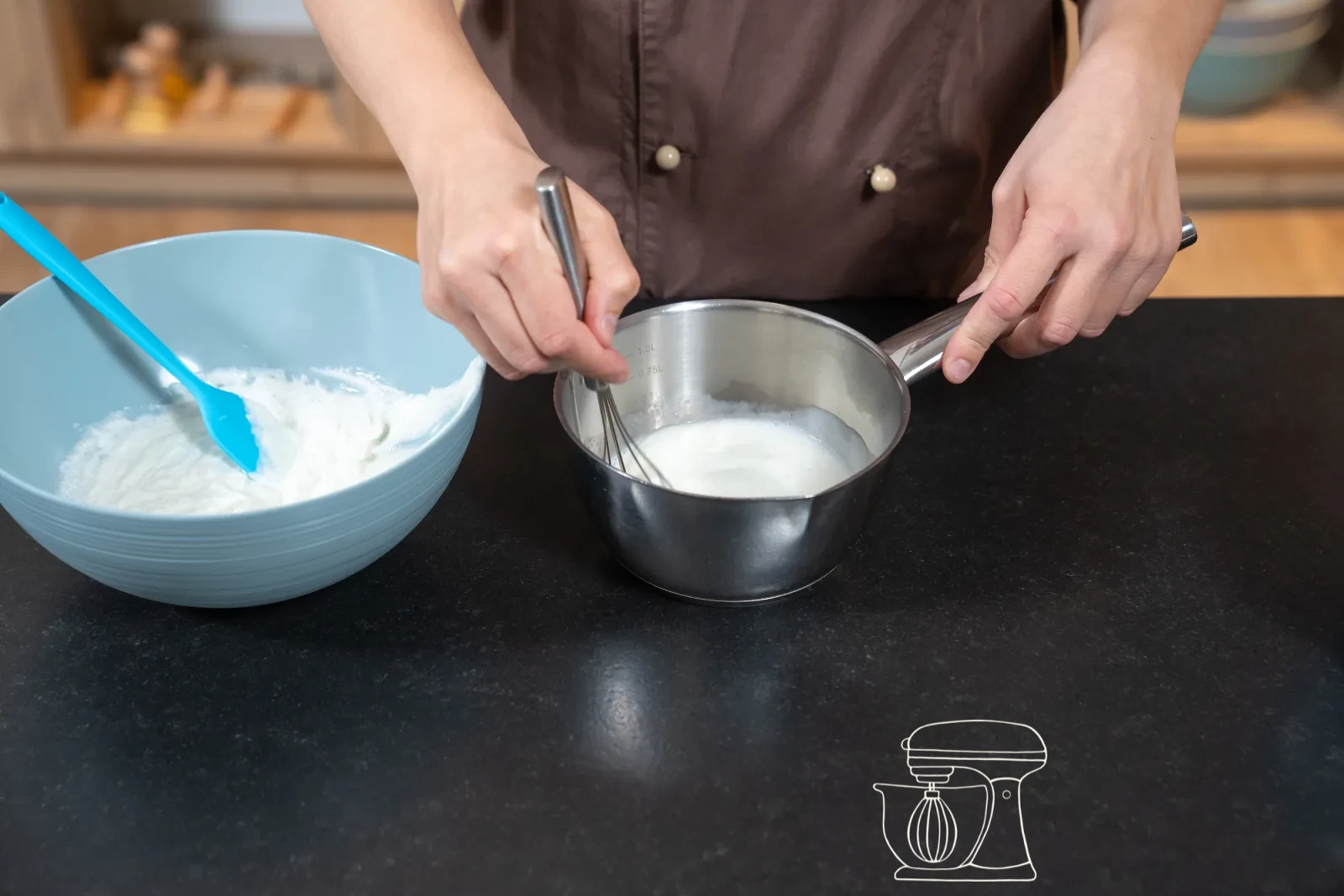
Heat 100 ml whole milk with 20 g sugar and a pinch of Vanilla. Mix 12 g Vanilla cream powder lump-free with 20 ml cold milk. Stir in a little of the hot milk.
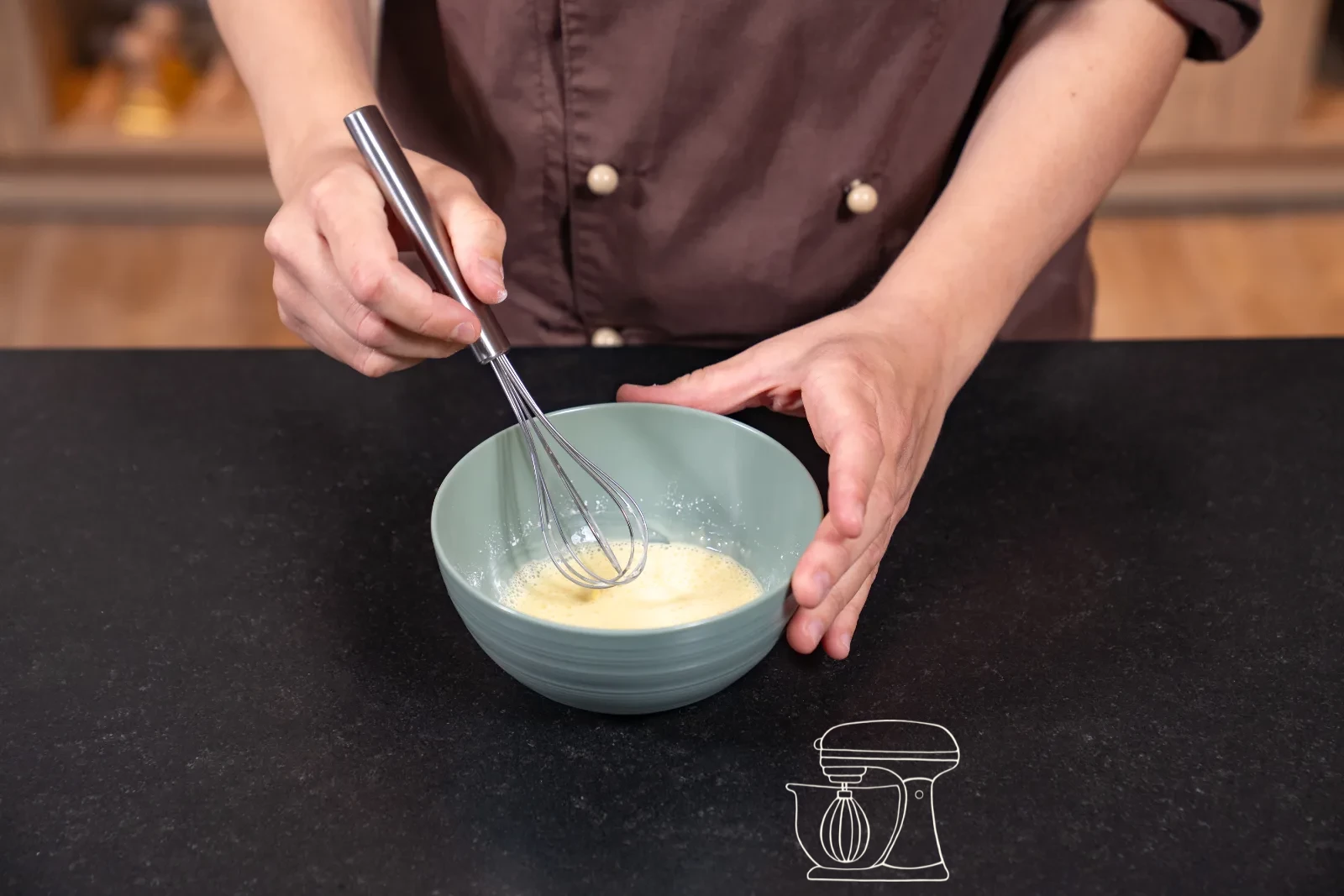
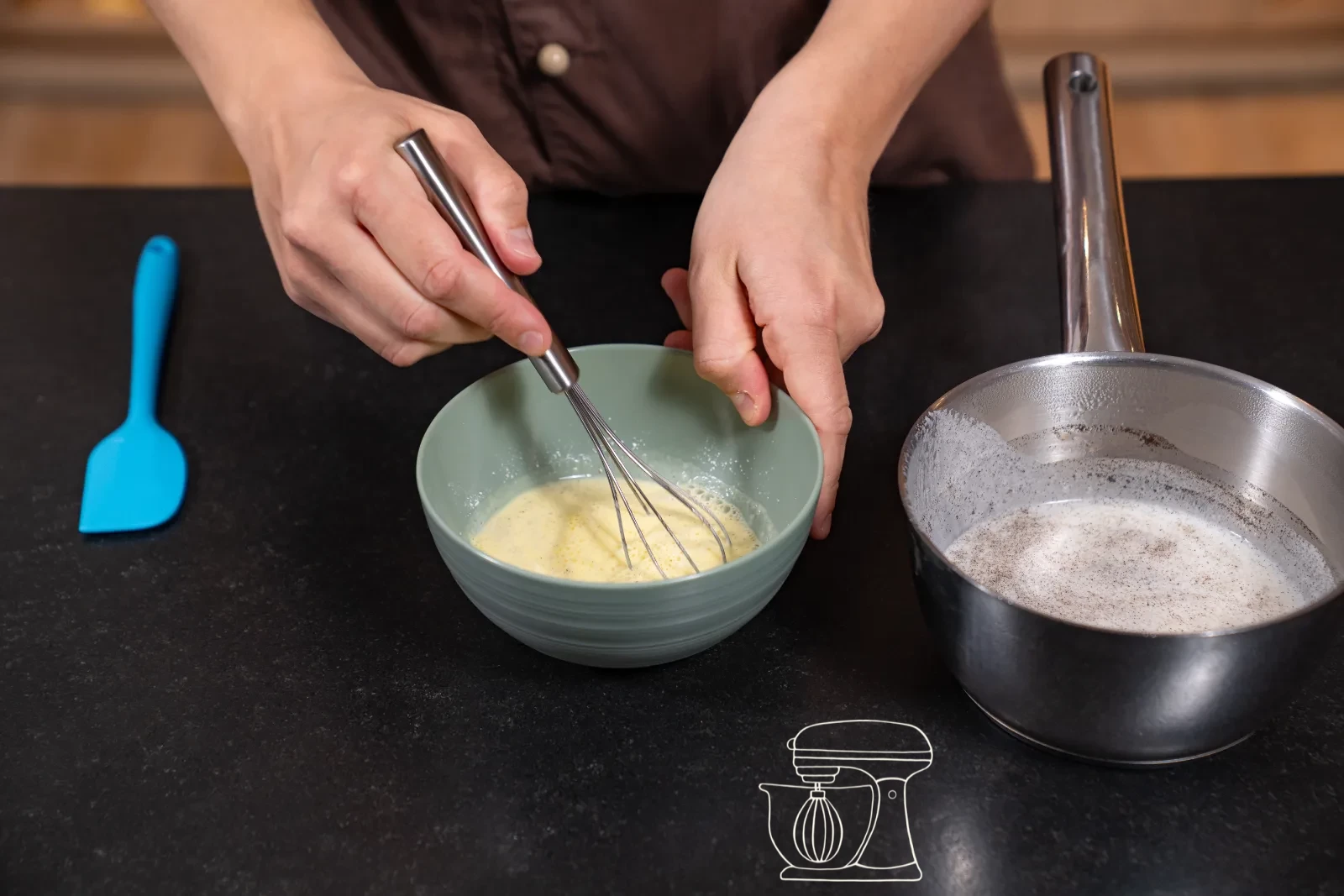
Bourbon vanilla seeds, 5 g
Vanilla cream powder, 120 g
Small whisk 21.5 cm
Cook the vanilla cream
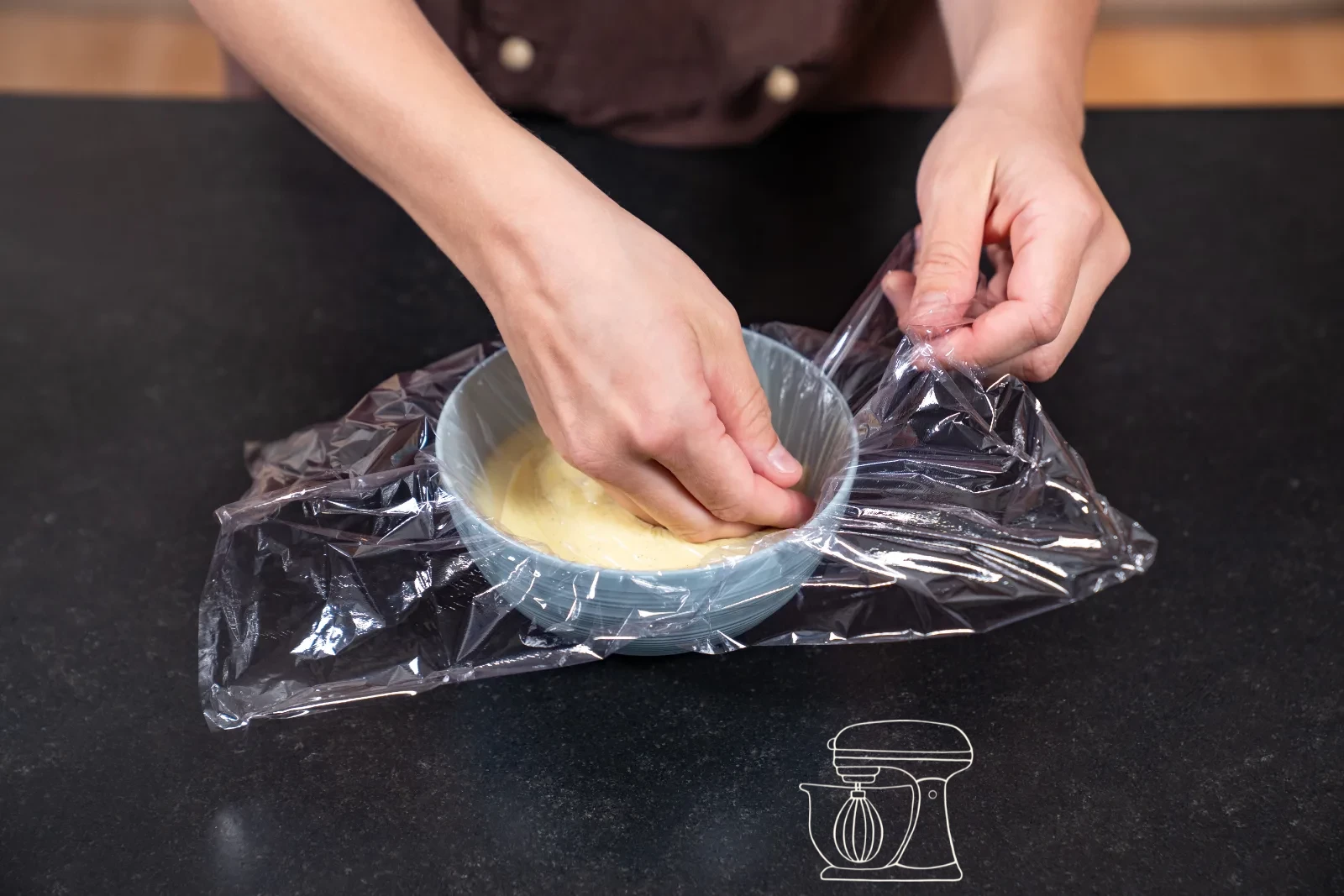
Pour everything back into the pot and bring the cream to the boil while stirring, until it thickens. Cover it with film directly on the surface and chill it completely.
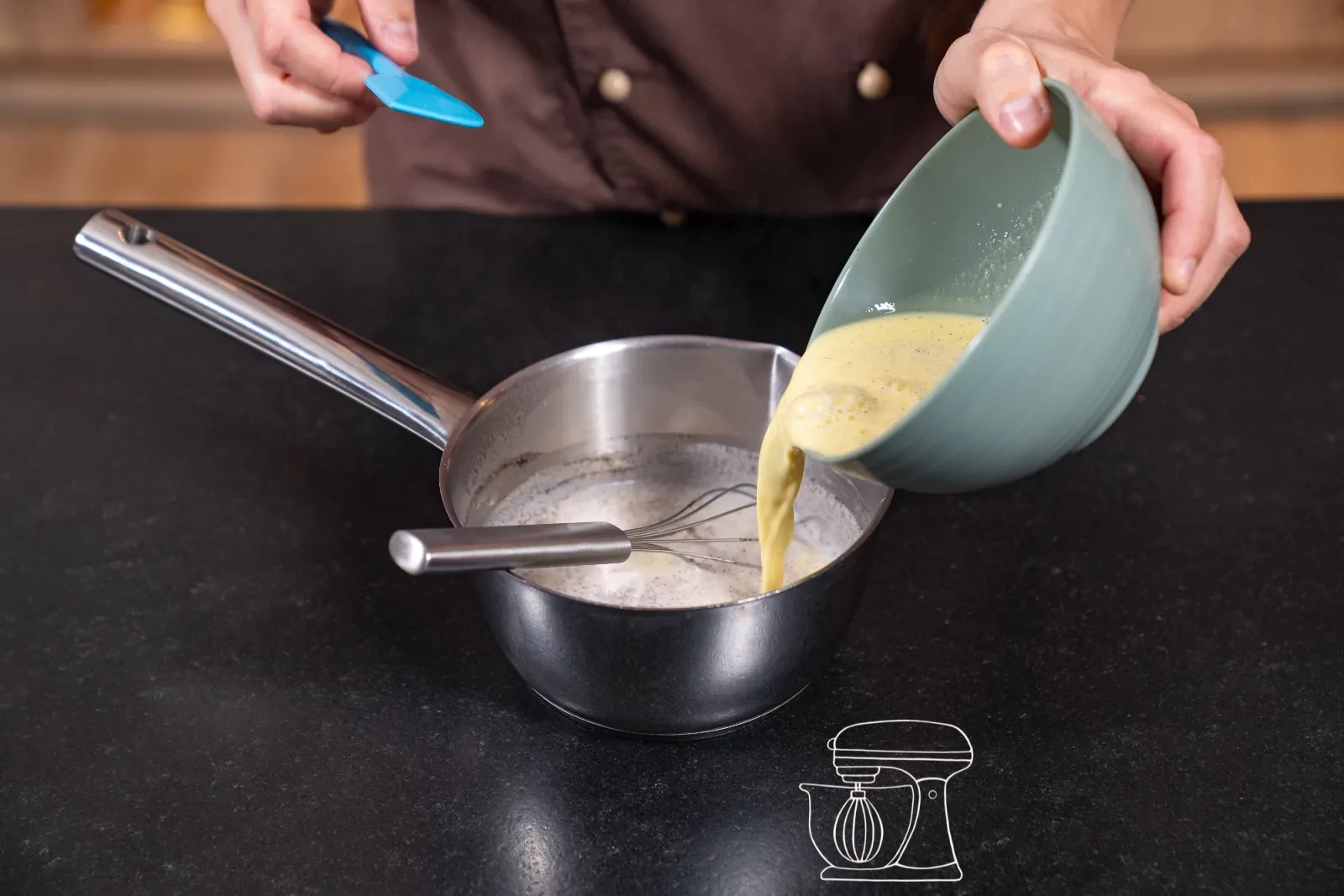
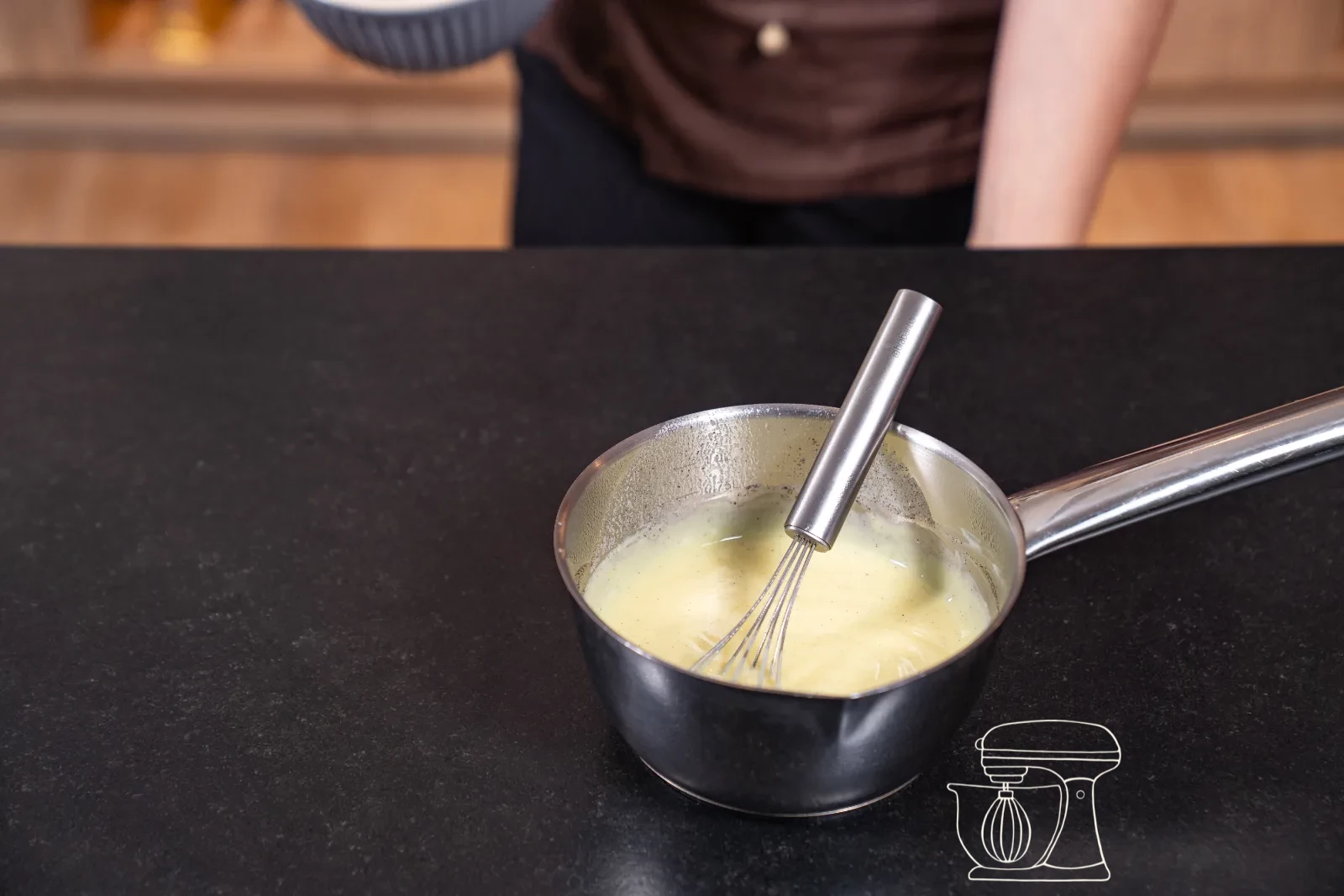
Cook the vanilla cream
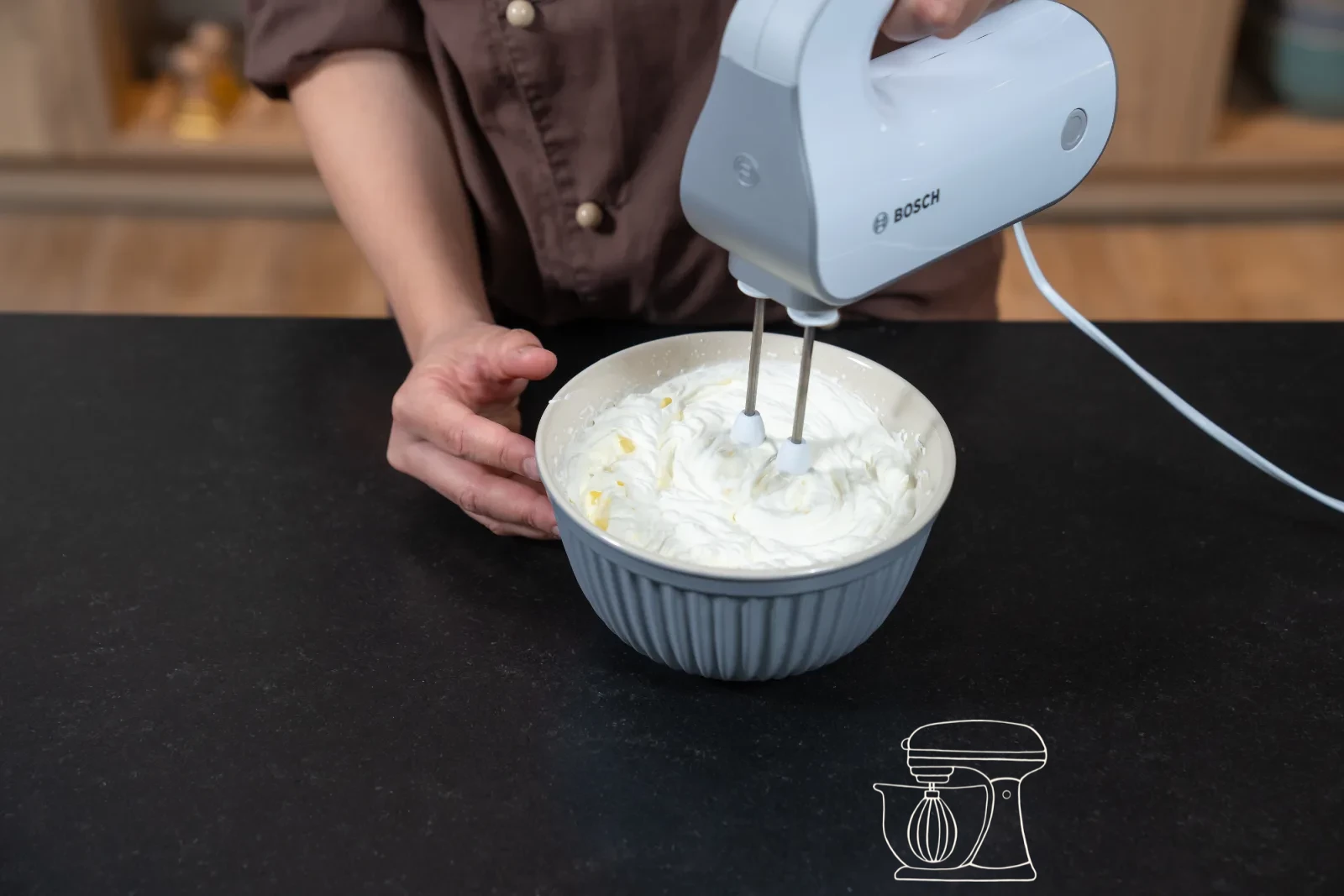
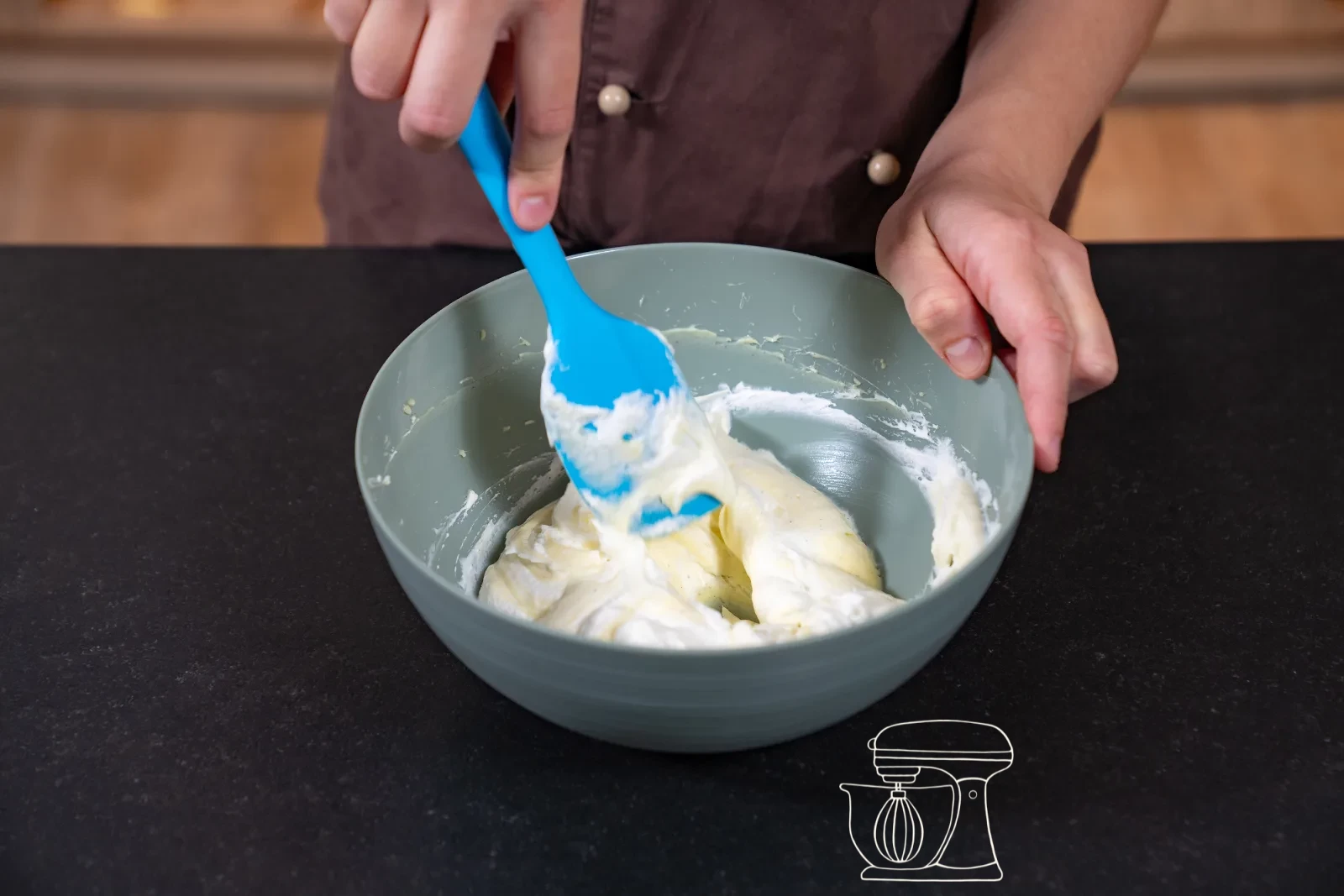
Then whip 65 g full cream until stiff, briefly stir the cold cream smooth and fold in the cream.
Make the quark cream
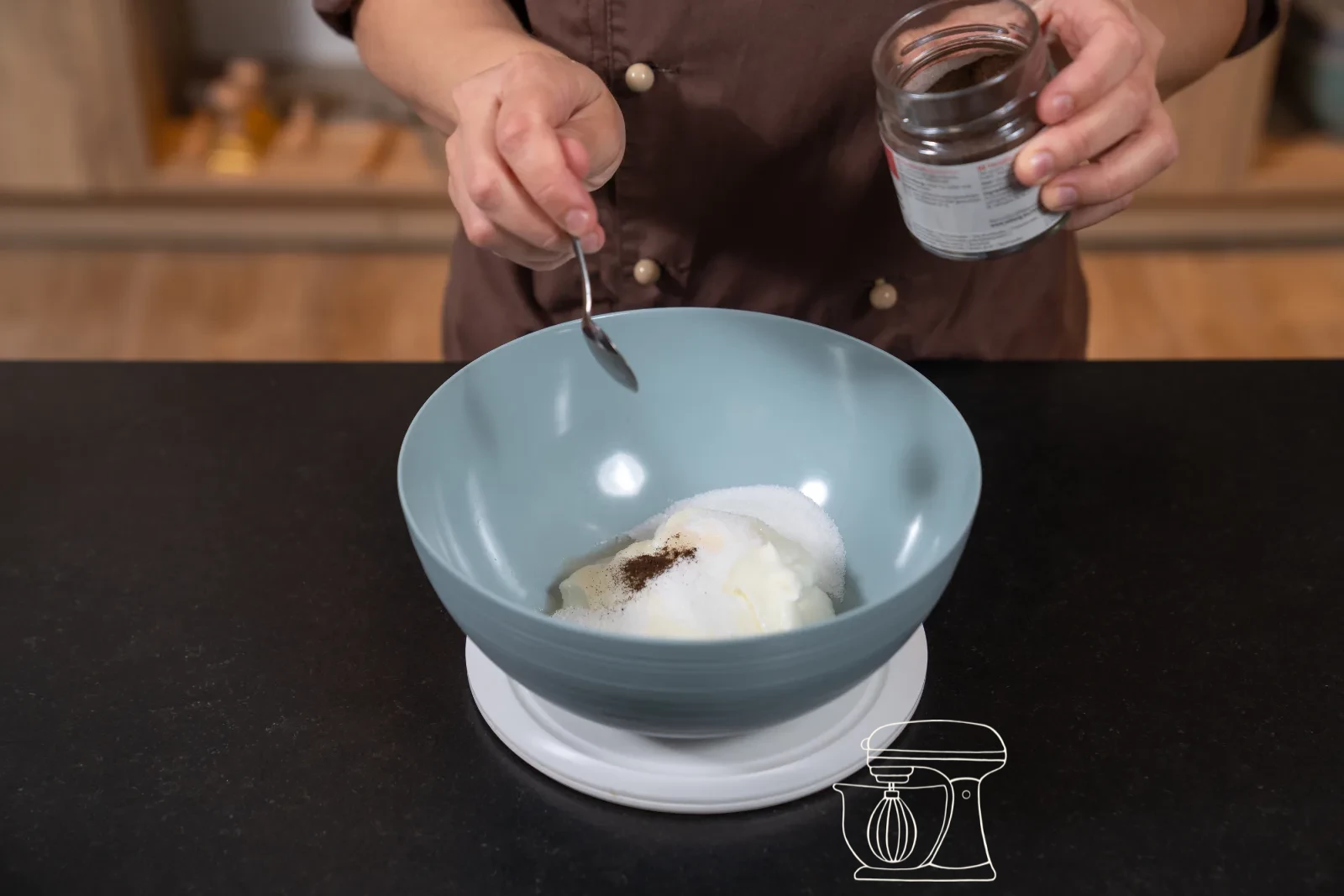
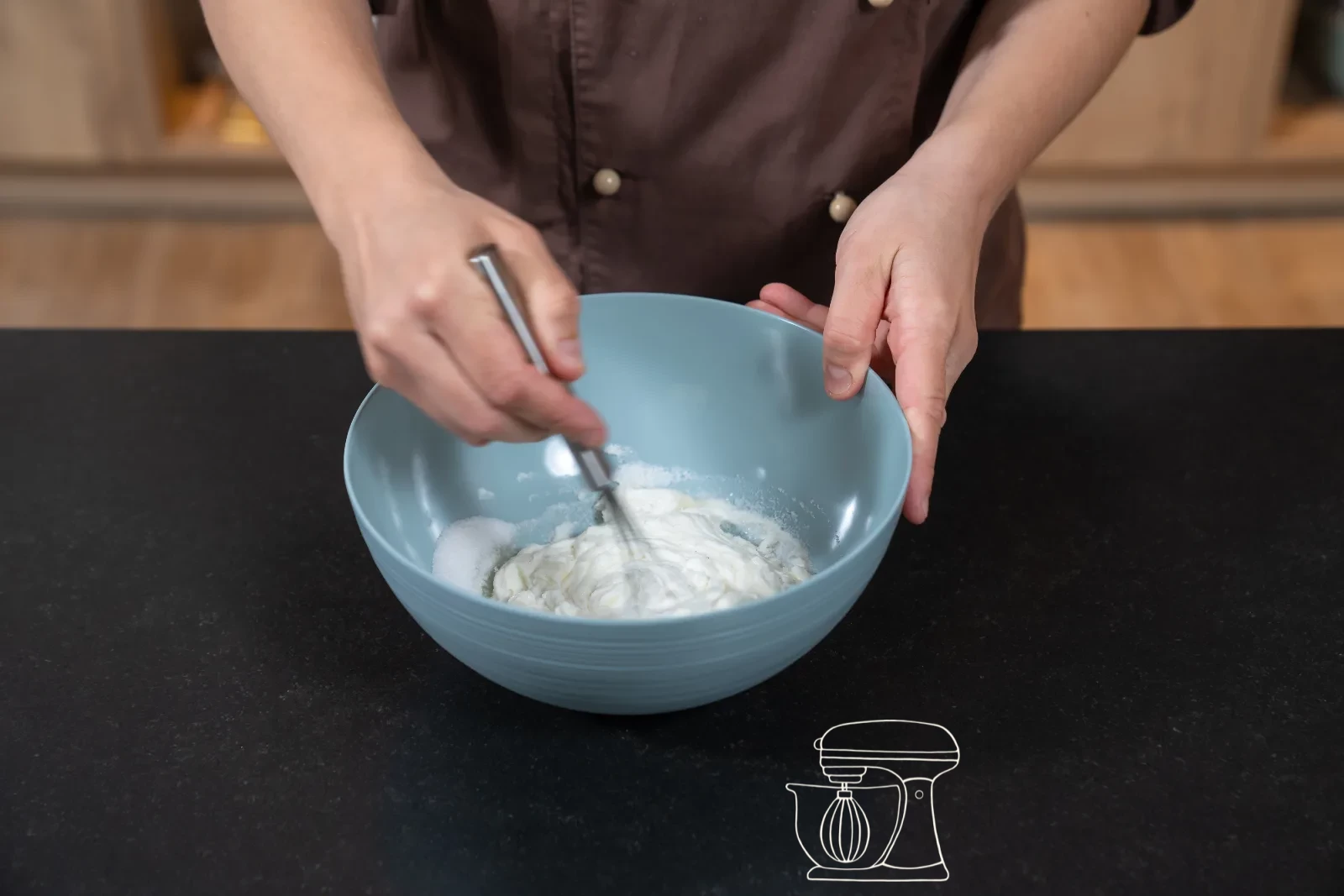
Bourbon vanilla seeds, 5 g
Small whisk 21.5 cm
RUF gelatine sheets, 12 pieces
Make the quark cream
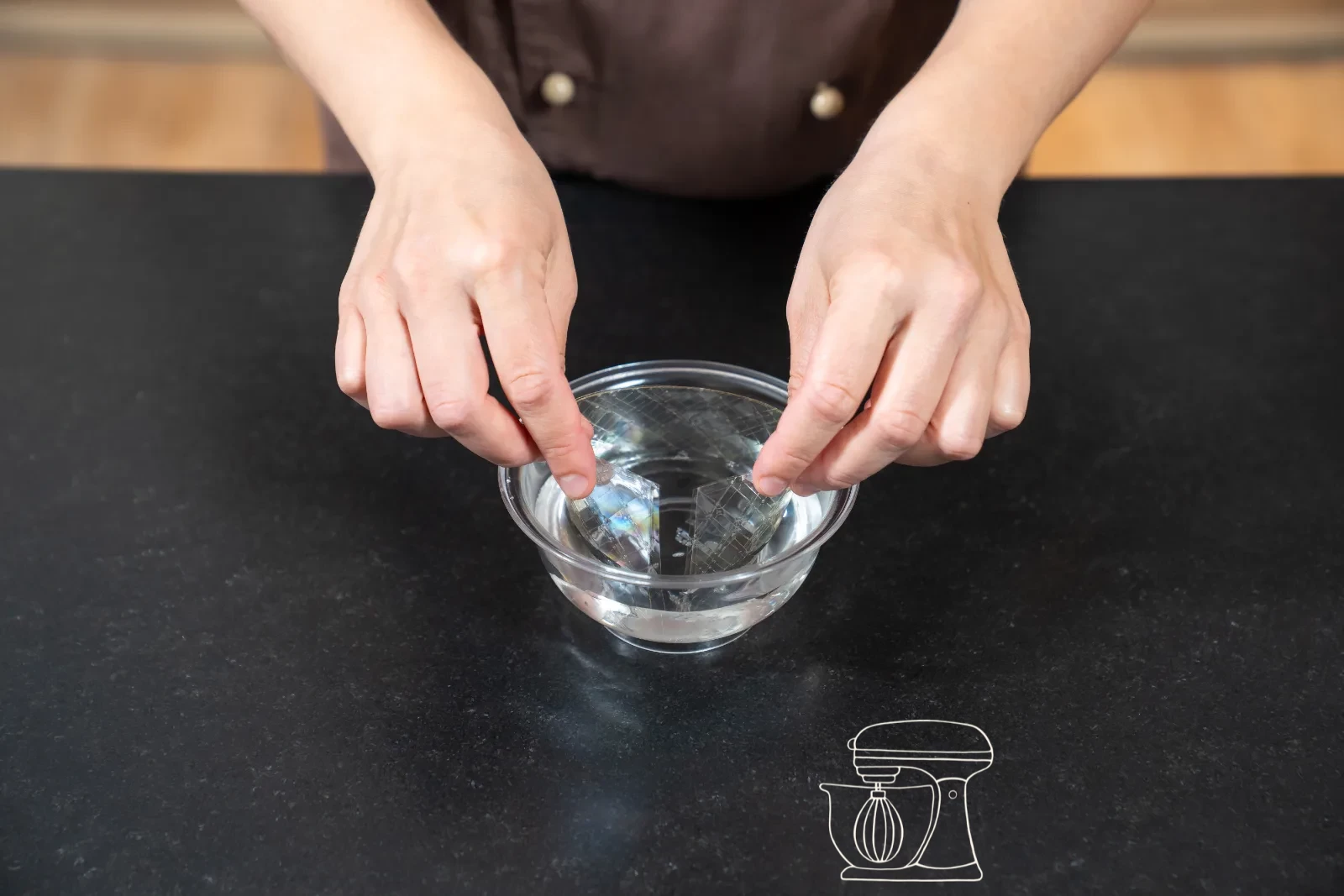
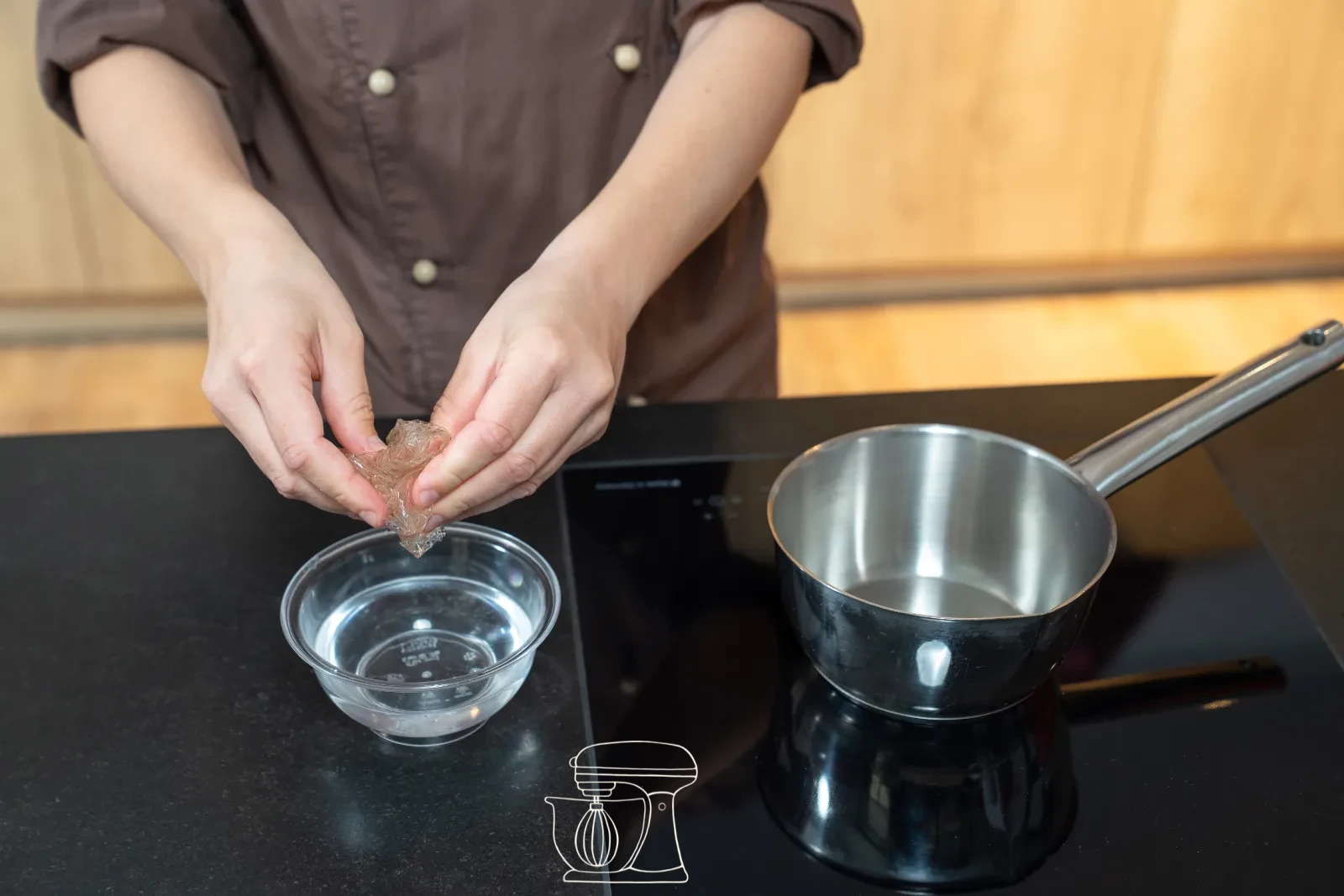
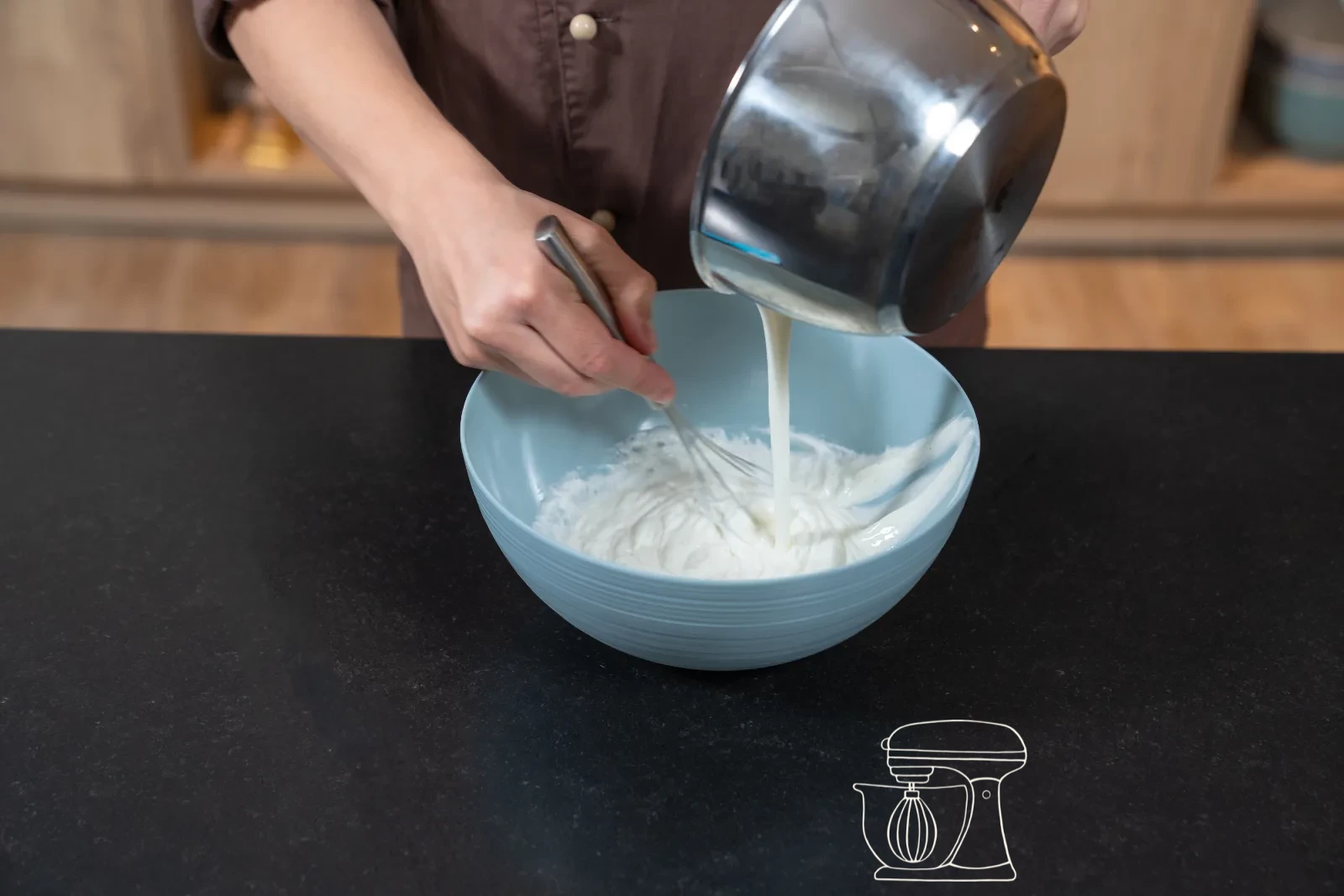
Squeeze out the Gelatine, melt it over low heat and stir it into the quark straight away.
Make the quark cream
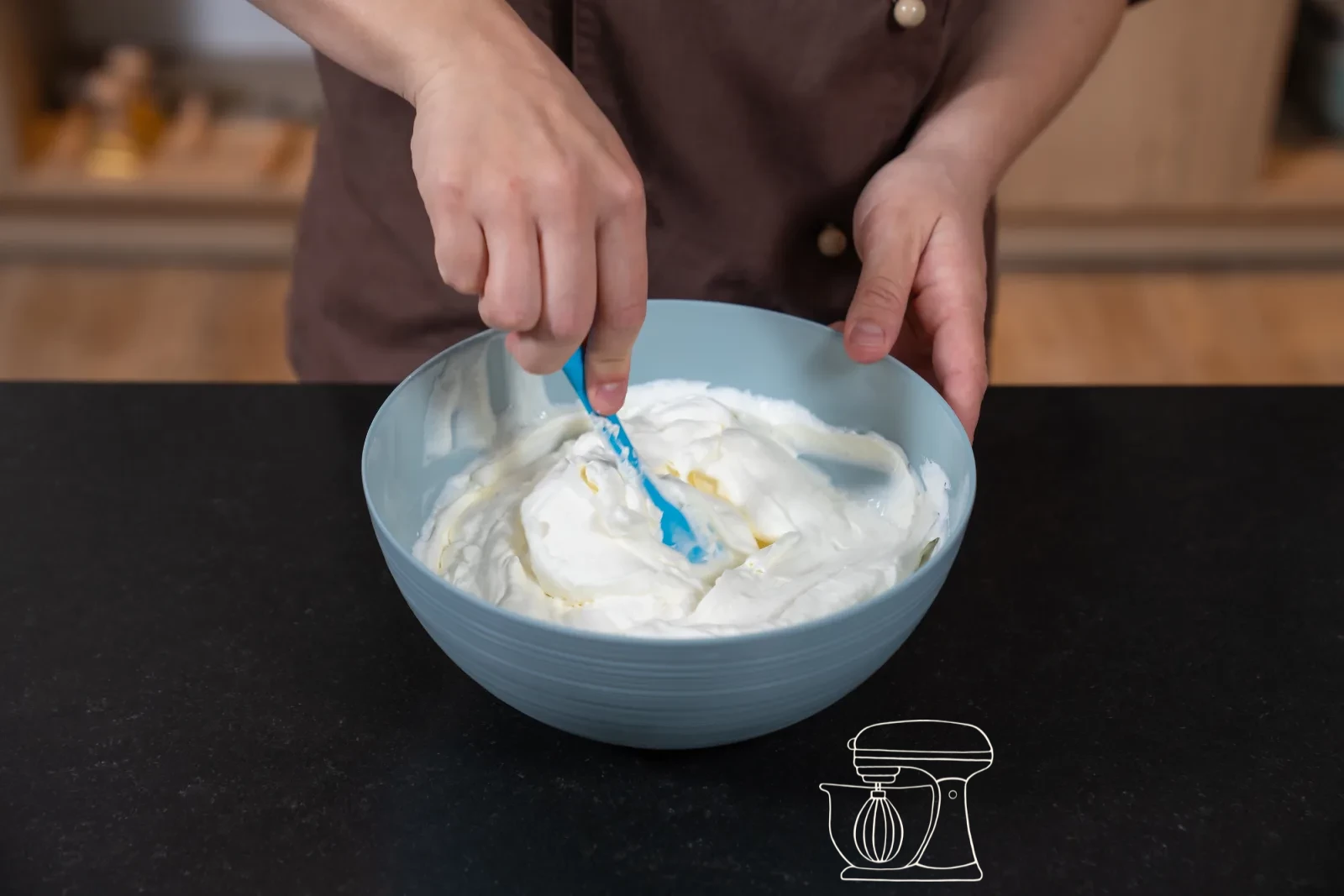
Whip 145 g full cream until stiff and fold it in in three portions – this keeps the cream airy.
Assembling and decorating the charlotte royale
Line the molds and trim the sponge
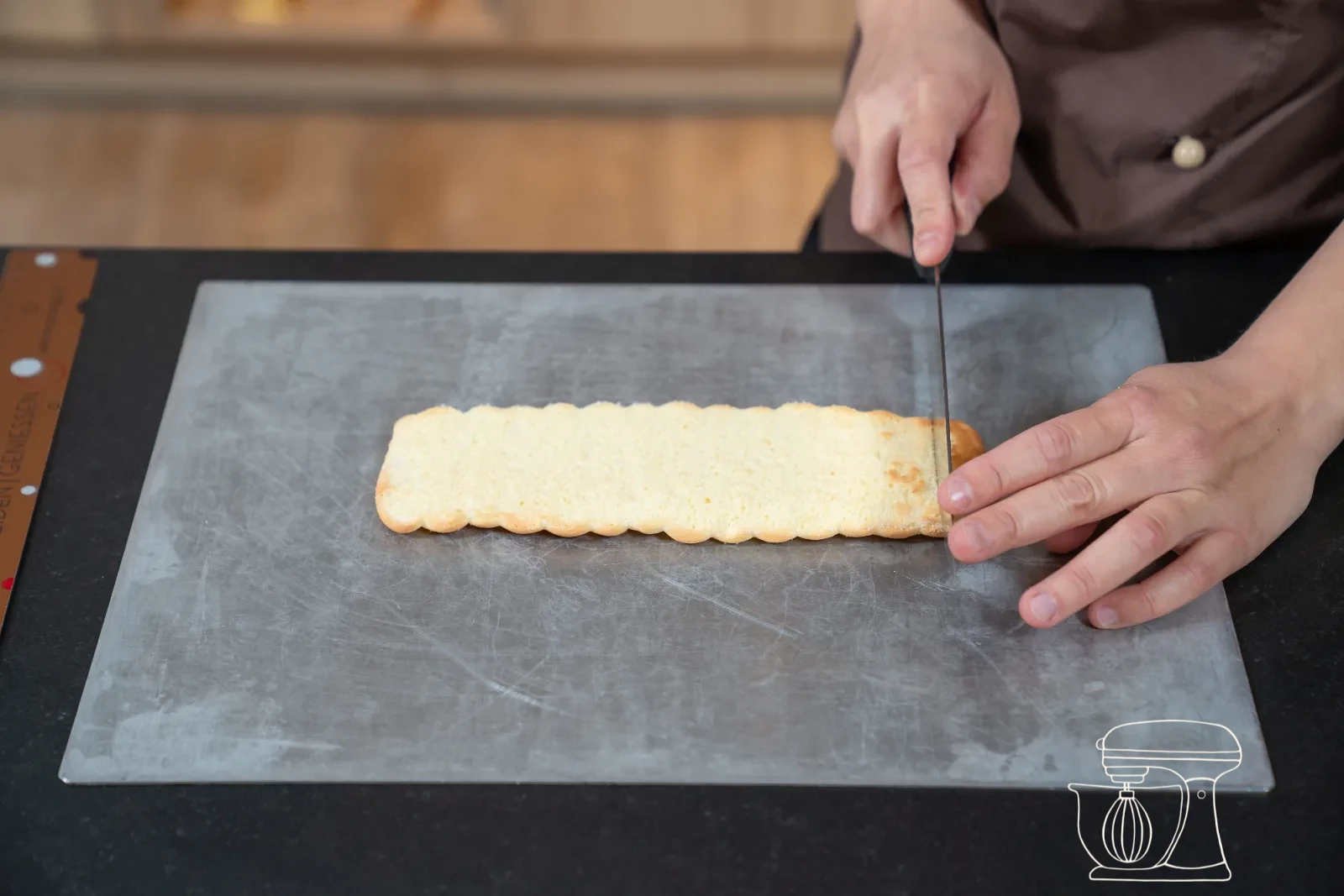
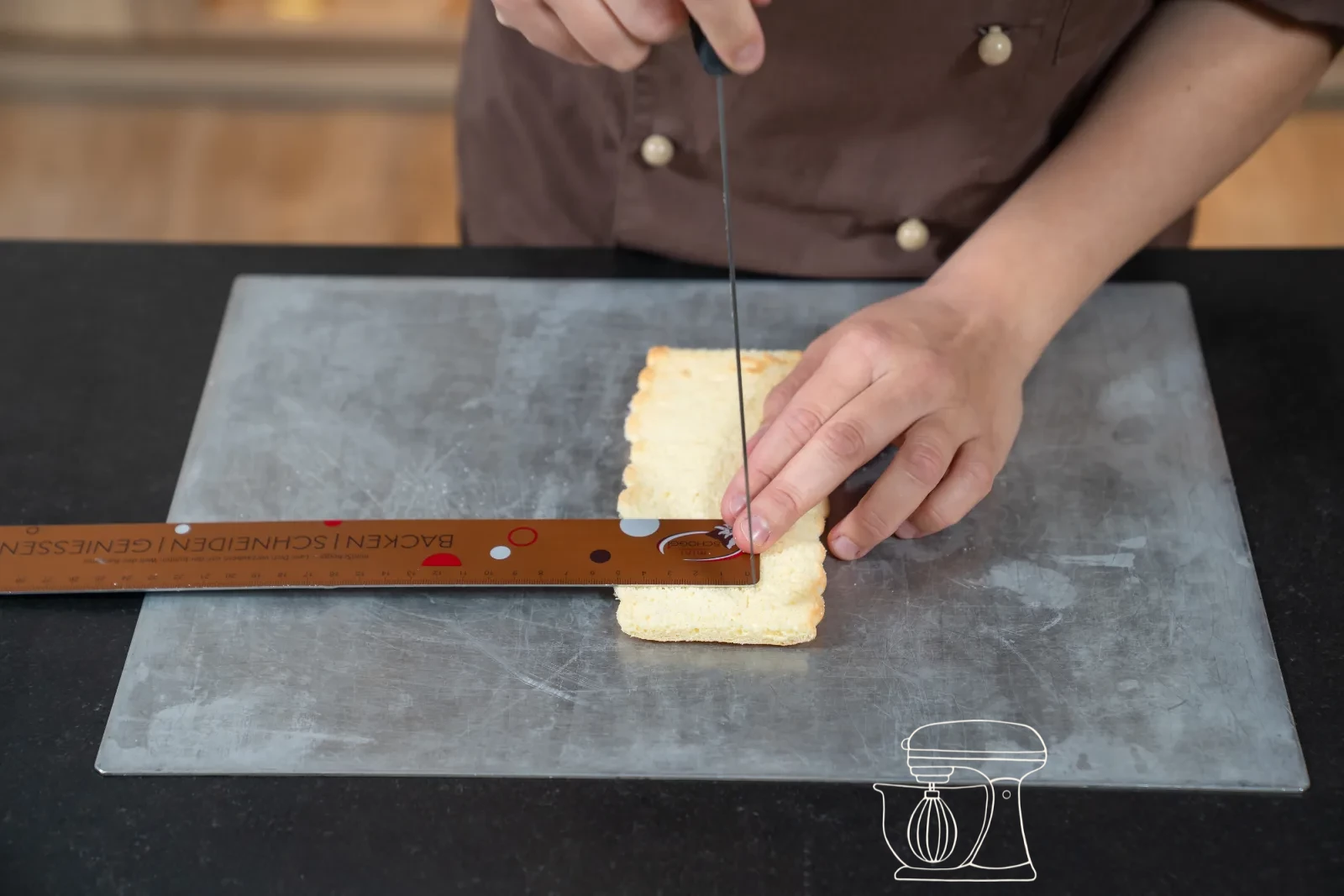
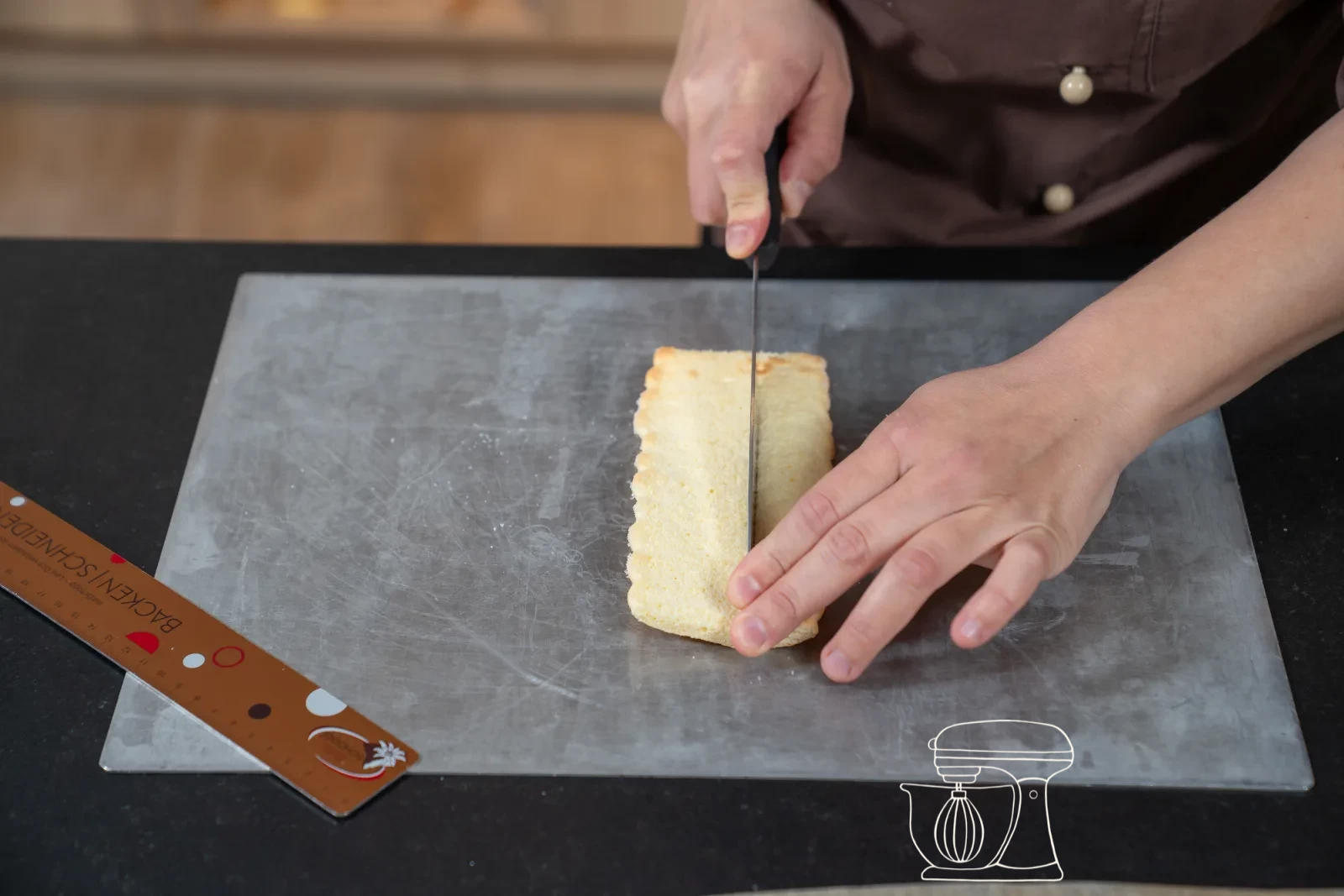
Cut the Cake insert strips to 18 cm and place one in each of the round patisserie molds – this way the charlotte releases cleanly later. Trim the cooled sponge strips from 6 to 5 cm in height and to 18 cm in length.
Insert strips for Cake rings 10 m x 6 cm
Line the molds and trim the sponge
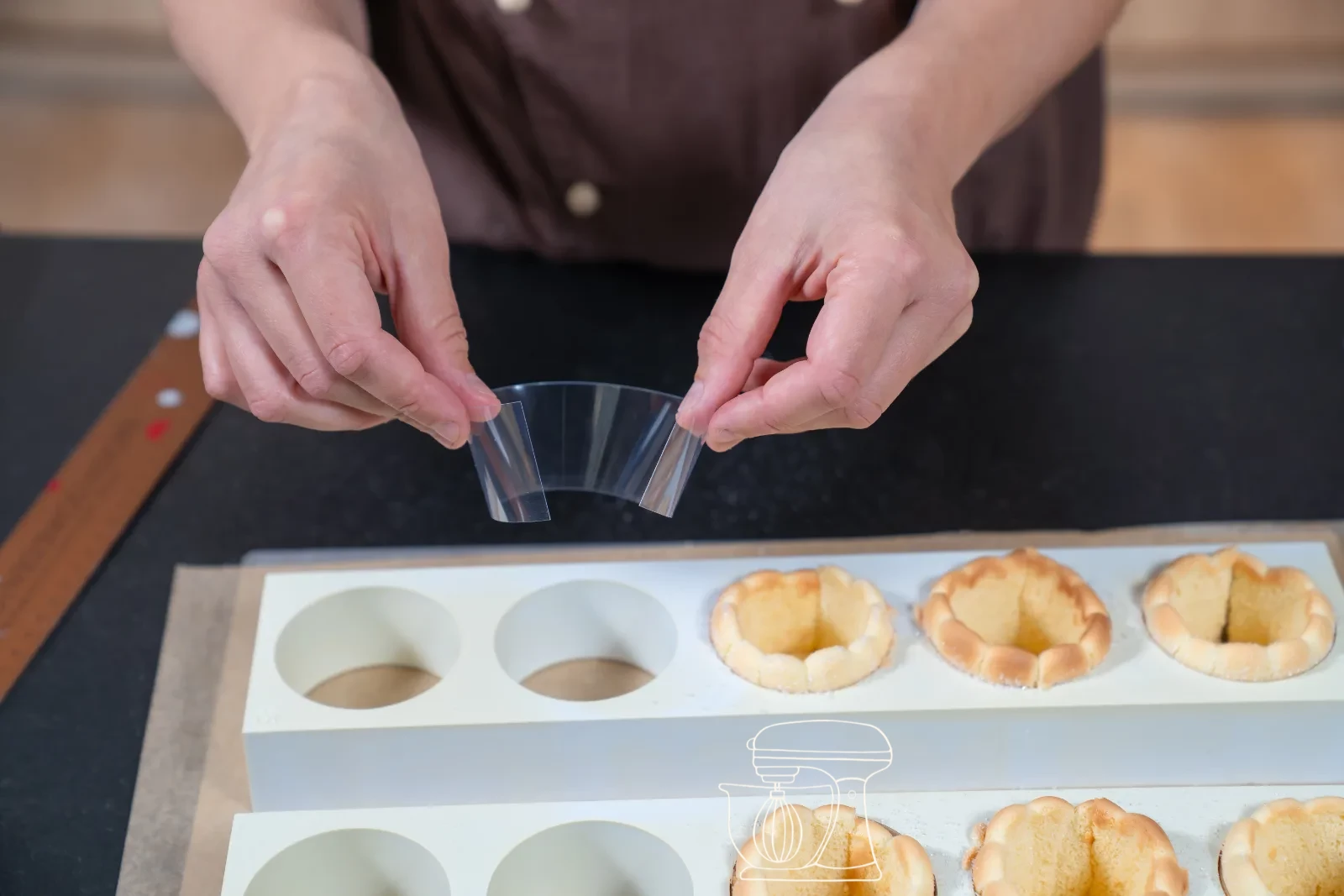
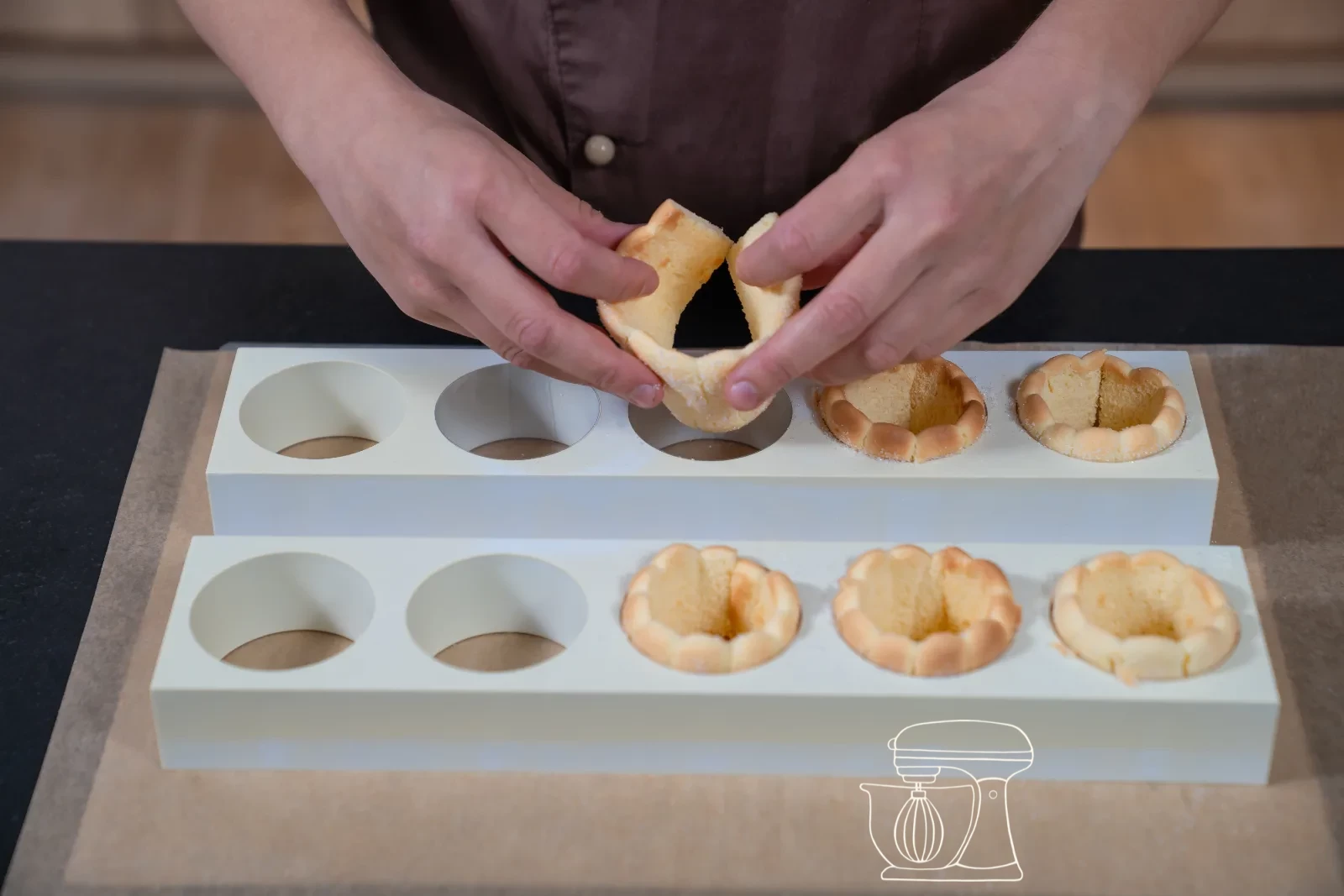
Form each strip into a ring and set it into the mold.
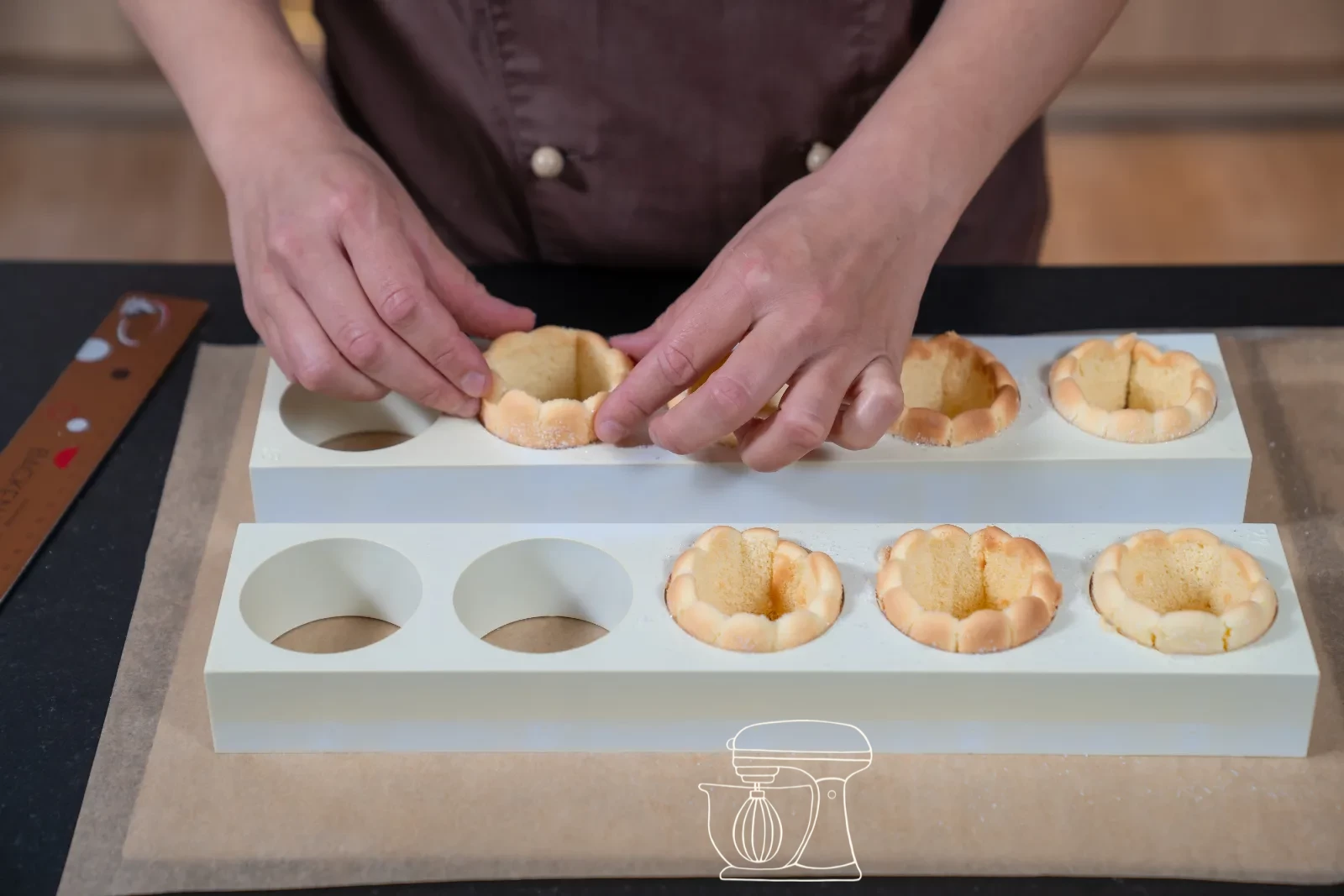
Round ejector for patisserie mold
Round patisserie mold, tray with 2 molds of 5 cavities each
Insert strips for Cake rings 10 m x 6 cm
Line the molds and trim the sponge
Cut out 10 bases with the round Cookie cutter and lay them in.
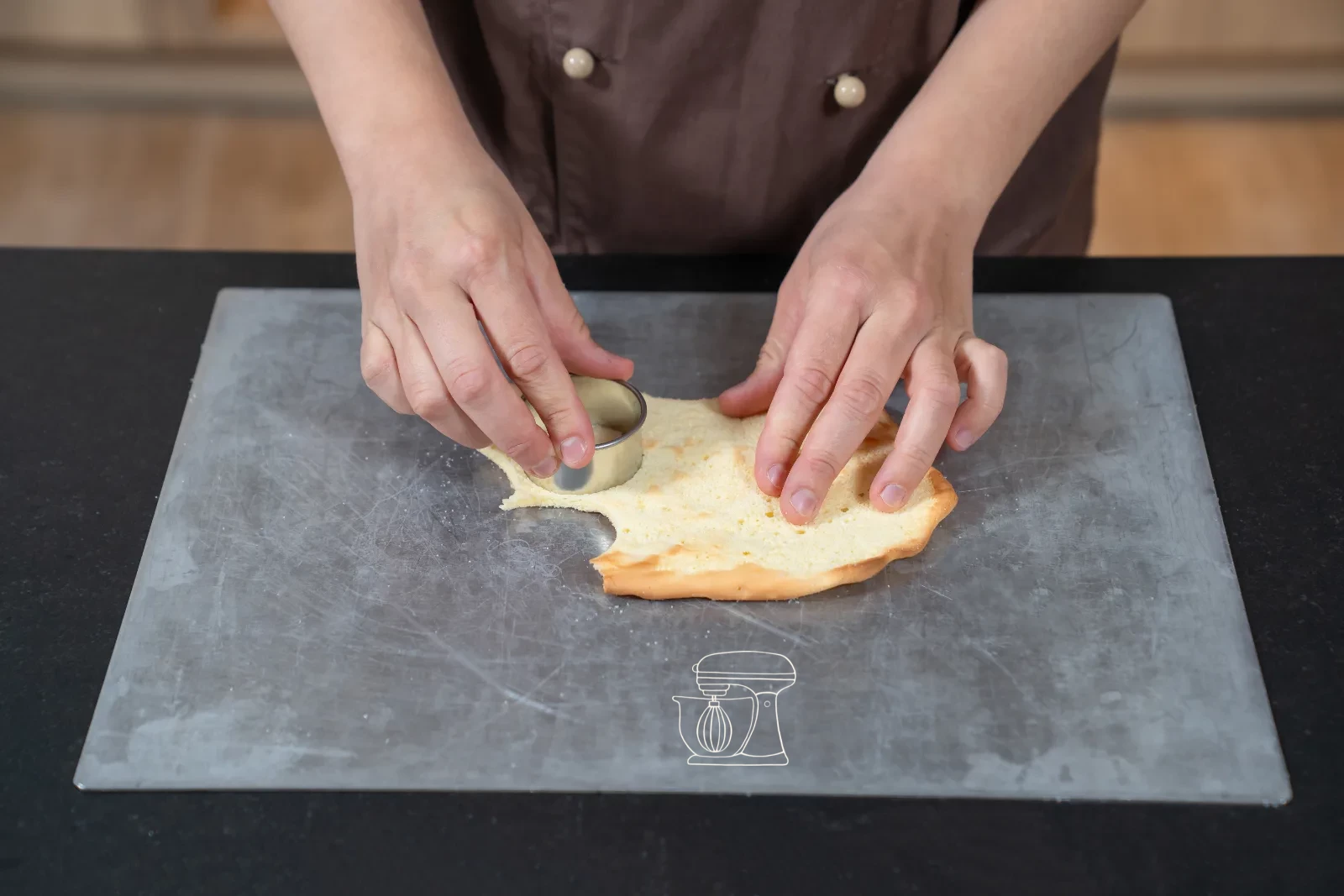
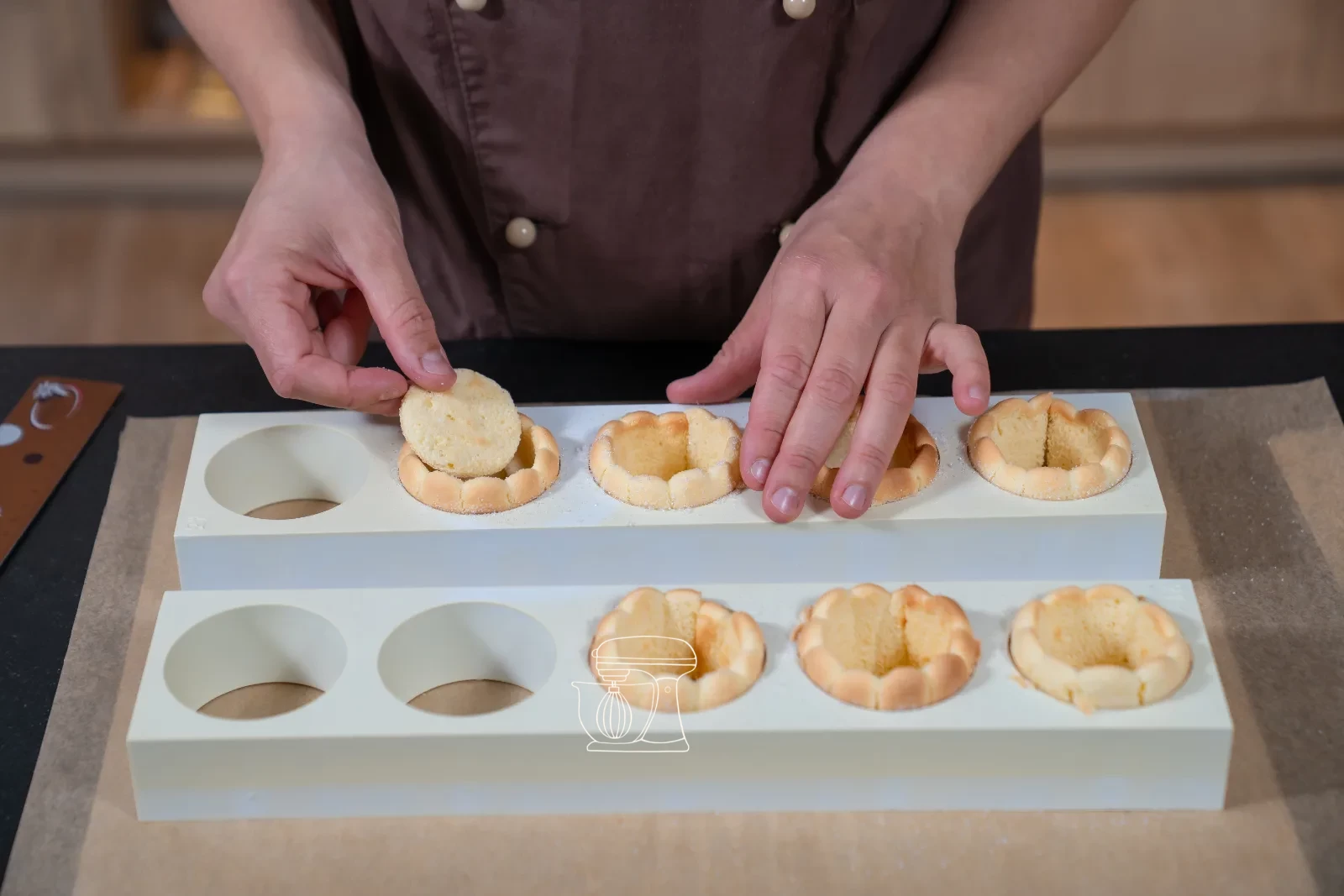
Round cookie cutter for sponge bases
Layer, decorate, chill
Fill both creams into piping bags. Per charlotte: 15 g quark cream as a base, then approx. 10 g berries, then 10 g quark cream.
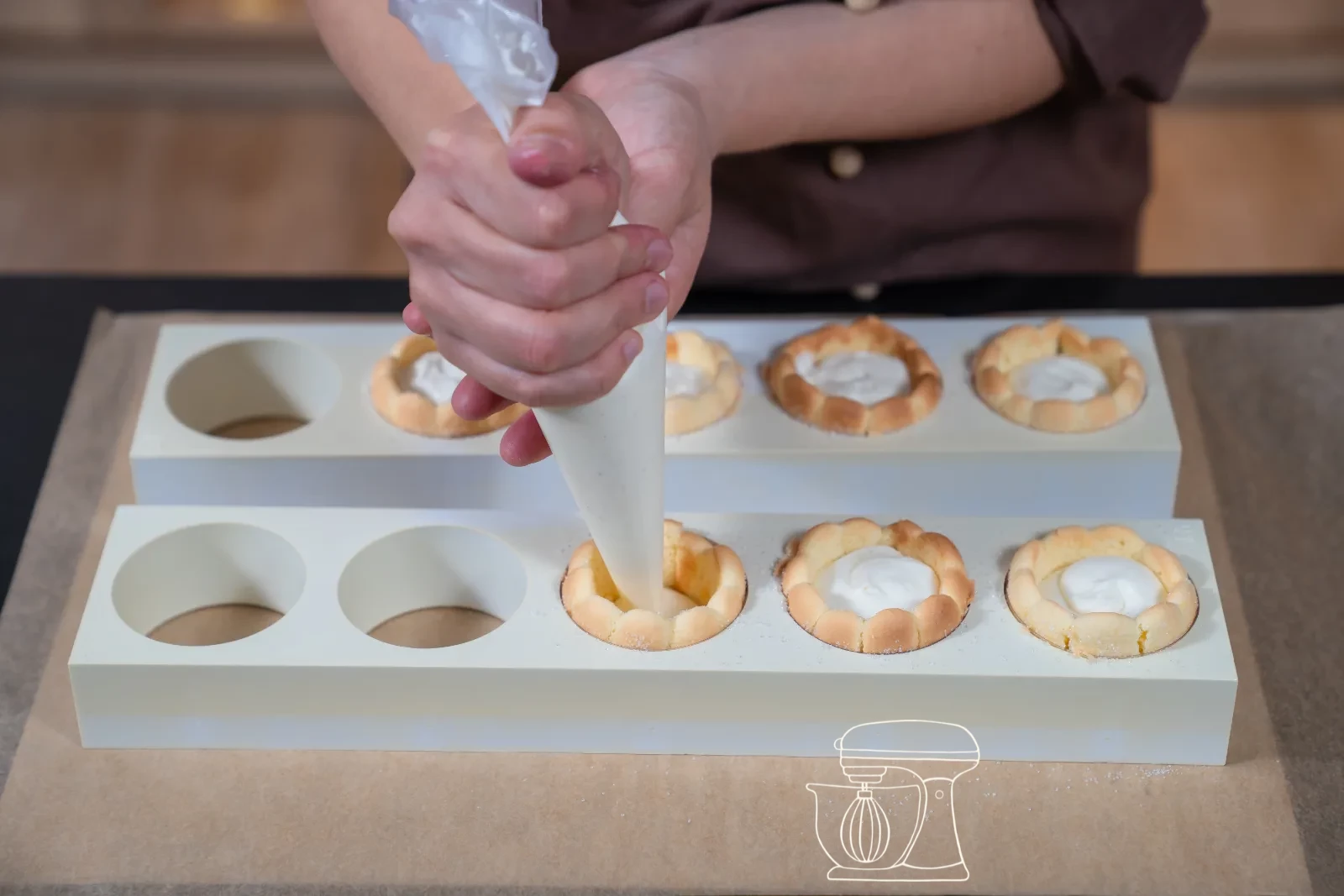
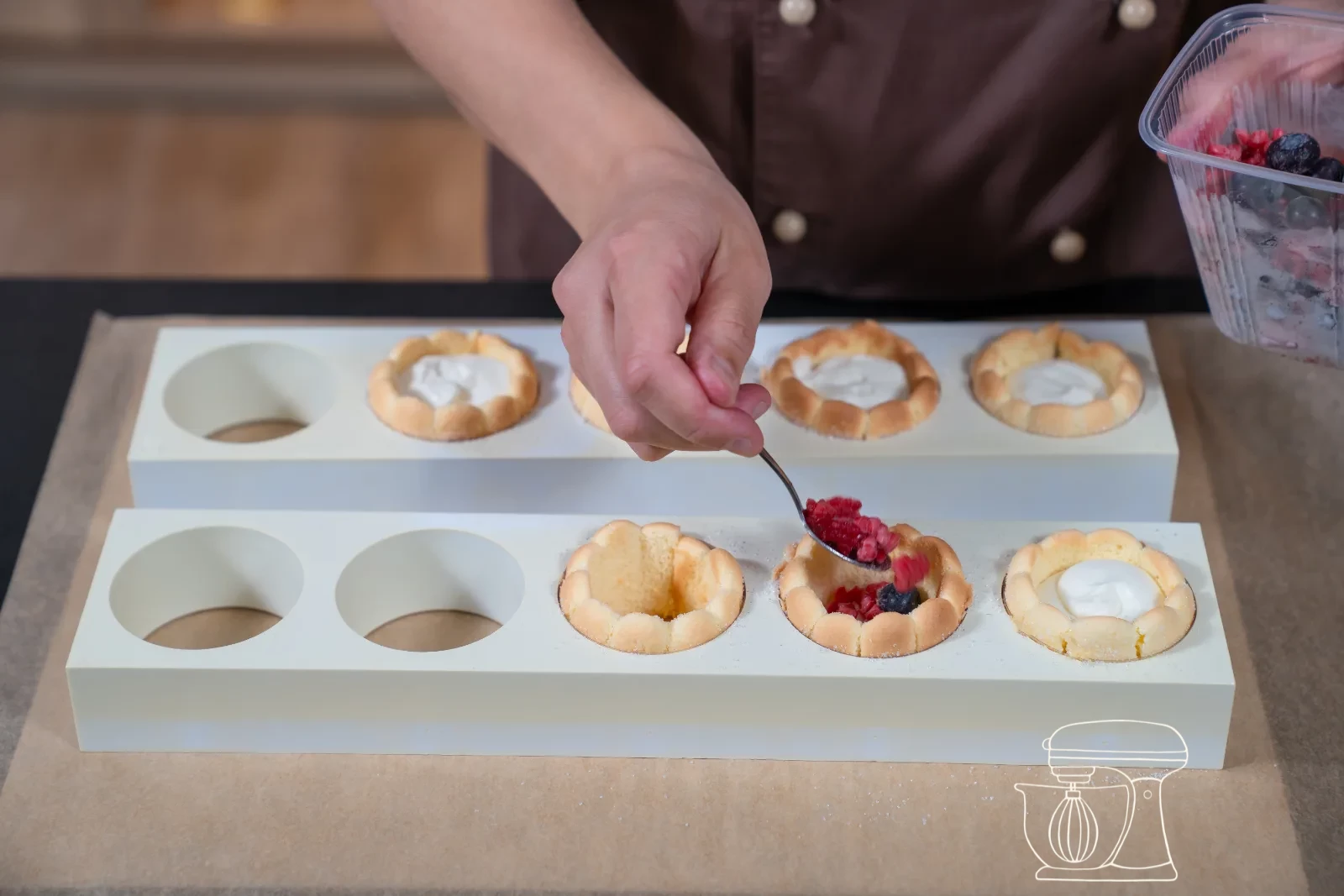
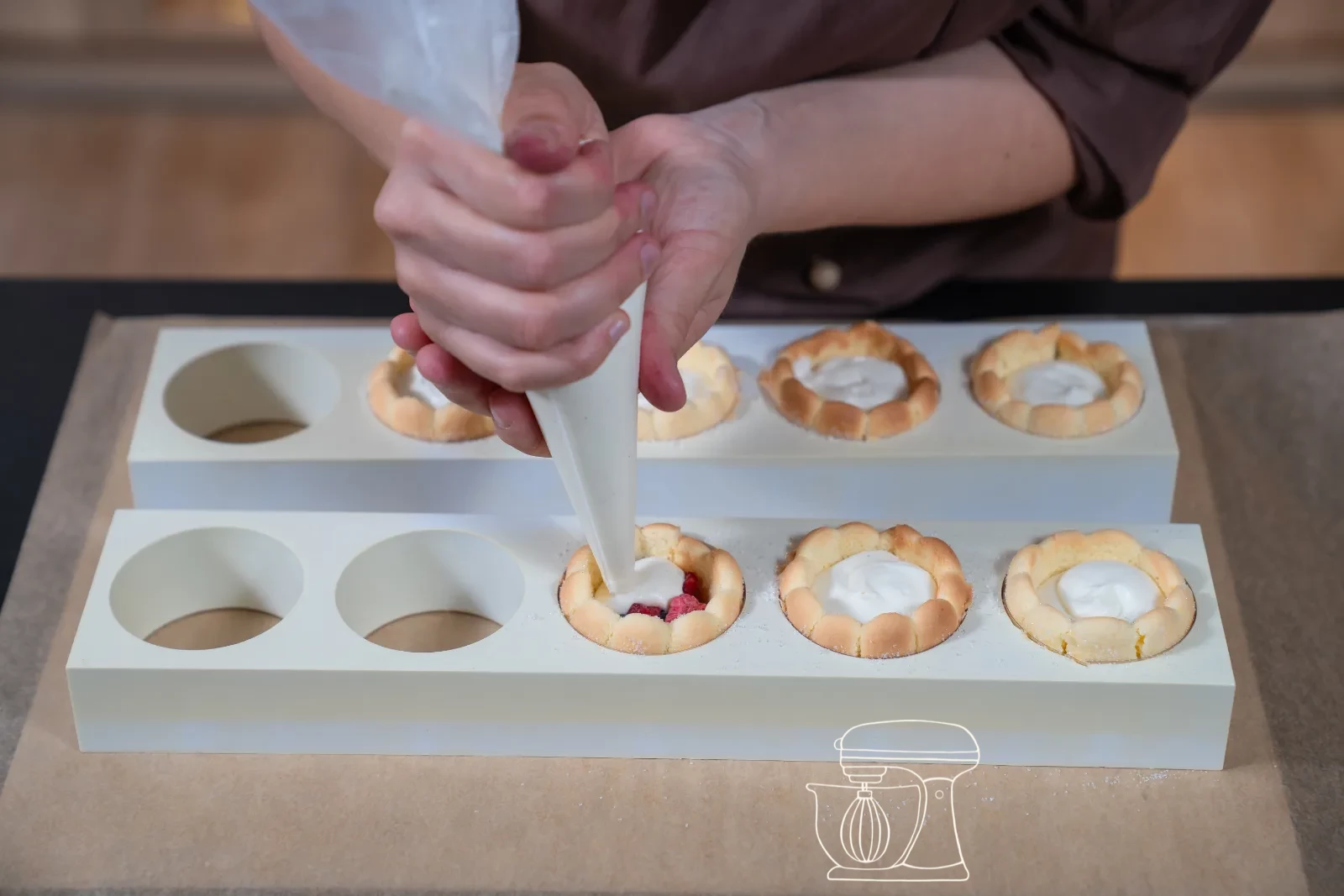
Layer, decorate, chill
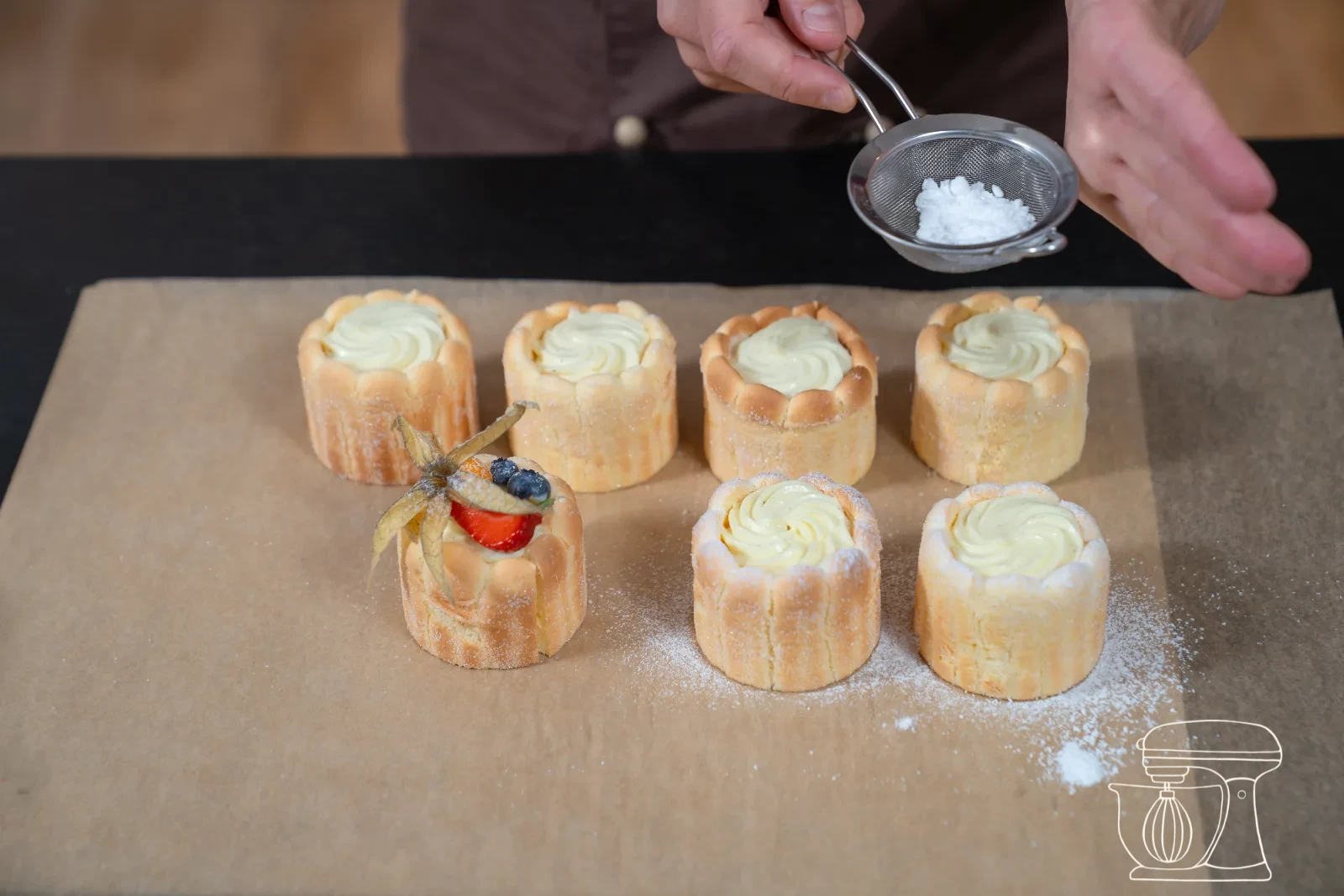
The crowning finish is a spiral of Vanilla cream with the 18 mm Rosette nozzle. Chill for at least 2 hours, then release from the mold, decorate with fresh fruit and dust with icing sugar.
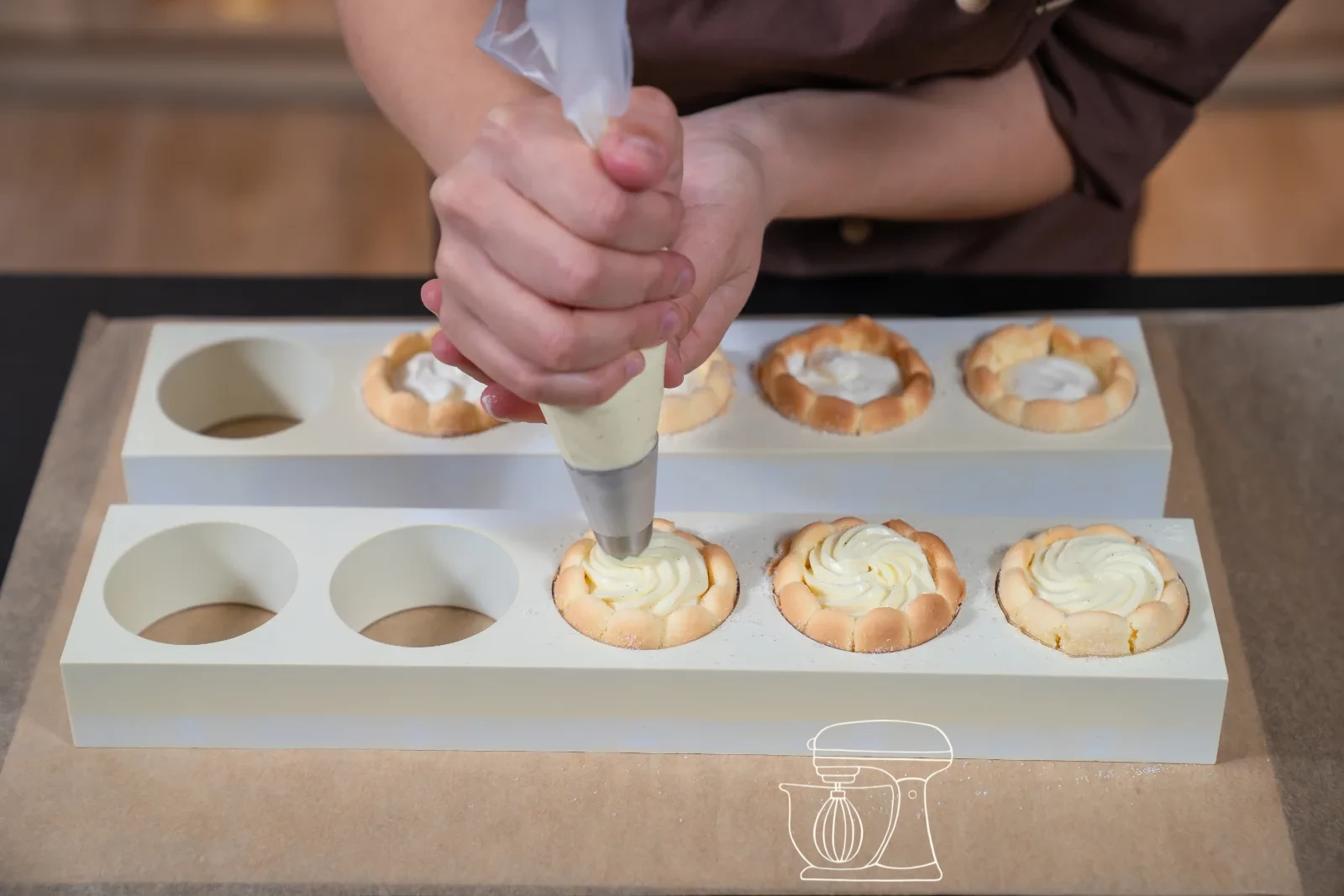
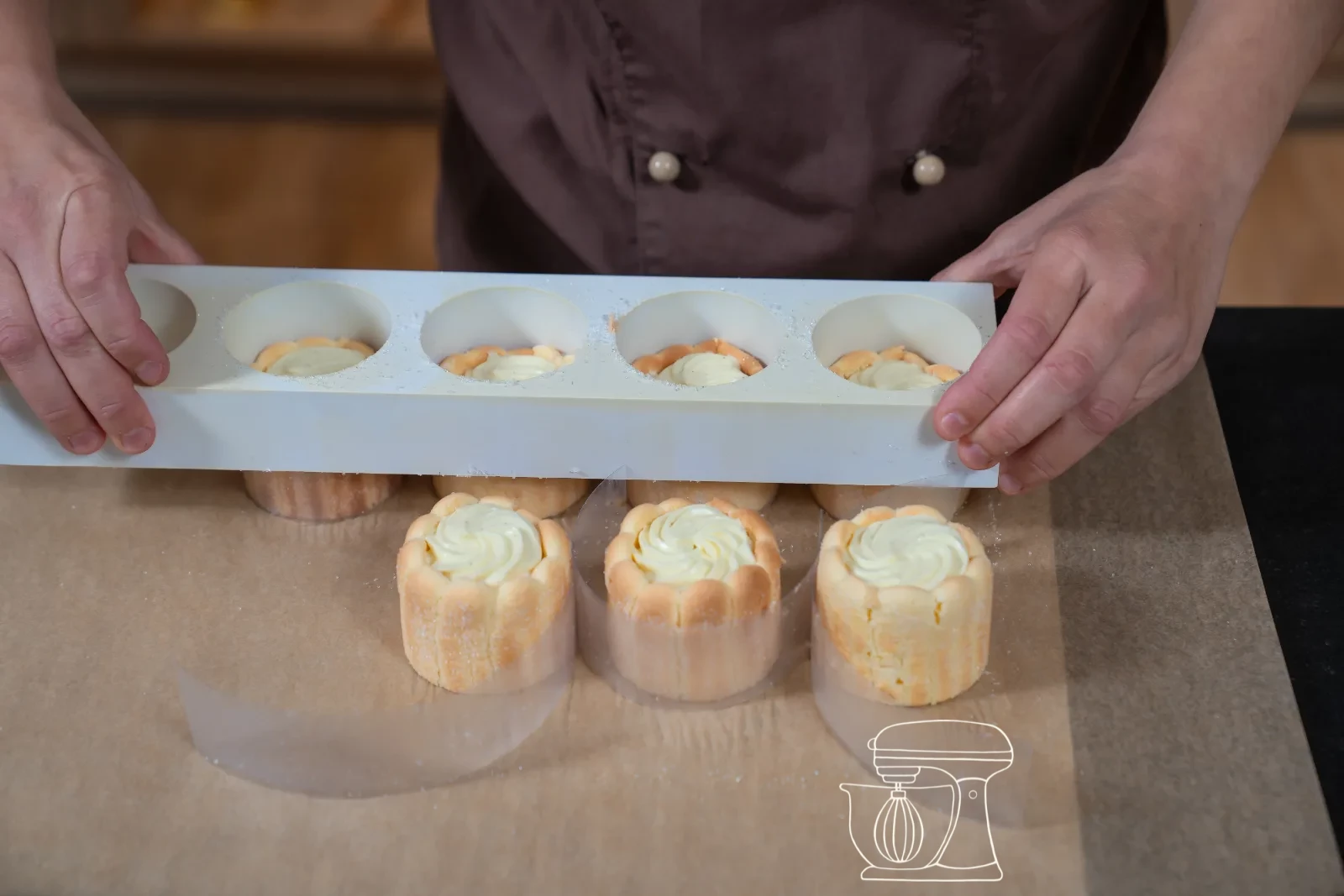
Rosette nozzle 18 mm
Disposable piping bag - 41cm - 24pcs
Charlotte Royale with Berries – elegant mini charlottes with quark and vanilla cream
Ingredients
Ladyfinger sponge
Quark cream (approx. 290 g / 25–30 g per charlotte)
Vanilla cream (approx. 140 g / 10–14 g per charlotte)
Filling & decoration
Preparation
- Stencil: Draw 22 × 6 cm strips on A3, lay baking paper over them.
- Mixture: Whip egg yolk and egg white each with 130 g sugar, fold in flour.
- Pipe: Pipe strips in a zigzag and a rectangle for the bases.
- Bake: 230 °C fan, 5–7 min., sugar immediately and turn over.
- Vanilla cream: Boil the milk, stir in the powder, stir cold, fold in the cream.
- Quark cream: Season the quark, stir in the gelatine, fold in the cream in 3 portions.
- Assemble: Line the molds with strips, trim the sponge to 5 × 18 cm, lay in the bases.
- Fill: Quark cream, berries, quark cream, vanilla cream rosette. Chill 2 hrs, decorate.
Nutritional values per 100 g
Storage & shelf life
Everything for this recipe
Recommended from our bakery — exactly the sizes the recipe was tested with.
Ingredients
Bourbon vanilla seeds, 5 g
Vanilla cream powder, 120 g
RUF gelatine sheets, 12 pieces
Equipment
Round ejector for patisserie mold
Round patisserie mold, tray with 2 molds of 5 cavities each
Round cookie cutter for sponge bases
Insert strips for Cake rings 10 m x 6 cm
Round piping nozzle 8 mm
Rosette nozzle 18 mm
Disposable piping bag - 41cm - 24pcs
Small whisk 21.5 cm
Bosch Hand mixer Clever Mix
Angled spatula Medium with plastic handle
Small silicone dough scraper
Delivery in 1–2 working days · Free shipping from CHF 100
So it turns out perfectly, guaranteed
The bowl for the egg white must be absolutely grease-free, otherwise the meringue won't be stable. And pipe the strips quickly: the mixture loses air with every minute, and it's that very air that later holds up the sponge.
The Cake insert strips are not a mere detail, they are your insurance. They give the sponge ring a smooth wall on the inside, and when lifting out, nothing sticks to the mold. Peel them off only after the chilling time.
In spring, strawberries and rhubarb work well, in summer raspberries and blueberries, in autumn figs with a few blackberries. The creams stay the same – the dessert looks different every time.
Frequently asked questions
The classic goes back to the French pâtissier Antonin Carême, who lined the mold with ladyfinger sponge and filled it with Bavarian cream. Our version stays true to the idea but works with quark and vanilla cream and comes to the table in mini format – a bit like a charlotte's cakery take on the russe cake.
Fully decorated, better not – the fresh fruit loses its structure when thawing. The baked ladyfinger sponge, on the other hand, can be frozen flat and well wrapped for up to a month. That way you can get the most time-consuming part done well in advance.
Yes, with 1 g Agar-Agar, which you briefly boil in a little cream. The cream then becomes a bit firmer and cuts even more precisely – fold it in quickly, as Agar-Agar sets immediately when cooling.
Print recipe
Choose what should appear on the printout.
Related posts
 Juicy Matcha Muffins with Pecan Nuts & White Chocolate
Matcha Iced Latte & Coconut Variant
Pull-apart bread with fresh wild garlic pesto
Mini Banana Bread with Chocolate Chips
Juicy Matcha Muffins with Pecan Nuts & White Chocolate
Matcha Iced Latte & Coconut Variant
Pull-apart bread with fresh wild garlic pesto
Mini Banana Bread with Chocolate Chips
Leave a comment