
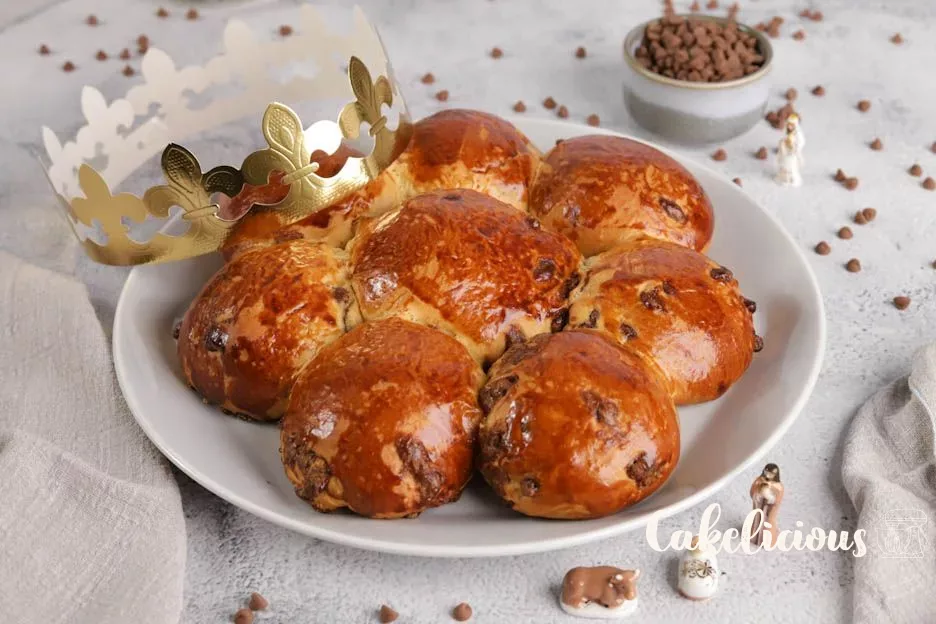
Epiphany crown with chocolate: brioche for little kings
Fluffy brioche with orange, vanilla and chocolate chunks
Hello food lovers,
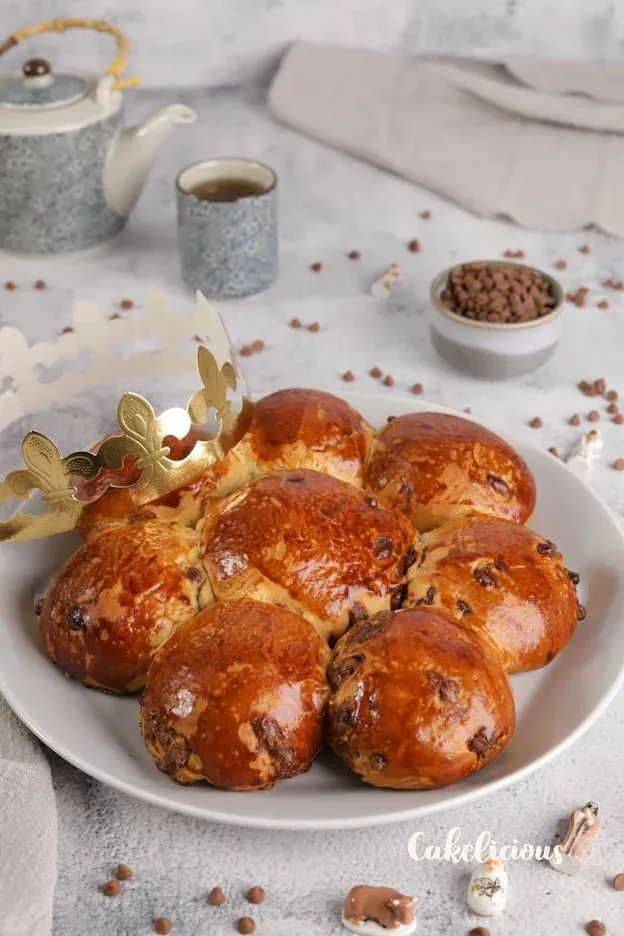
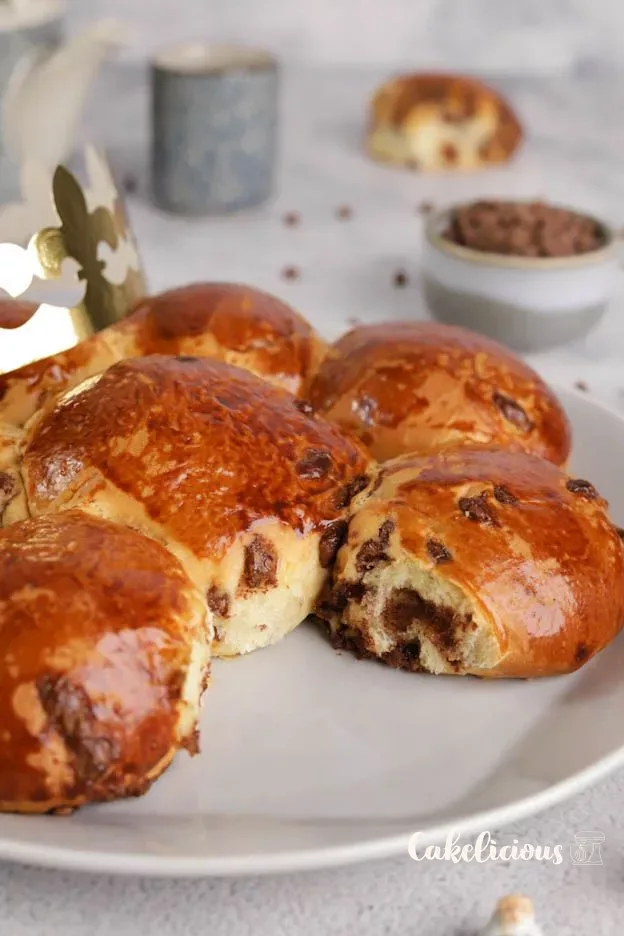
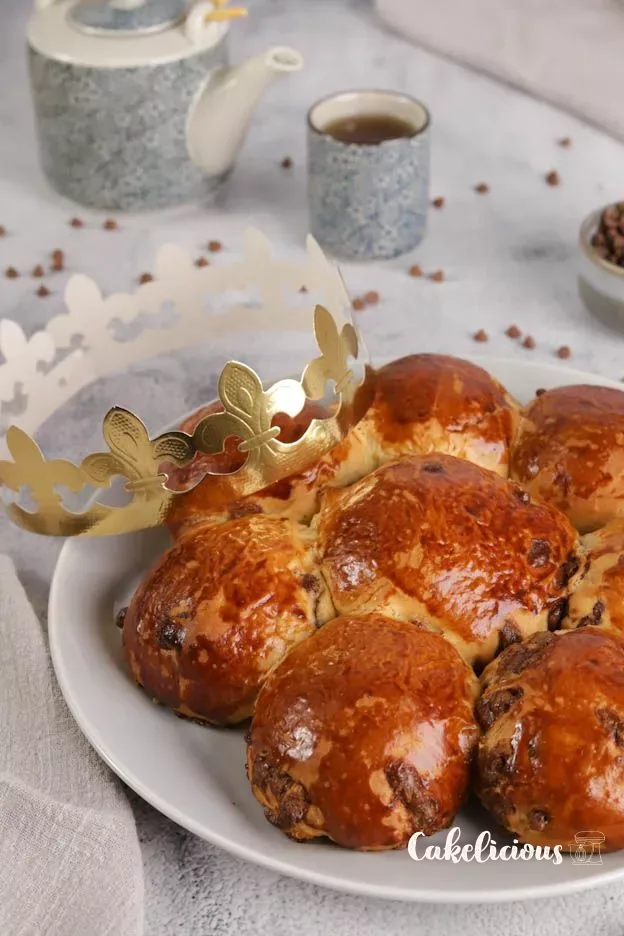
what makes an epiphany crown even better? Chocolate, of course! Our wreath is made from a tender brioche dough with a hint of orange and vanilla, and every ball hides small chocolate chunks. Children love it, and honestly, so do we grown-ups.
The dough needs a bit of patience, as it has to rise twice, but the work itself is very simple. We'll even show you two tricks for building a proving cabinet at home.
This quantity makes a wreath of 8 balls. And don't forget the king figurine!
The recipe in video
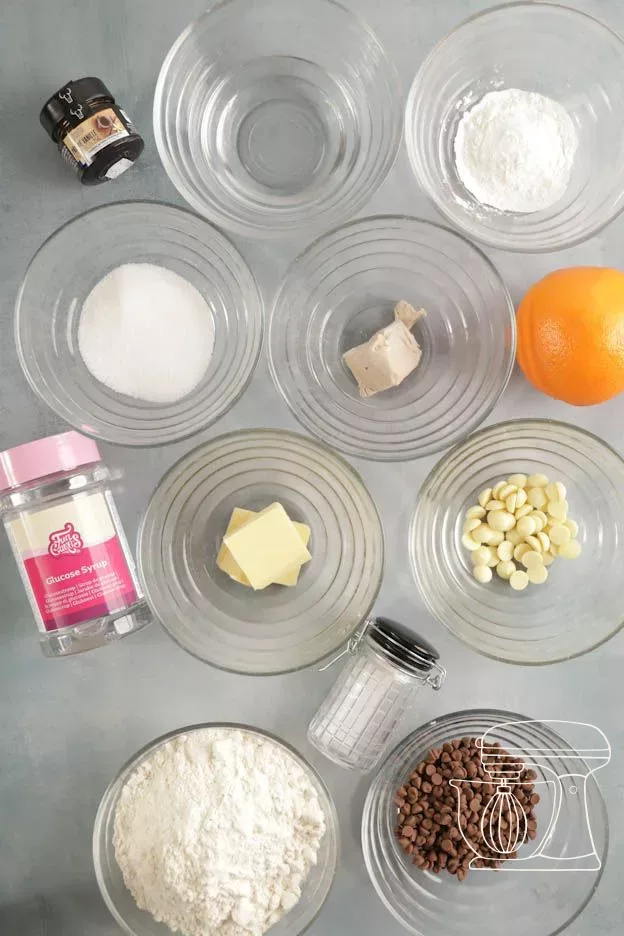
Ingredients
For the brioche dough
Step by step
The brioche dough
Mix the liquid ingredients
Stir 105 g warm water with 13.5 g Cornstarch and 53 g sugar. Crumble 20 g fresh yeast into the mixture and stir again. Finely grate the zest of an orange, a steel grater is perfect for this, and press one half of the orange juice directly into the mixture.
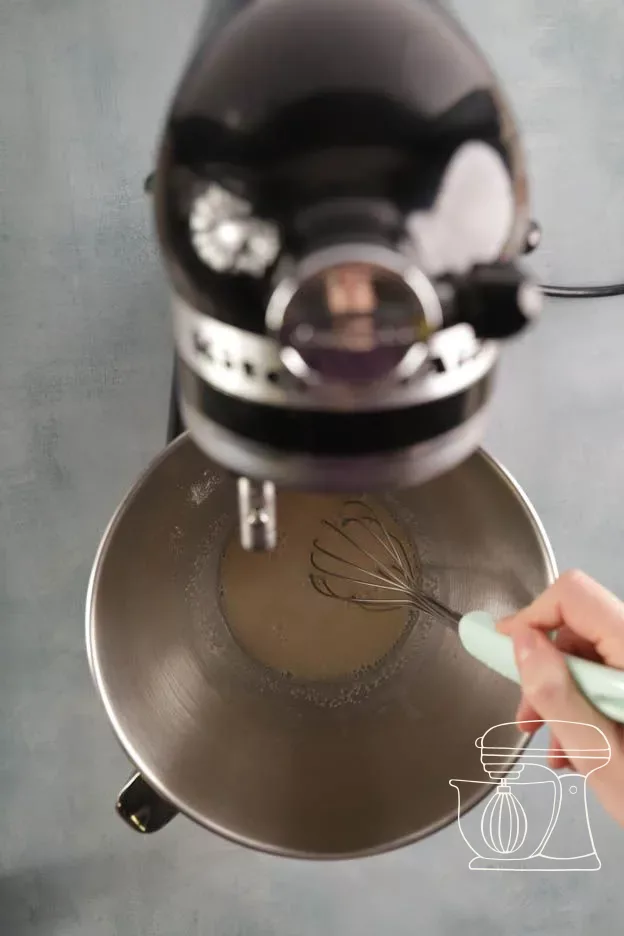
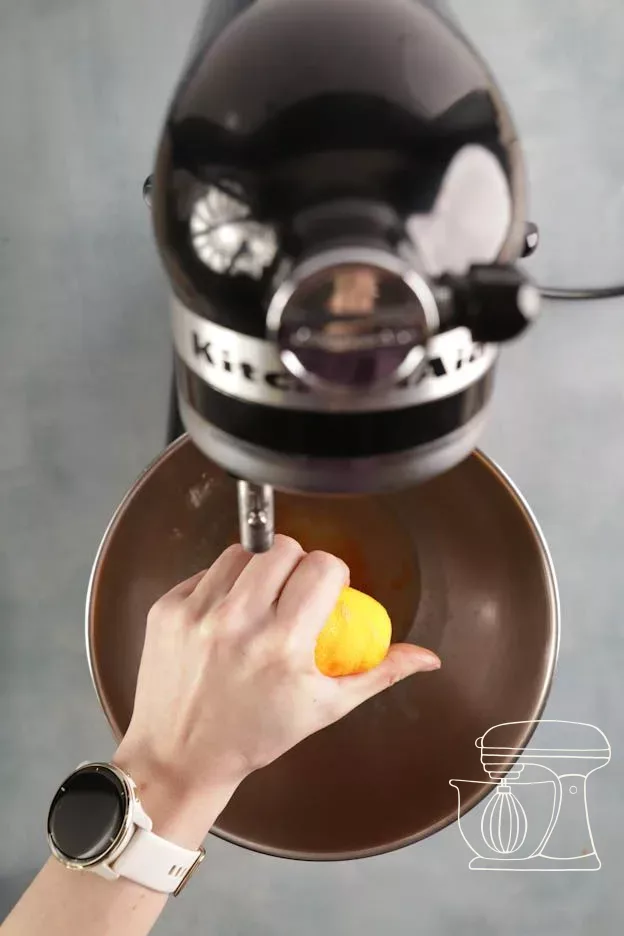
Steel grater
Vanilla, glucose syrup and cocoa butter
Add 2 tsp Vanilla liquid aroma and 25 g Glucose syrup. Warm 25 g white chocolate with 25 g butter in two rounds of 30 seconds at 600 watts. It won't look melted at first, but after a short stir everything turns liquid. Stir the mixture in.
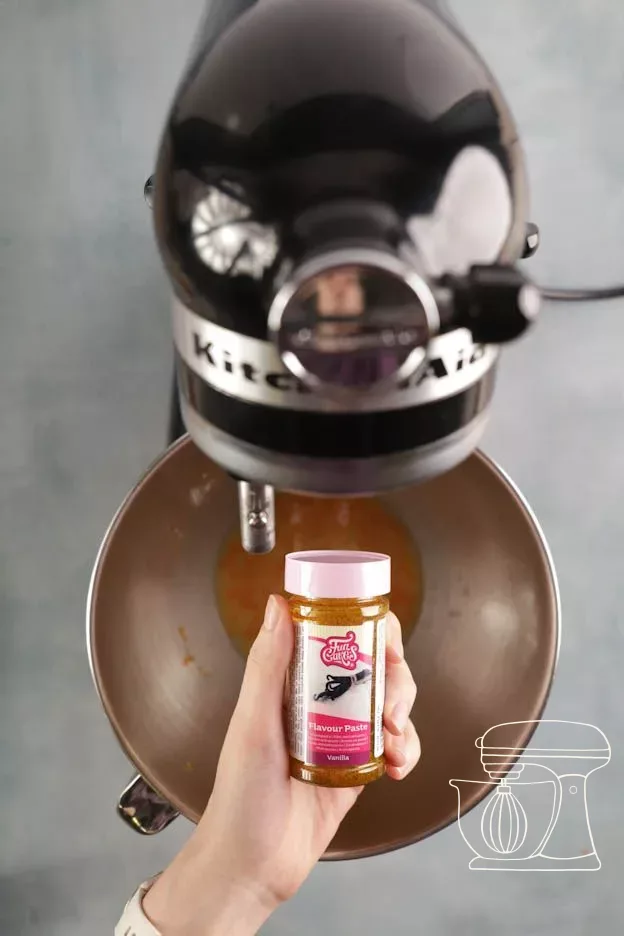
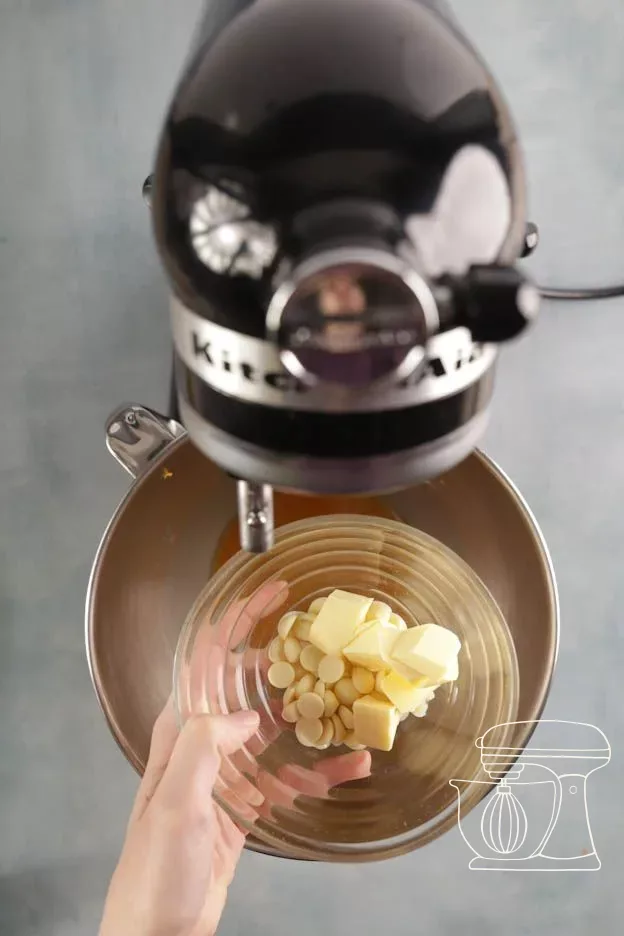
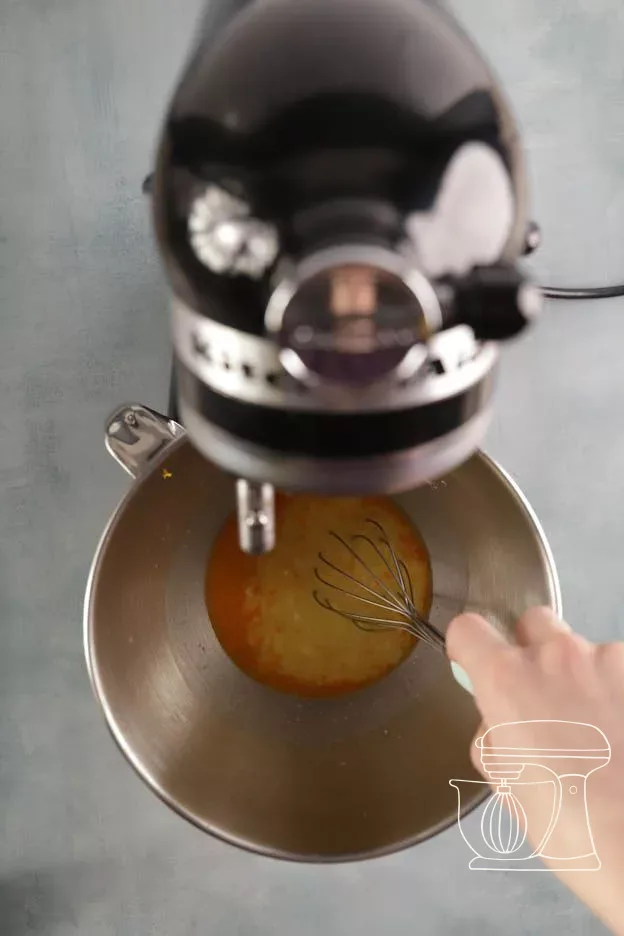
Knead for ten minutes
Add 263 g flour and ¾ tsp salt, making sure the salt only touches the flour. Knead the dough with the dough hook for 10 minutes on medium speed, and really not a minute less! Only then do the gluten and yeast develop properly, and the brioche turns out beautifully fluffy.
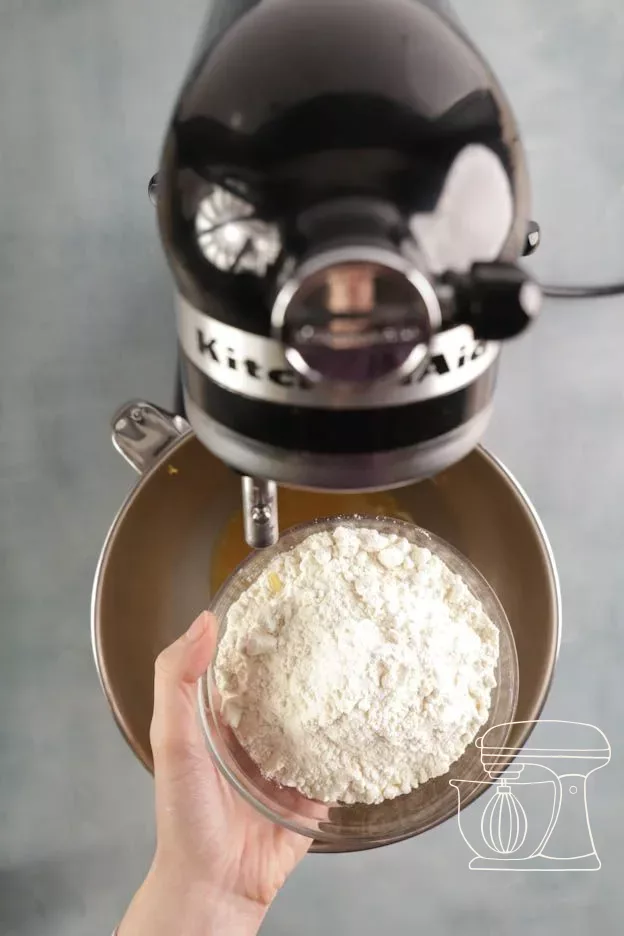
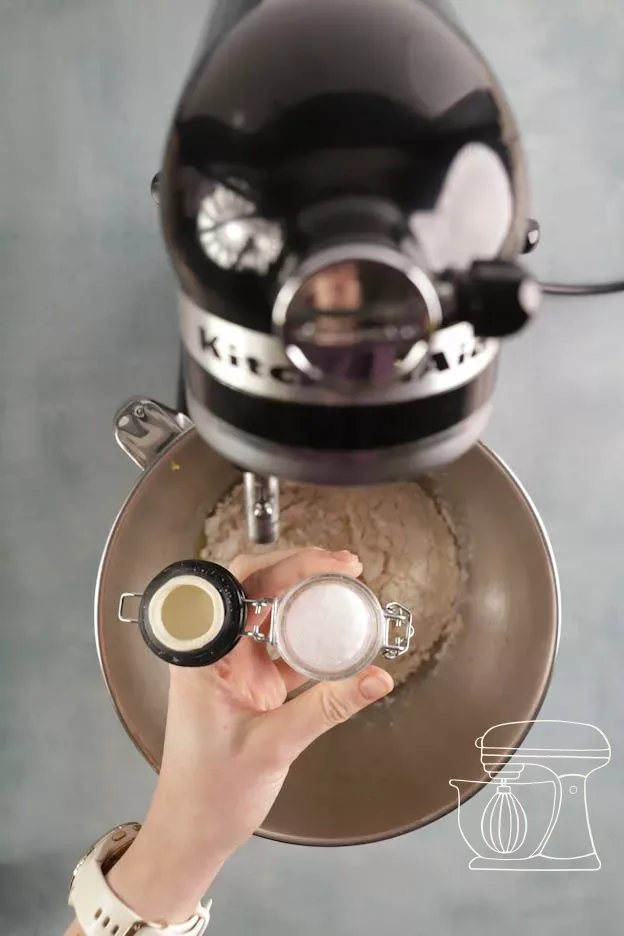
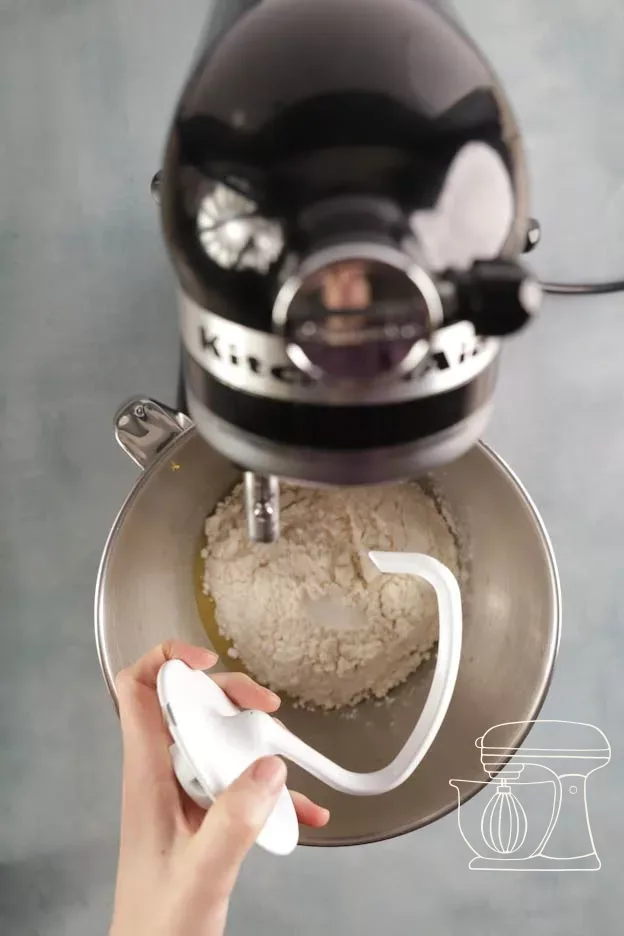
First proofing and chocolate
Shape the dough into a ball and cover the bowl with a damp cloth. Our proofing-cabinet trick: place the bowl in the switched-off oven with a dish of very hot water and leave the door closed for one hour. The dough will only rise slightly, which is normal. Then fold 75 g chocolate drops into the dough with a dough scraper.
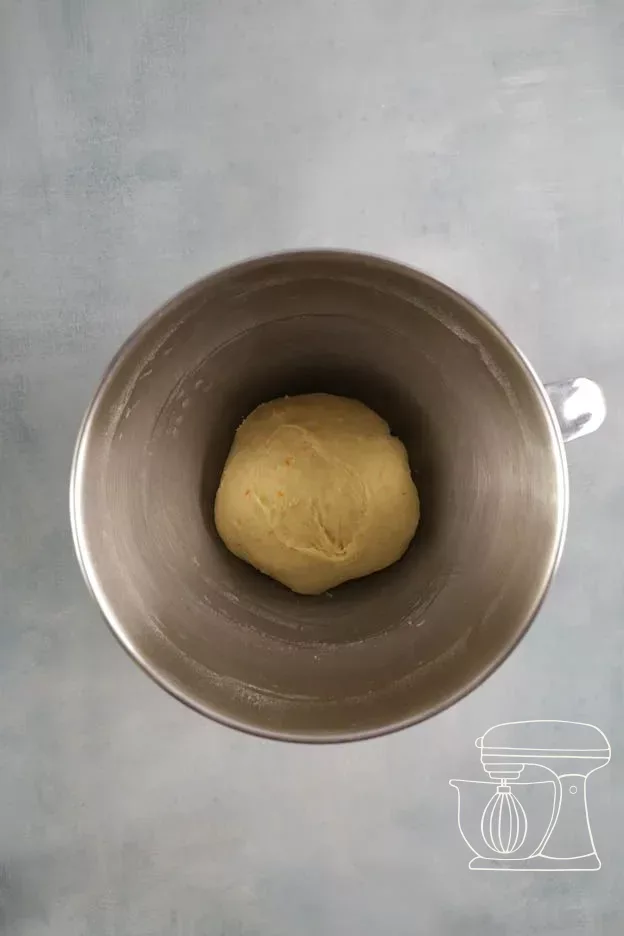
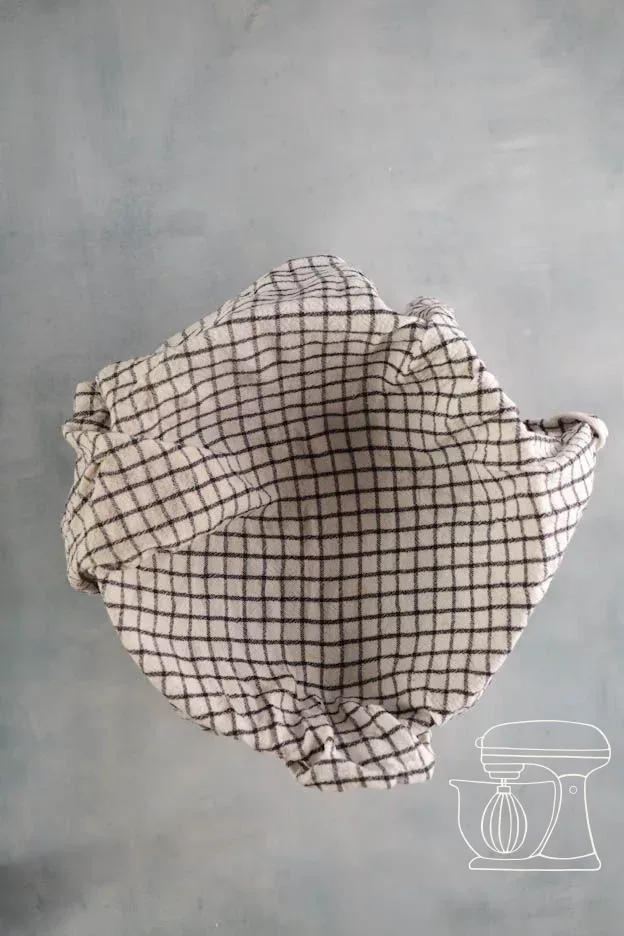
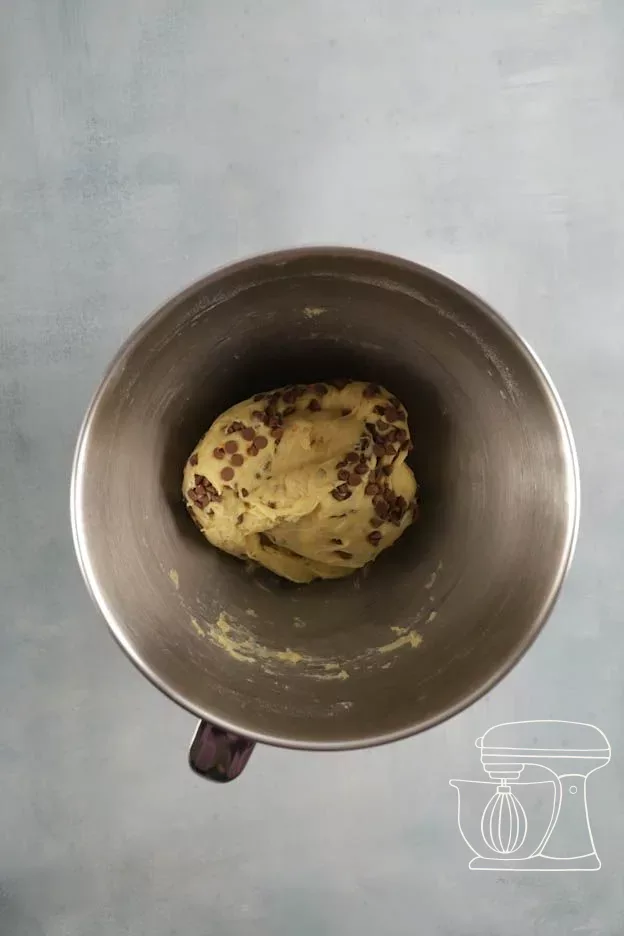
Small flexible dough scraper
Shape and bake
Shape the balls
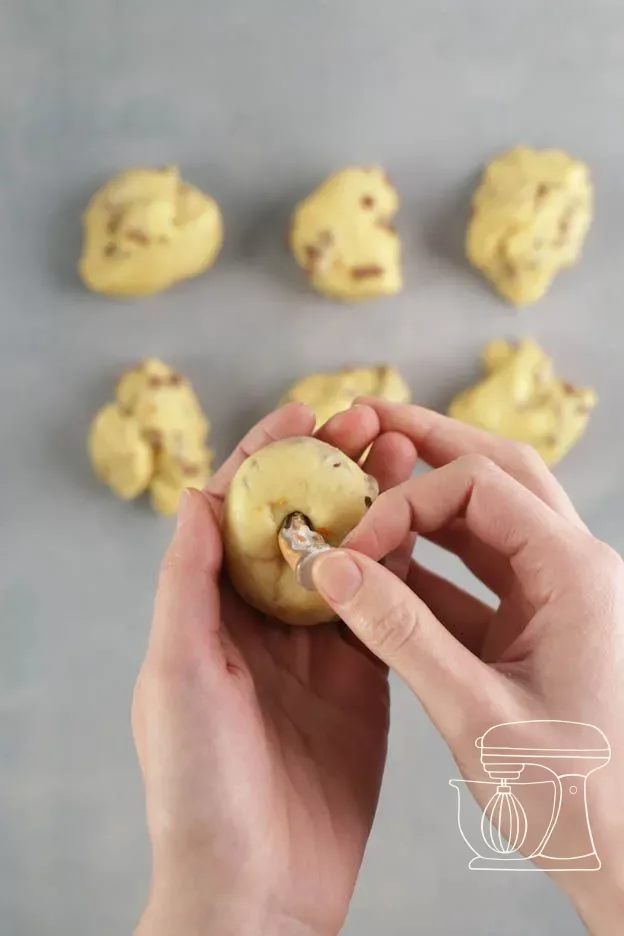
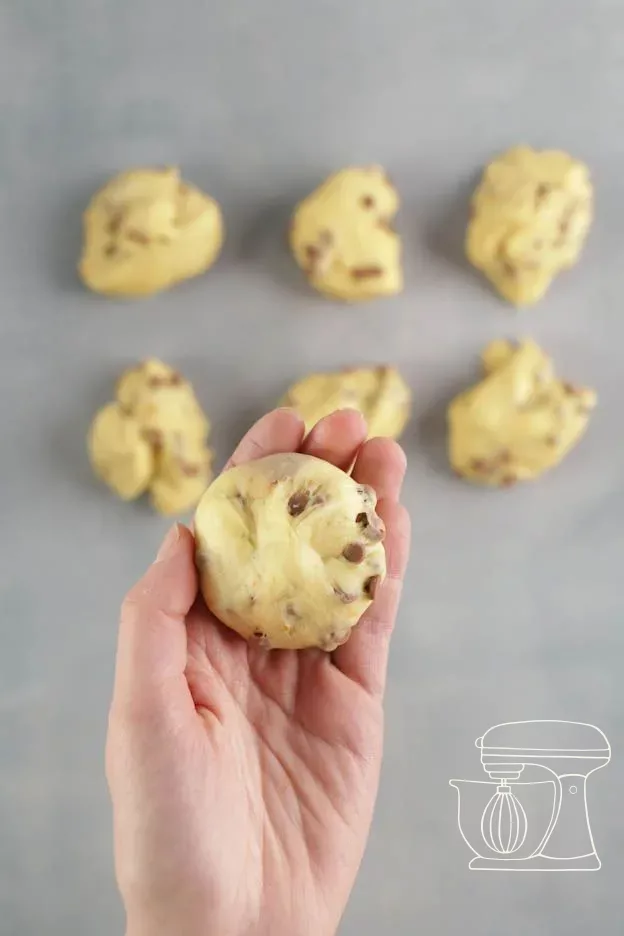
Divide the dough into 7 balls of 75 g each and one larger ball of 90 to 100 g. Shape each ball nice and tight. Place the king figure into one of the small balls, seal the dough well around it and place it seam side down.
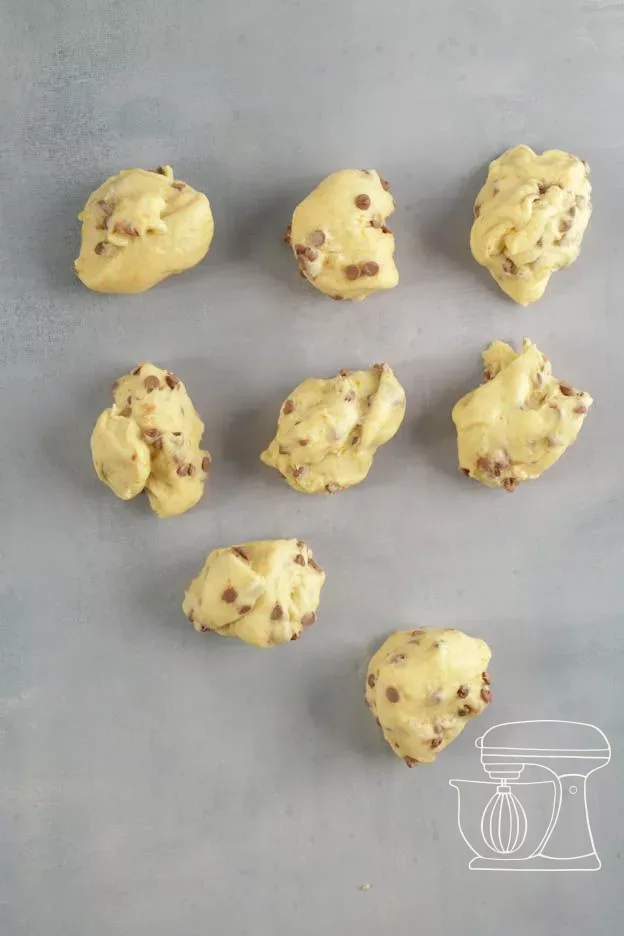
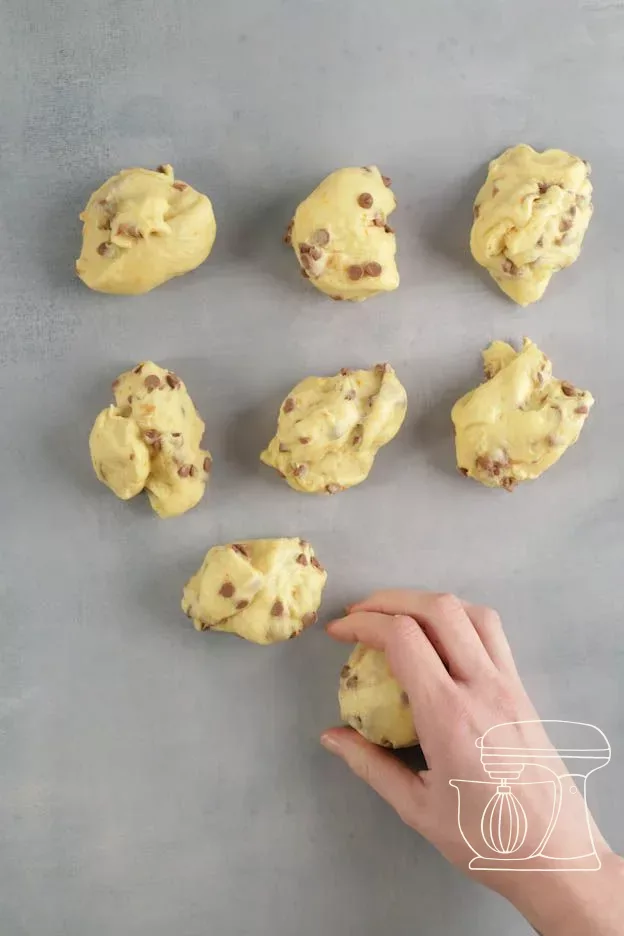
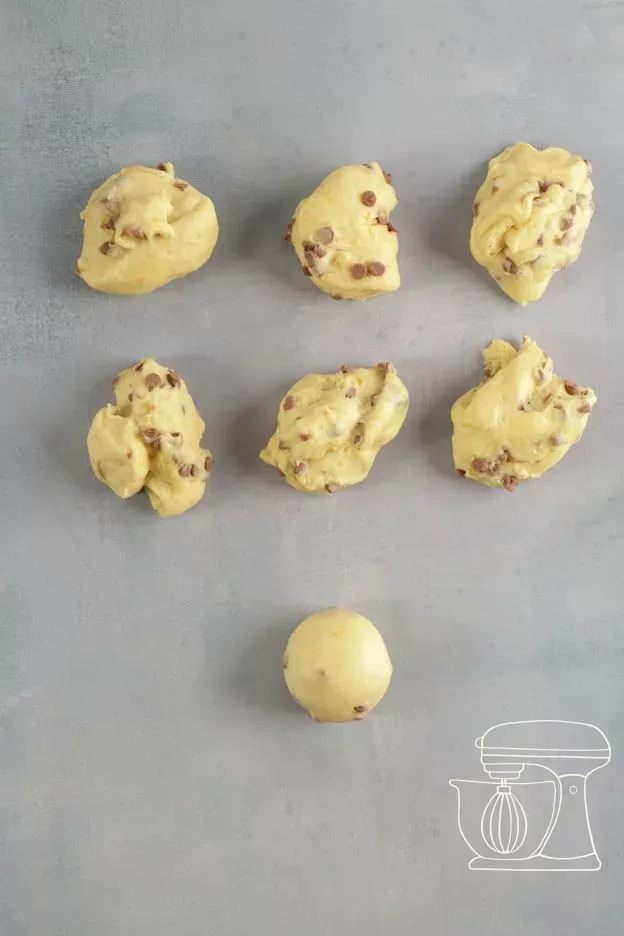
Form the wreath and second proofing
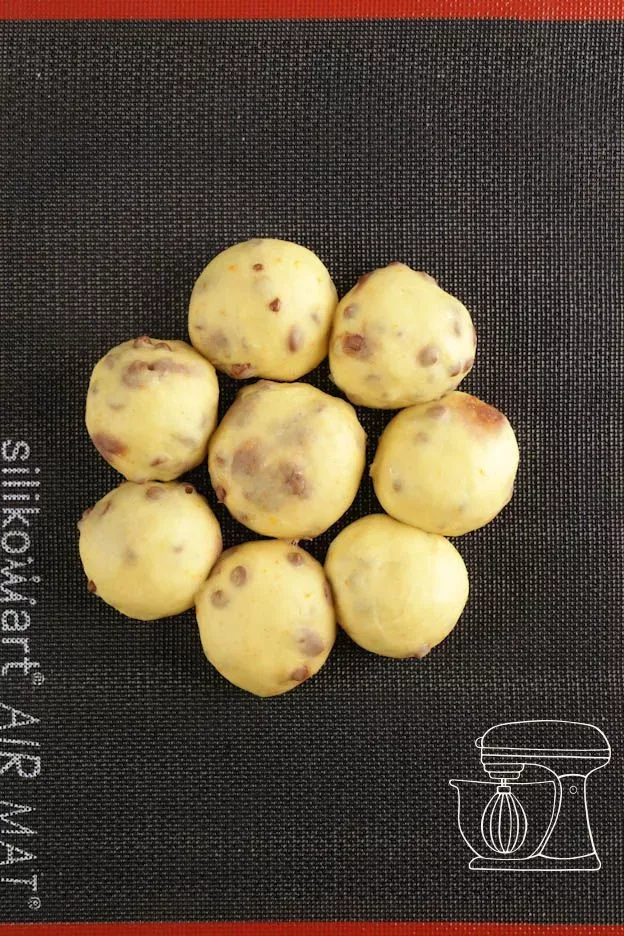
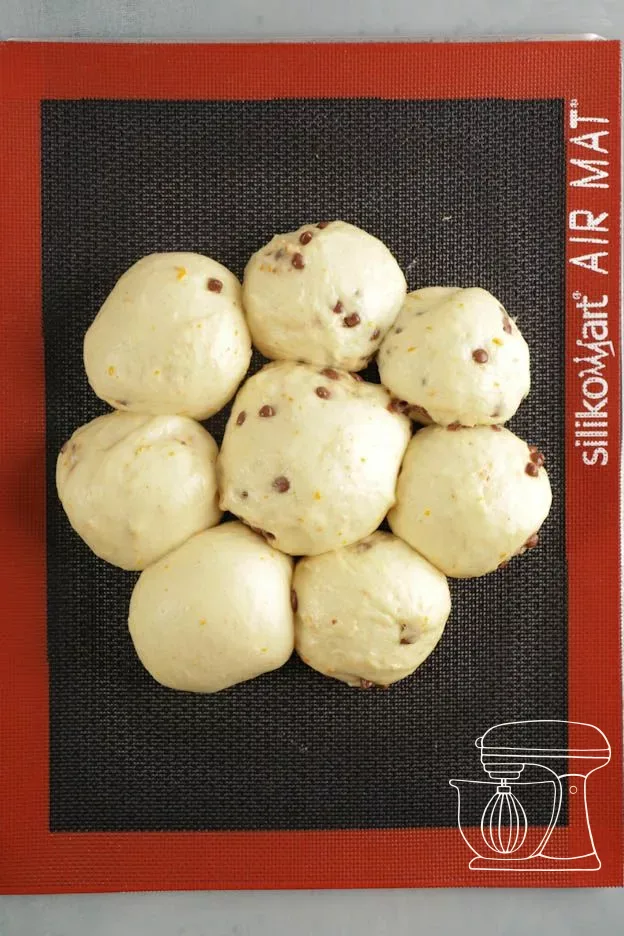
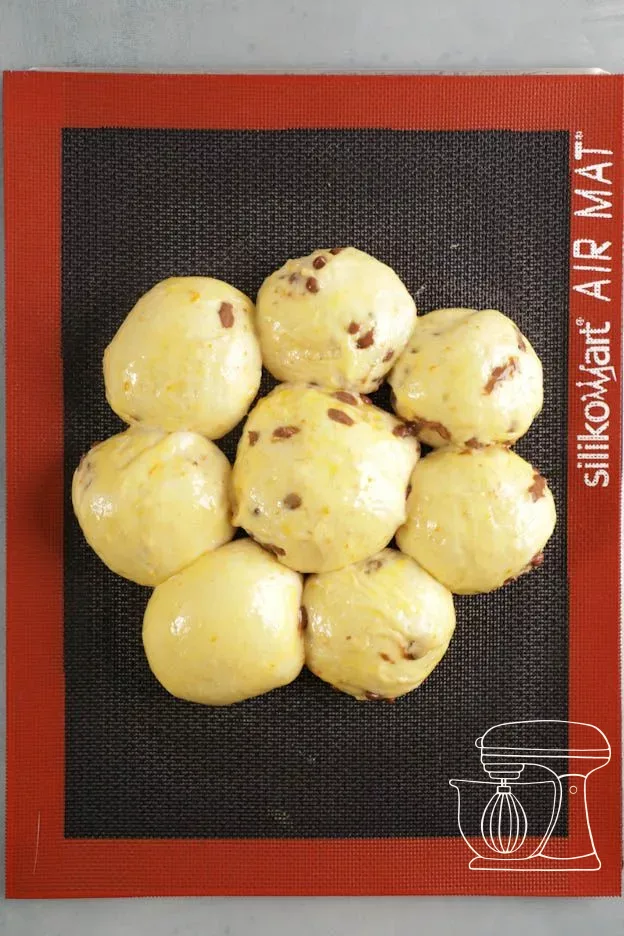
Arrange the 7 balls in a circle with some space between them on a perforated baking sheet with a perforated mat, and place the large one in the centre. For the second proofing, set up a proofing box: a large, sealable box with a dish of hot water. Let the wreath rise in it undisturbed for 2 hours, until there are no more gaps between the balls.
Aluminium perforated baking sheet 40 x 30 cm
Brush and bake
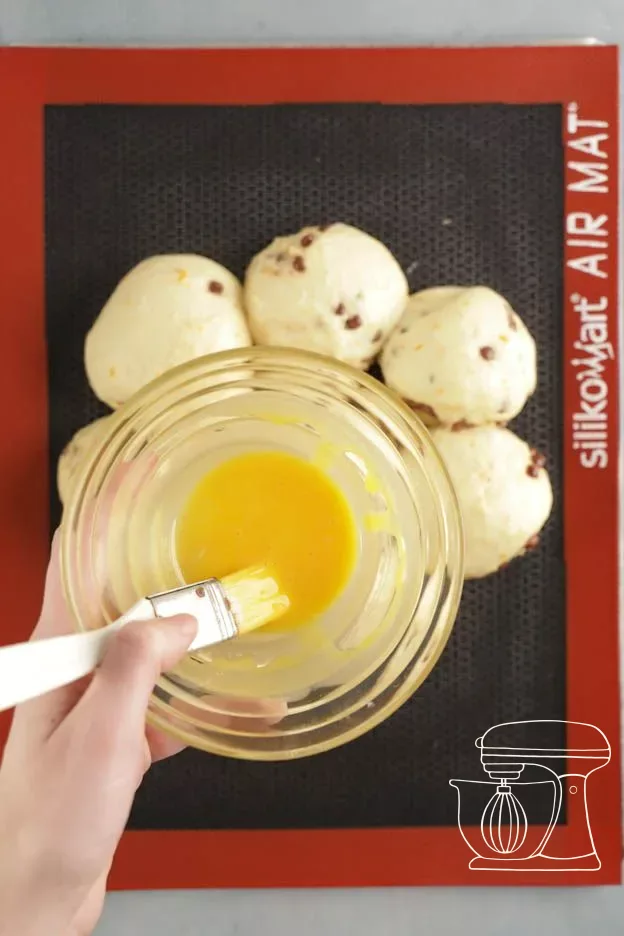
Preheat the oven to 150 °C fan. Mix 10 g of cream with one egg yolk, brush the wreath with it and bake for 35 to 40 minutes, until it is golden brown and glossy. Yummy!
Silicone baking brush
Epiphany crown with chocolate
Ingredients
For the brioche dough
For brushing
Preparation
- Dough: Mix water, cornstarch, sugar, yeast, orange, vanilla, glucose syrup and melted chocolate butter, add flour and salt, knead for 10 min.
- Proofing: Let rise for 1 hr in the proofing cabinet, then work in the chocolate drops.
- Shaping: Form 7 balls of 75 g and one of 90 g, hide the Königsfigur, arrange into a wreath, let rise for 2 hrs.
- Baking: Brush with cream and egg yolk, bake for 35 to 40 min. at 150 °C fan.
Nutritional values per 100 g
Storage & shelf life
Everything for this recipe
Recommended from our bakery, in exactly the sizes this recipe has been tested with.
Ingredients
Corn starch, 400 g
Glucose syrup - 375g
Baking-stable white chocolate drops
Baking-stable dark chocolate drops
Figurines for Epiphany crown with chocolate, 2 pieces
Swiss white flour, 1 kg
Liquid aroma "Vanilla"
Accessories
Stainless steel grater
Small flexible dough scraper
Aluminium perforated sheet 40 x 30 cm
Silicone baking brush
Delivery in 1 to 2 working days · Free shipping from CHF 100
So gelingt es garantiert
Brioche dough needs a long kneading time so the gluten network can develop. This makes the brioche light and fluffy.
A bowl of hot water in a closed oven or in a large box creates moist warmth. The dough rises evenly in it.
You can leave out the chocolate drops or replace them with raisins or candied orange peel.
Frequently asked questions
That is normal with brioche dough. The real rising work is done by the yeast during the second, longer proof.
Yes, 7 g of dried yeast replaces the 20 g of fresh yeast. Stir it directly into the warm water.
You can freeze it after baking and warm it briefly in the oven before serving. That way it tastes freshly baked.
Print recipe
Choose what should appear on the printout.
Related posts
 Matcha Muffins with Pecan Nuts and White Chocolate: Fluffy and Moist
Golden Milk: the warming turmeric drink for little moments of rest
Matcha Iced Latte: creamy, cool and ready in 5 minutes
Pull-apart bread with wild garlic pesto: for sharing, no knife needed
Mini Banana Bread with Chocolate Chips: Moist Snacks for On the Go
Leave a comment
Comments
Question de Sylvie
By: Sylvie L. On 2025-01-05Il y a des différences entre la recette écrite et la recette vidéo (lévure, pétrin). Moi j’ai suivi la recette écrite et je suis en attente du premier repos (étuve).
Replied by: Karin On 2025-01-06
Question de Christine
By: Christine Z. On 2023-01-01Coucou,
N'ayant pas de micro ondes pour faire fondre le chocolat blanc,c'est bien de le faire fondre au bain marie ou dans une casserole ?
Bonne journée
Christine
Replied by: Karin On 2023-01-02
Question de Karen
By: Karen B. On 2021-12-31Par quoi peut on remplacer le chocolat blanc? ☺️ Merci pour la recette
Replied by: Laura On 2022-01-03
Réponse à M-P
By: Cakelicious-Team On 2019-01-25Si vous ne respectez pas les temps de pousse, votre pâte lèvera moins bien et sera donc moins aérée et gonflée... Vous risquez d'avoir une pâte toute compacte malheureusement....
Désolé
Belle journée.
Karin
Réponse
By: Cakelicious-Team On 2019-01-05Oulàlà la boulette! :o( Je vous ai noté 135gr de maïzena au lieu de 13.5gr de maïzena...
Je suis super méga navrée pour l'erreur!
Du coup c'est pour cela que le grammage ne fonctionnait pas.
Toutes mes excuses!
La recette est maintenant corrigée. :o)
Karin
Question de Client
By: Client C. On 2019-01-01Super ! Merci beaucoup pour votre réponse rapide ! :-)
M-P
Replied by: Client C. On 2019-01-06
Réponse à M-P
By: Cakelicious-Team On 2019-01-01Oui oui dans cette recette vous pouvez sans soucis mettre du miel à la place du glucose. :o)
Très belle journée et bonne année!
Karin