
Couverture, chocolate or cake icing: which do you use for what?
Difference couverture chocolate, chocolate bar or cake icing: which one do you use for what?
Cocoa butter, sugar or foreign fat: how to recognise all three
Copy link
https://cakelicious.ch/en/blog/difference-couverture-chocolate-cake-icing-fat-glaze
Tap once to select the whole address, then copy it.
To print: Cmd+P (Mac) or Ctrl+P (Windows)
What you will learn
- Why chocolate stays thick when melted while couverture flows
- What you need couverture for and why it must be tempered
- What is in cake icing and when it is the right choice
- How long white, milk and dark varieties keep
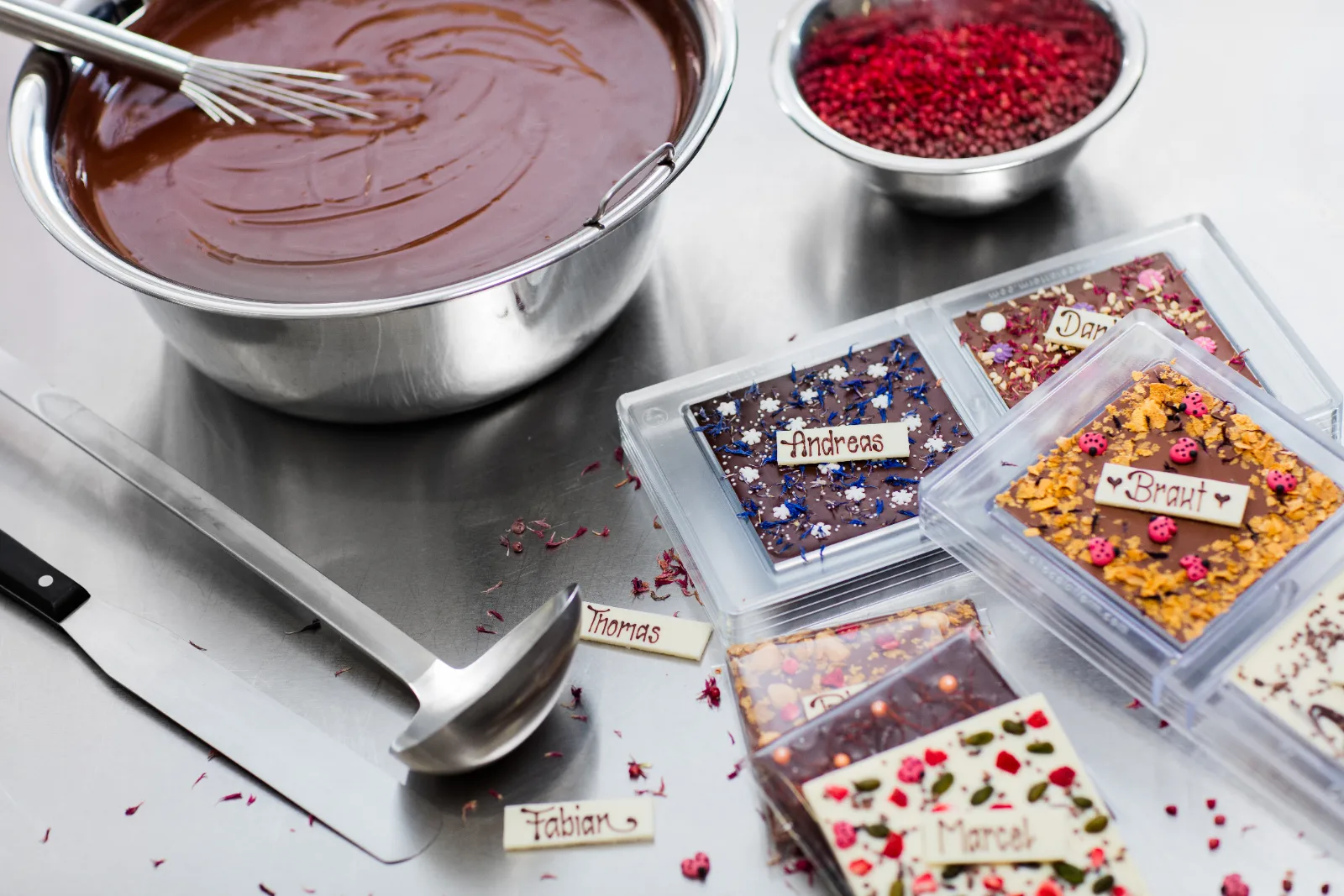
Hello fellow food lovers,
On the shelf they sit peacefully side by side: chocolate, couverture and cake icing. They look deceptively alike, but once you melt them you see who they really are!
Use the wrong one for pralines and you get a thick, dull shell. Coat a cake with expensive couverture and you have tempered for nothing. The difference lies almost entirely in the fat: how much cocoa butter is in it, or has it been replaced altogether?
We explain simply how to recognise all three and which one works best for what.
01Chocolate from the supermarket
Perfect for snacking, only partly suitable for coating.
Ordinary chocolate contains less cocoa butter than couverture and more sugar instead. You notice this straight away when melting it: it stays viscous and forms threads. Coating a praline with a paper-thin layer using it is almost impossible. This is especially noticeable with milk chocolate, which stays nicely thick when melted.
Chocolate is cheaper and sweeter than couverture. Use it for snacking and for simple cakes where it disappears into the batter. For pralines, bars and hollow figures we do not recommend it.
02Couverture or Kuvertüre
Less sugar, more cocoa butter: the favourite material of chocolatiers.
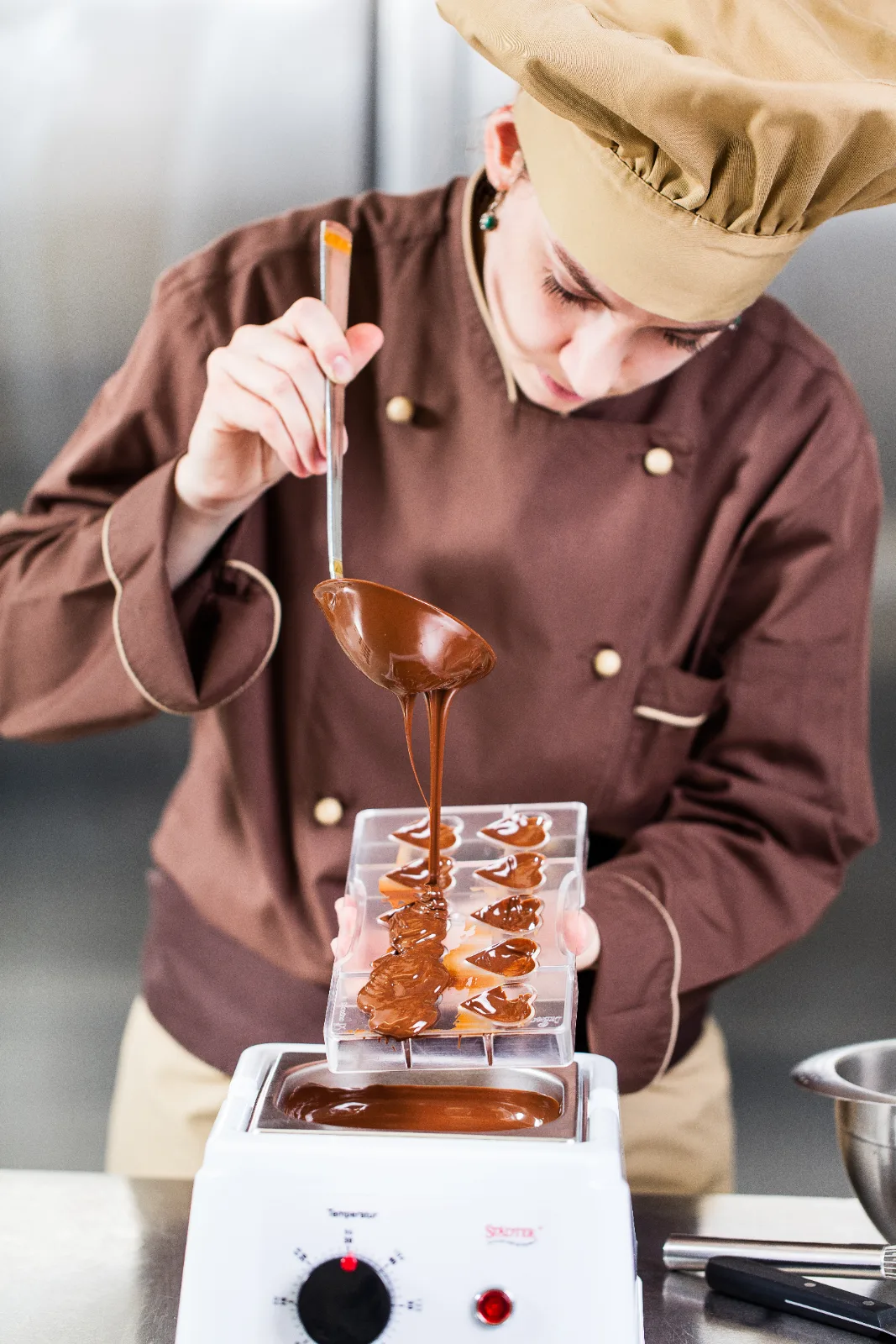
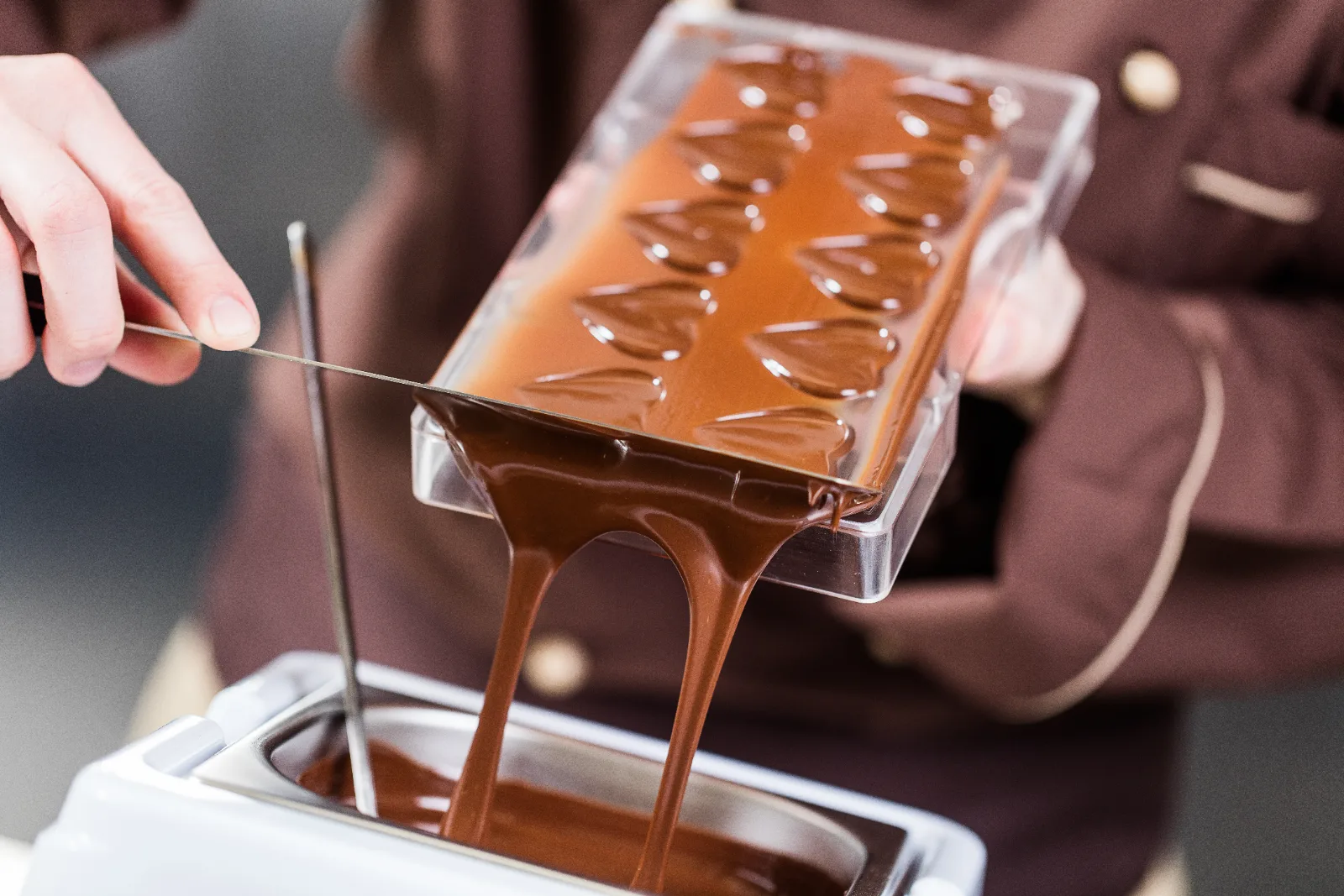
Couverture, also known in German as Kuvertüre, has less sugar and instead more cocoa mass and cocoa butter. That makes it somewhat more expensive, but it tastes far more intensely of chocolate and flows beautifully. This is exactly what you need for bars, pralines, hollow figures and fine coatings.
One rule always applies: couverture must be tempered before use, otherwise it turns grey, dull or brittle.
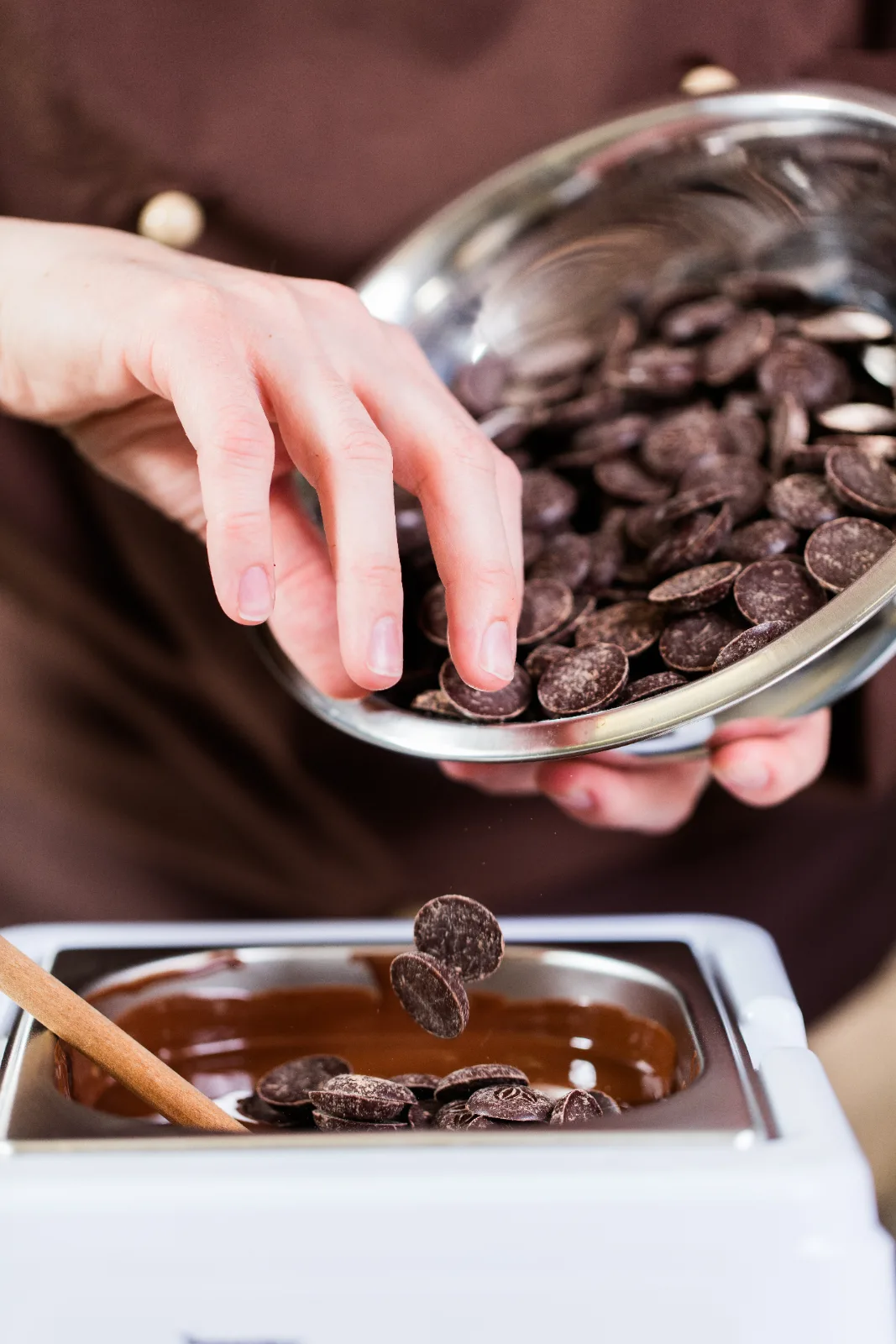
Couverture is available as blocks, drops or shavings. We prefer working with drops: they melt evenly, can be weighed precisely and are ideal for seeding during tempering.
03Cake icing
Shines without tempering, but does not replace couverture.
Cake icing, also called fat icing, is a chocolate-like mass. The cocoa butter is left out entirely and replaced with another vegetable fat, usually coconut or palm fat. That is why you don't need to temper it, and it still shines.
It couldn't be simpler: place the pack in lukewarm water until the contents have melted, then pour the icing over your cake. It sets firm and gets a lovely gloss. In terms of flavour, however, it doesn't come close to couverture.
It is perfect for cakes, loaf cakes, cake pops and biscuits. For praline or chocolate bars, however, the taste and melt are not enough.
04The three compared
| Chocolate | Couverture | Cake icing | |
|---|---|---|---|
| Fat | little cocoa butter | a lot of cocoa butter | Coconut or palm fat |
| Sugar | high | lower | depends on the variety |
| Melted | thick | flows evenly | flows evenly |
| Tempering | not suitable for pralines | essential | not necessary |
| Flavour | sweet | intensely cocoa | milder |
| Ideal for | snacking, simple cakes | pralines, bars, hollow figures | cakes, loaf cakes, cake pops |
| Price | inexpensive | higher | the least expensive |
05Storage and shelf life
Dark, cool and dry, that applies to all three.
Store chocolate, couverture and cake icing always in a dark, cool and dry place, ideally at around 18 °C. Cake icing is somewhat less sensitive, because it contains no cocoa butter.
| Variety | Shelf life |
|---|---|
| White | about 6 months |
| Milk | 1 to 1.5 years |
| Dark | up to 2 years |
Leave a comment