Free shipping on orders of CHF 150 or more
Order by 4:00 p.m. - Next business day delivery
Over 8,000 products
Online shop only, no store
Free shipping on orders of CHF 150 or more
Order by 4:00 p.m. - Next business day delivery
Over 8,000 products
Online shop only, no store
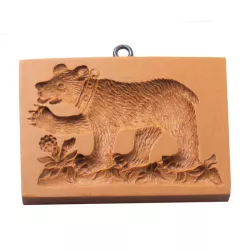
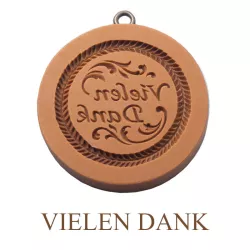
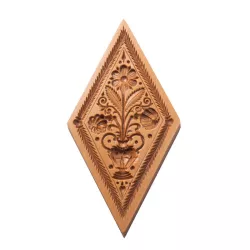
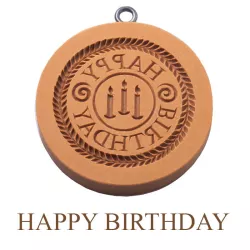
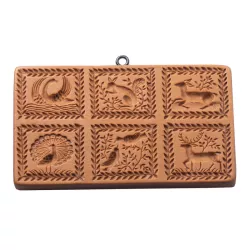
Springerle moulds, embossers and textured rolling pins turn simple doughs into Christmas cookies in relief. With Springerle moulds and food-safe resin cookie moulds – angels, snowman, star of Bethlehem, Christmas bells and much more – you can press Swiss aniseed cookies (Änisbrötli) and speculoos just like in the old days. An embossed rolling pin and texture rollers pattern whole sheets of dough in one go, while silicone embossers add Christmas motifs to fondant, marzipan and modelling chocolate. You will also find modelling tools and mats for delicate sugar work.
The choice of cookie moulds is wide. For a festive feel, try the 40 x 58 mm trumpeting angel Springerle mould, the Two Angels mould, the angel with trumpet, the 104 x 83 mm Father Christmas, the snowman, snowflake, candy canes, ornament star and the large 99 mm star. With the 90 x 42 mm Fröhliche Weihnachten (Merry Christmas) mould and the Christmas mould, your cookies carry the season’s greetings. The 106 x 106 mm small winter motifs mould combines several small designs on one board – handy when you want to press lots of aniseed cookies at once.
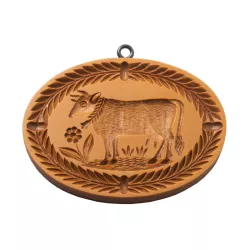
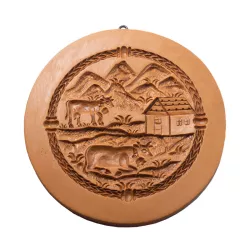
Swiss and playful designs are included too: Alpine cows, a gnome with lantern, bee and beehive, squirrel, ice skate, coffee grinder, gift and yin and yang. Many of these moulds are perfect well beyond Christmas.
For cakes and cupcakes, the silicone embossers – dancing snowman, snowman face, Father Christmas, Rudolph the reindeer, reindeer head figures, fir trees, snow star, snowflake and starry sky – offer a huge variety of designs. The rose embosser works with fondant, marzipan and modelling chocolate.
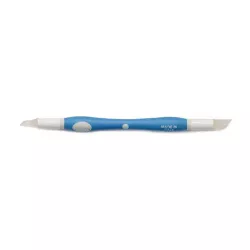
For fine fondant flowers, figures and details you will find the right helpers here: the 4- or 6-piece modelling tool set, the ball tool in small and large, the modelling tool for fondant flowers and leaves, the fine needle tool and the “Sail” modelling tool with two soft silicone wings. As a base, use the foam mat for modelling, the round modelling pad and the 2-piece modelling boards – ideal for thinning and shaping petals.
Pressed cookies look especially lovely on the plate next to cut-out classics like Spitzbuben and cinnamon stars – the matching cutters are in our Swiss cookie classics. Combine, for example, aniseed cookies with an angel design, speculoos with Father Christmas and butter cookies patterned with a texture roller. For a Christmas cake, an embossed fondant covering and figures such as a reindeer or snowman made with a silicone embosser are a perfect match. Find our full range of Springerle and cookie moulds – including designs for the whole year – in Anise Cookie Molds.
For aniseed cookies and Springerle, food-safe resin cookie moulds are the first choice – they are unbreakable and waterproof, and the dough releases more easily than from wooden moulds: small round moulds of 55 to 69 mm in diameter make handy cookies, while large moulds such as Father Christmas or small winter motifs leave room for detailed pictures or several designs. If you want to pattern a lot of dough quickly, go for the embossed rolling pin or the mini texture rollers. For fondant and marzipan, silicone embossers are ideal because they are flexible and the paste releases easily. When choosing modelling tools, look for a set that combines ball and pointed tools.
A firm dough of eggs, sugar and flour, as used for aniseed cookies. It holds the relief and hardly spreads during baking.
Resin moulds are waterproof: simply wash and dry them. Wooden moulds such as the beehive are cleaned with a dry, soft brush; if necessary, wipe briefly with a damp cloth and let them dry thoroughly – never in the dishwasher.
Yes, with lightly dusted fondant or marzipan you can make beautiful plaques for cakes and cupcakes.
The 25 cm embossed rolling pin patterns larger sheets of dough in one go, while the mini texture rollers are designed for smaller areas and details.
On the soft surface you can thin and gently curve fondant petals with the ball tool without them tearing or sticking to the worktop.
Find more shapes for Advent among our Christmas cookie cutters and across our Christmas range. Recipes for aniseed cookies and other festive bakes are on the blog: Christmas cookie recipes.