Salt, 50 g

Price: CHF4.90
VAT included
Reference 0020-1915 Category Other ingredient Brand miniSchoggi GmbH EAN13 7630557801350
Product in stock
more than 30 pieces available

Product Features

Ingredients Ammonium bicarbonate with anti-caking additive
Weight 50 g
Product Gluten free Yes
Product Lactose free Yes
Product suitable for vegetarians Yes
Vegan product Yes
Allergens None
Storage note Store in a cool, dry and dark place
Country of production Norway
Product is halal certified No
Product is kosher certified No

Salt 50 g

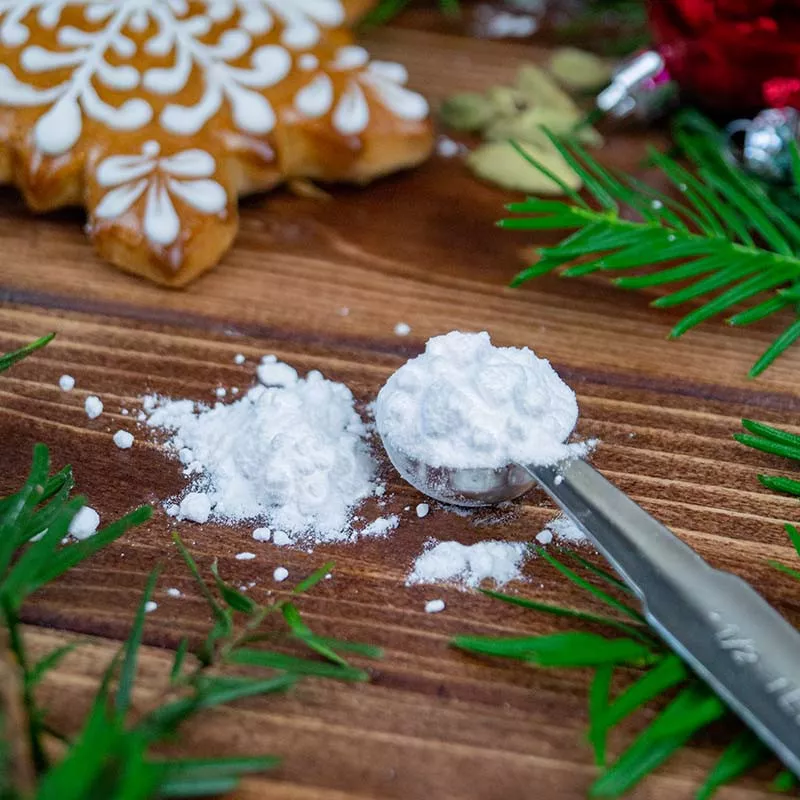
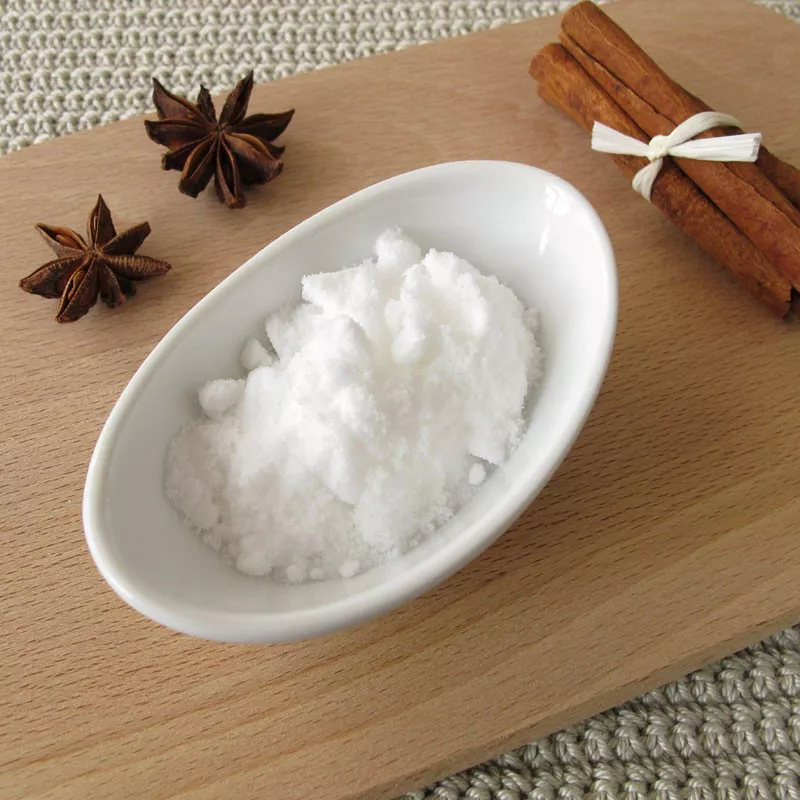
Leavening salt is a leavening agent for various flat baked goods such as Biberli, Magenbrot or gingerbread. It is particularly popular for sugary doughs such as honey cake. Raising salt is also known as deer horn salt. Like yeast or sourdough, this leavening agent ensures that even heavy doughs rise well. In contrast to other leavening agents, however, the dough rises in width rather than height. This is exactly what gingerbread is known for: It remains flat and yet becomes beautifully airy. As with cornflour, you should dissolve leavening salt in water, milk, egg white or cream before use. This ensures even distribution in the dough. What happens in gingerbread with salt? You can achieve an airy, light and fine gingerbread dough with table salt. Three different gases are produced during baking, which ensure wide, flat pores. This ensures that the gingerbread is neither tough nor too hard. If you leave out the leavening salt, the dough does not rise during baking and remains compact. One of the gases produced is ammonia, which gives the cookies the characteristic, slightly salty taste typical of flat cookies. Stag's horn salt and potash: Potash and stag's horn salt essentially have a similar effect. In the past, deer horn salt was obtained by heating finely grated deer horn - which consists mainly of bone. Today, deer horn salt is produced chemically and is an ammonium salt of carbonic acid. In old recipes, the combination of both leavening agents is often recommended. If you also want to do this, make sure you dissolve both substances separately in liquid and then add them to the dough. Potash is potassium carbonate and is obtained from ash. The name comes from the original method of production from plant and seaweed ash. Despite their similarity, the direct mixing of the two substances can reduce the leavening effect. When using potash, it is essential to observe the resting period, as it is only activated by the acid that is produced during this time. Baking instructions: Make sure that the cut-out motifs are as similar in size as possible or bake the same motifs together on one tray so that they cook evenly. As the salt causes the dough to expand, you should leave enough space between the gingerbread or cookies and between them and the edge of the baking tray. Brush the surface of the gingerbread with milk and bake in the preheated oven for about 8 minutes. Please note: After the baking time, the gingerbread is still very soft, but will become much firmer as it cools.

Product Name & Allergy Information

Description Baking soda
Eggs and egg products Does not contain
Peanuts and peanut products Does not contain
Fish and fish products Does not contain
Cereals and cereal products containing gluten Does not contain
Crustaceans and crustacean products Does not contain
Lupine and lupine products Does not contain
Milk and dairy products Does not contain
Milk sugar (lactose) Does not contain
Nuts and nut products Does not contain
Sulphur dioxide and sulphites Does not contain
Celery and celery products Does not contain
Mustard and mustard products Does not contain
Sesame seeds and sesame seed products Does not contain
Soy and soy products Does not contain
Molluscs and mollusc products Does not contain

Nutritional Information / 100 g

Energy (kJ) 0 kJ
Energy (kcal) 0 kcal
Carbohydrate 0.00 g
   of which sugars 0.00 g
Protein 0.00 g
Salt 0.00 g
Fibre 0.00 g
Loading...
Back to top