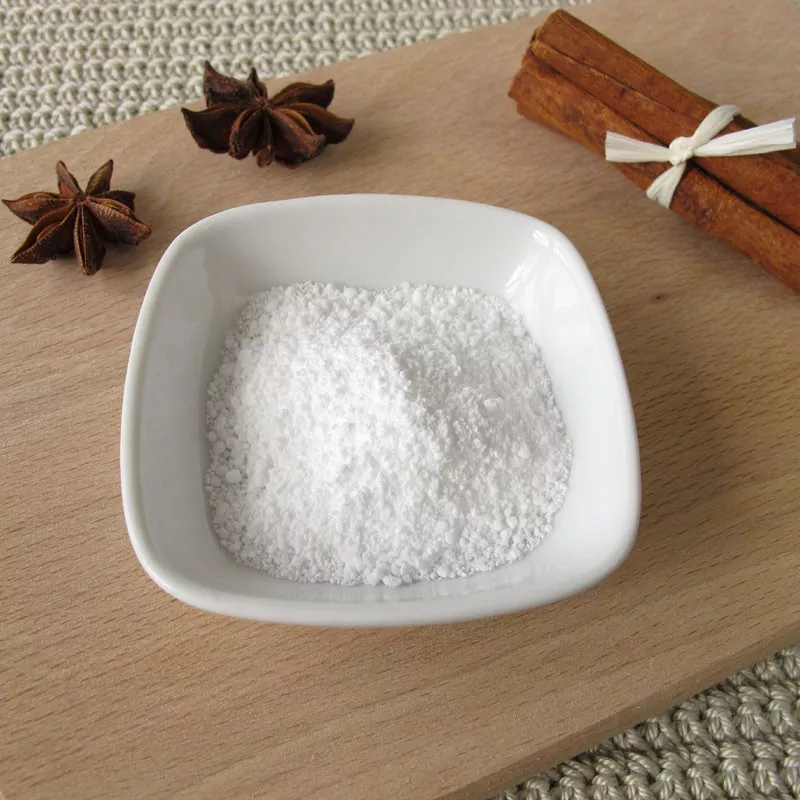
Potash, 40 g

Price: CHF5.90
VAT included
Reference 0020-1919 Category Other ingredient Brand miniSchoggi GmbH EAN13 7630557801343
Product in stock
more than 30 pieces available

Product Features

Ingredients Potassium carbonate E501
Weight 40 g
Product Gluten free Yes
Product Lactose free Yes
Vegan product Yes
Allergens None
Storage note Store in a cool, dry and dark place
Country of production Germany
Product is halal certified No
Product is kosher certified No

Potash, 40 g

Potash is a leavening agent for various flat baked goods such as cookies, cookies, Biberli and gingerbread. It is particularly popular for sugary doughs such as honey cake. Similar to yeast or sourdough, this leavening agent ensures that even heavy doughs rise well. However, potash differs from sourdough and yeast in a number of ways. In contrast to other leavening agents, the dough rises in width rather than height. This is exactly what gingerbread is known for: It stays flat and yet becomes nice and airy. As with cornflour, potash should be dissolved in water, milk, egg white or cream before use to ensure better distribution in the dough. What happens in gingerbread with potash? Potash makes a light, airy and fine gingerbread dough particularly well. During baking, the leavening agent forms a gas that creates wide, flat pores. As a result, the gingerbread is neither tough nor too hard. If potash is omitted, the dough does not rise properly during baking and remains compact. Potash, also known as potassium carbonate, owes its name to the historical method of extraction from vegetable and seaweed ash. The ash was leached out with water and then evaporated in "pots" (pots). Today, this potash salt is mainly used in Germany, where it is also largely produced. Potash is very similar to staghorn salt in its effect. This used to be obtained by heating finely grated stag horn. Contrary to its name, deer horn does not consist of horn, but mainly of bone, which has a high nitrogen content - just like hooves, claws and leather, which were later also used to produce leavening agents. A combination of both leavening agents is often recommended in old recipes. If you also want to use this, you should make sure to dissolve the substances separately in liquid and only then add them to the dough. Although they are similar, a direct reaction can reduce their leavening power. When using potash, it is important to strictly adhere to the resting time of the dough. During this time, lactic acid and acetic acid are produced which, together with the acidity of the honey, develop the leavening effect to optimum effect. At the same time, the resting time makes the dough easier to work with. Freshly mixed gingerbread dough is very sticky; it dries slightly during the resting period and sticks less strongly to the hands and work surface. Nevertheless, all utensils should be well floured, which is why baking powder is less suitable for gingerbread. It is mainly used in cake batters to make them rise, and these are usually baked immediately after mixing. However, baking powder only reacts with moisture for a short time. If it were used in a gingerbread dough with a longer resting time, its leavening power would be lost before baking.

Product Name & Allergy Information

Description Baking soda
Eggs and egg products Does not contain
Peanuts and peanut products Does not contain
Fish and fish products Does not contain
Cereals and cereal products containing gluten Does not contain
Crustaceans and crustacean products Does not contain
Lupine and lupine products Does not contain
Milk and dairy products Does not contain
Milk sugar (lactose) Does not contain
Nuts and nut products Does not contain
Sulphur dioxide and sulphites Does not contain
Celery and celery products Does not contain
Mustard and mustard products Does not contain
Sesame seeds and sesame seed products Does not contain
Soy and soy products Does not contain
Molluscs and mollusc products Does not contain

Nutritional Information / 100 g

Energy (kJ) 731 kJ
Energy (kcal) 175 kcal
Fat 0.00 g
   of which saturates 0.00 g
Carbohydrate 37.80 g
   of which sugars 10.00 g
Protein 5.20 g
Salt 0.00 g
Fibre 0.00 g
Loading...
Back to top